
Recording Studio Ideas: 25 Inspiring Designs for Your Studio
Published on June 23, 2026
Reading time: 7min
By Lucas Medus - Studio & Acoustics Expert at Red House
Sommaire
When you are looking for new layout designs or gear setups, your ultimate goal is often to create tracks that sound pristine. Whether you want to build your own creative space or ultimately submit your music to a recording studio for final mastering, having the right environment is key.
Whether you are building your first home setup or upgrading a commercial facility, designing a recording studio requires a perfect balance of acoustic performance and creative inspiration. Discover 25 expert ideas to help you optimize your space, select the right materials, and craft a professional studio that sounds as incredible as it looks.
25 recording studio ideas to inspire your setup
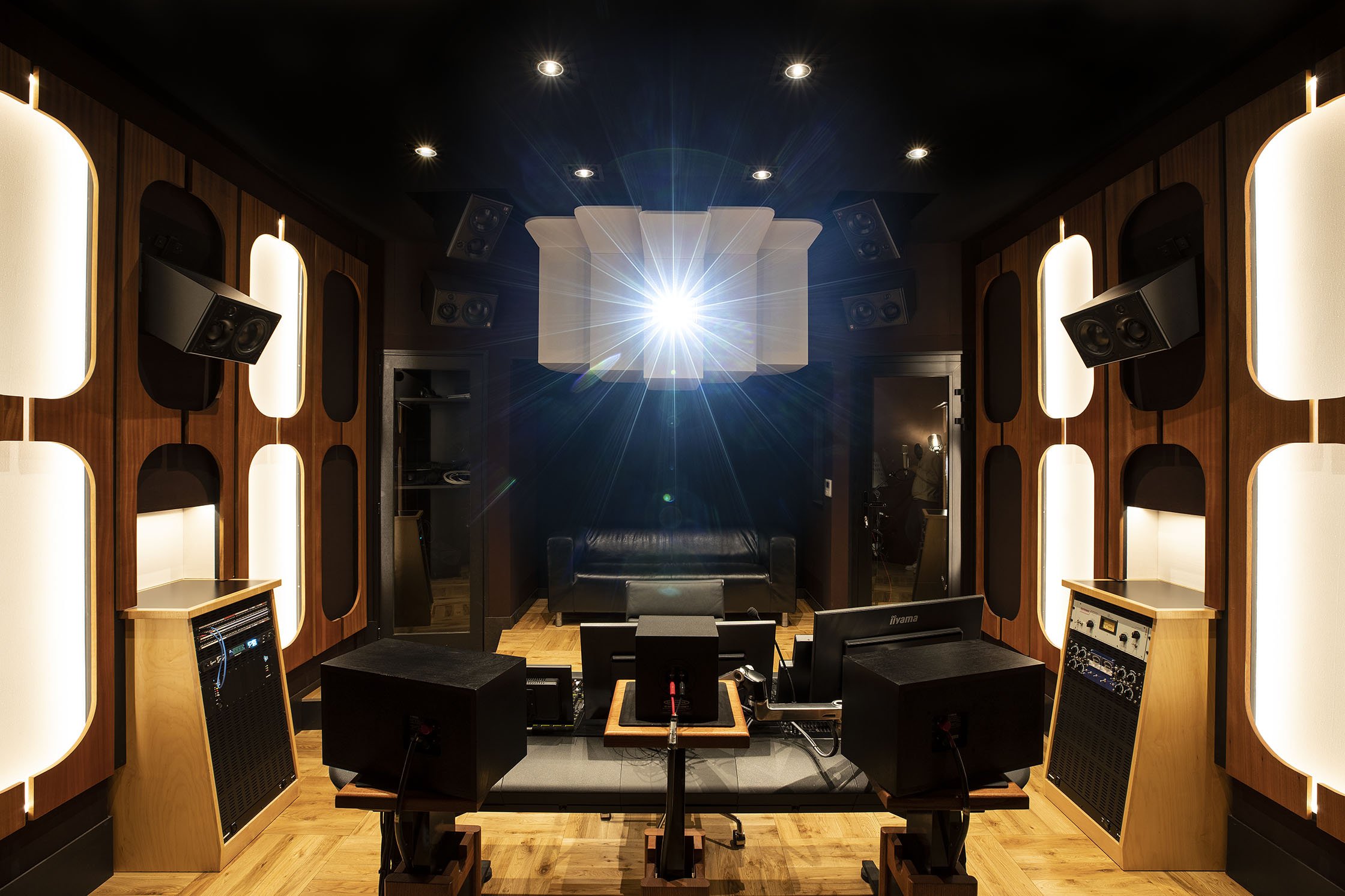
1. Custom-designed studio desk for optimized workflow
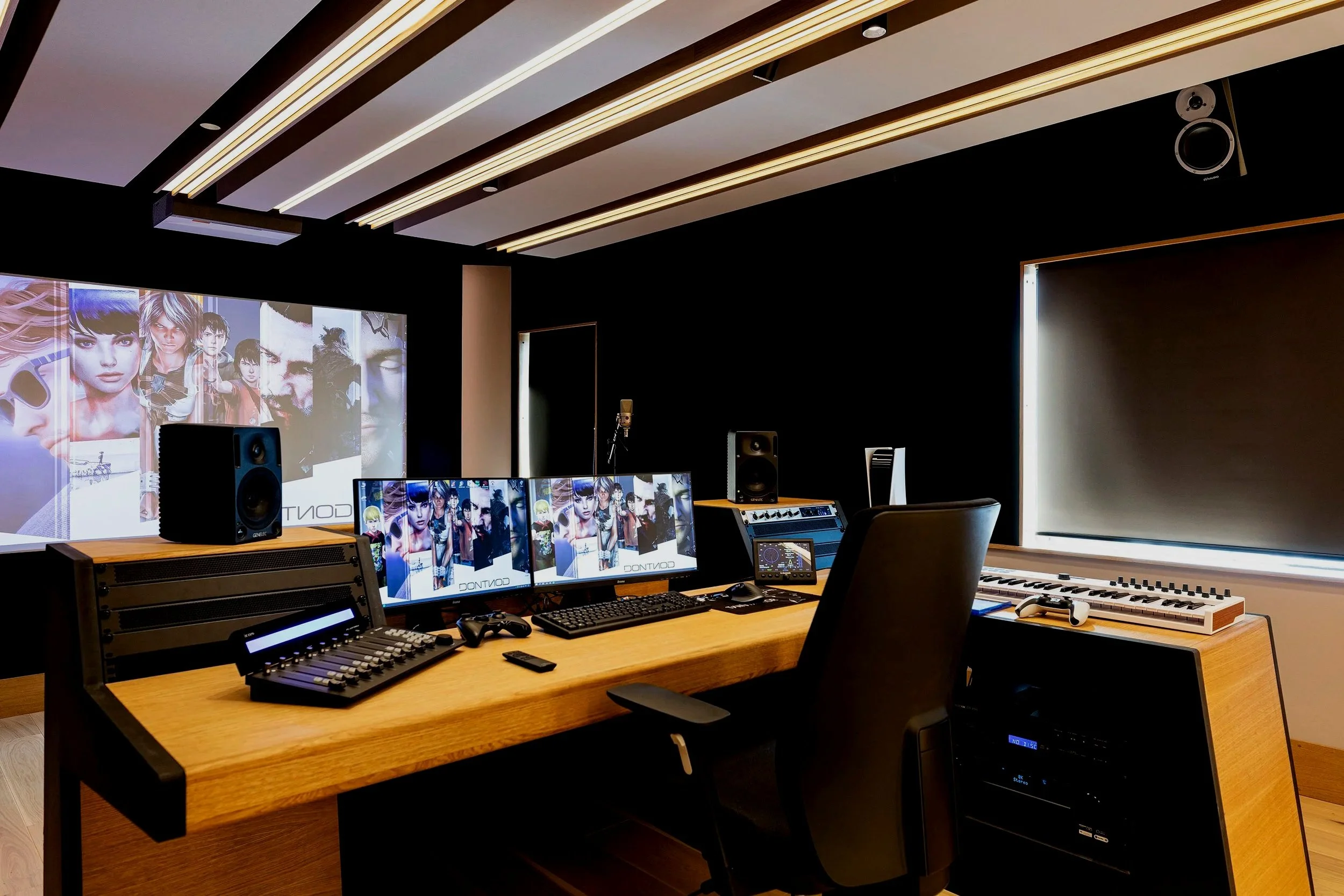
A tailor-made workstation designed to fit your rack gear and monitors at the ideal height and angle. This setup maximizes ergonomics while keeping your essential tools within arm's reach.
2. Studio with large analog mixing console
The ultimate traditional layout built around a large-format analog desk as the room's centerpiece. It combines premium tactile mixing with a powerful visual statement for high-end commercial spaces.
3. Integrated hidden cable management systems
Custom floor troughs and hidden wall channels route power and audio cables invisibly. This keeps the studio completely organized, safe, and visually minimalist.
4. Modular mobile rack gear stations
Heavy-duty, rolling wooden racks allow you to reposition your outboard gear depending on the session. They bring your preamps and compressors closer to the sweet spot when tweaking.
5. Wooden acoustic studio design
Utilizing natural wood slats and custom diffusers creates an elegant, organic look. This design scatters harsh flutter echoes while maintaining a lively, warm acoustic character.
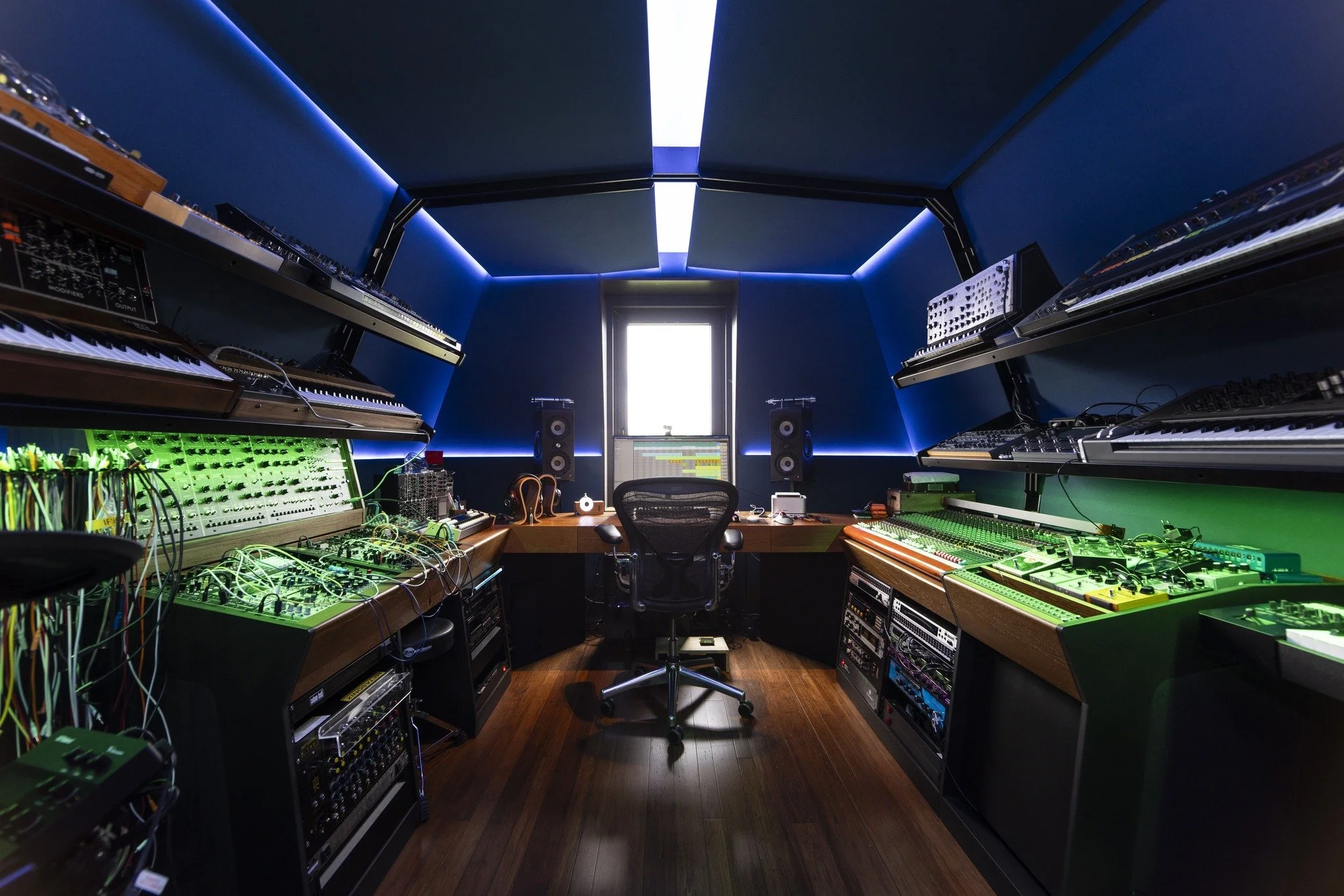
6. Fabric-wrapped seamless acoustic wall panels
Large-format fabric panels hide deep acoustic absorption behind a sleek, uniform surface. This approach offers a modern appearance without sacrificing professional room treatment.
7. Exposed brick with strategic acoustic treatment
This layout balances the raw aesthetic of natural brick walls with hanging acoustic clouds. The porous brick adds unique visual character while providing a pleasant, soft reflection.
8. Flush-mounted "Soffit" monitor installation
Embedding main monitors directly into rigid wall structures eliminates rear-wall reflections and maximizes bass impact. It is the ultimate structural choice for high-accuracy listening environments.
9. Recording studio with LED ambient lighting
Dynamic, dimmable RGB LED lighting is built directly into the acoustic clouds and desk borders. This allows you to instantly shift the creative energy of the room via app or voice control.
10. Natural light integration with acoustic windows
Maximize daylight using heavy-duty, angled multi-glazed windows that do not compromise sound isolation. This prevents the "bunker effect" and keeps creators connected to the outside world.
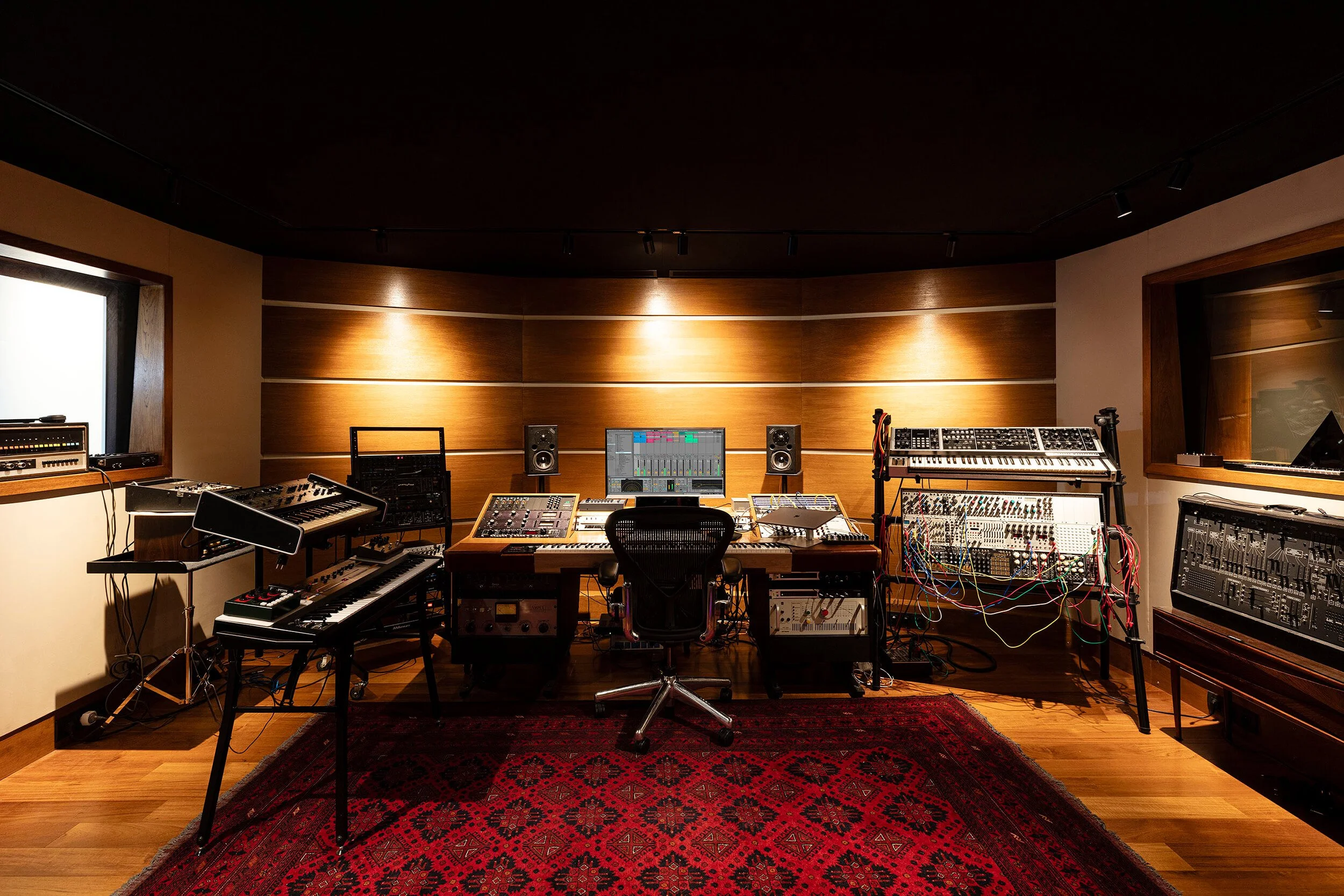
11. Architectural geometric acoustic backlighting
Custom-built diffusers and bass traps feature hidden, indirect LED backlighting to add three-dimensional depth. It brings a luxurious, high-end architectural feel to the acoustic design.
12. Fully soundproof recording studio room (Room-within-a-Room)
This structural isolation uses floating floors and decoupled walls for extreme noise reduction. It keeps external traffic out of your mics while allowing 24/7 loud recording sessions.
13. Recording studio with live room for instruments
A multi-room layout separates the accurate control room from a large, acoustically vibrant tracking space. This enables clean, bleed-free microphone inputs during live full-band tracking.
14. Integrated dedicated vocal booth
A tightly treated, isolated micro-space designed specifically to capture pristine vocals without any room coloration. Setting up a dedicated recording studio booth delivers ultra-clean recordings that are easy to process and mix later.
15. Dual-purpose control room and tracking space
This open-concept, single-room layout uses hybrid acoustic treatment to allow tracking and mixing in the same space. It maximizes a smaller footprint while fostering an intimate workflow.
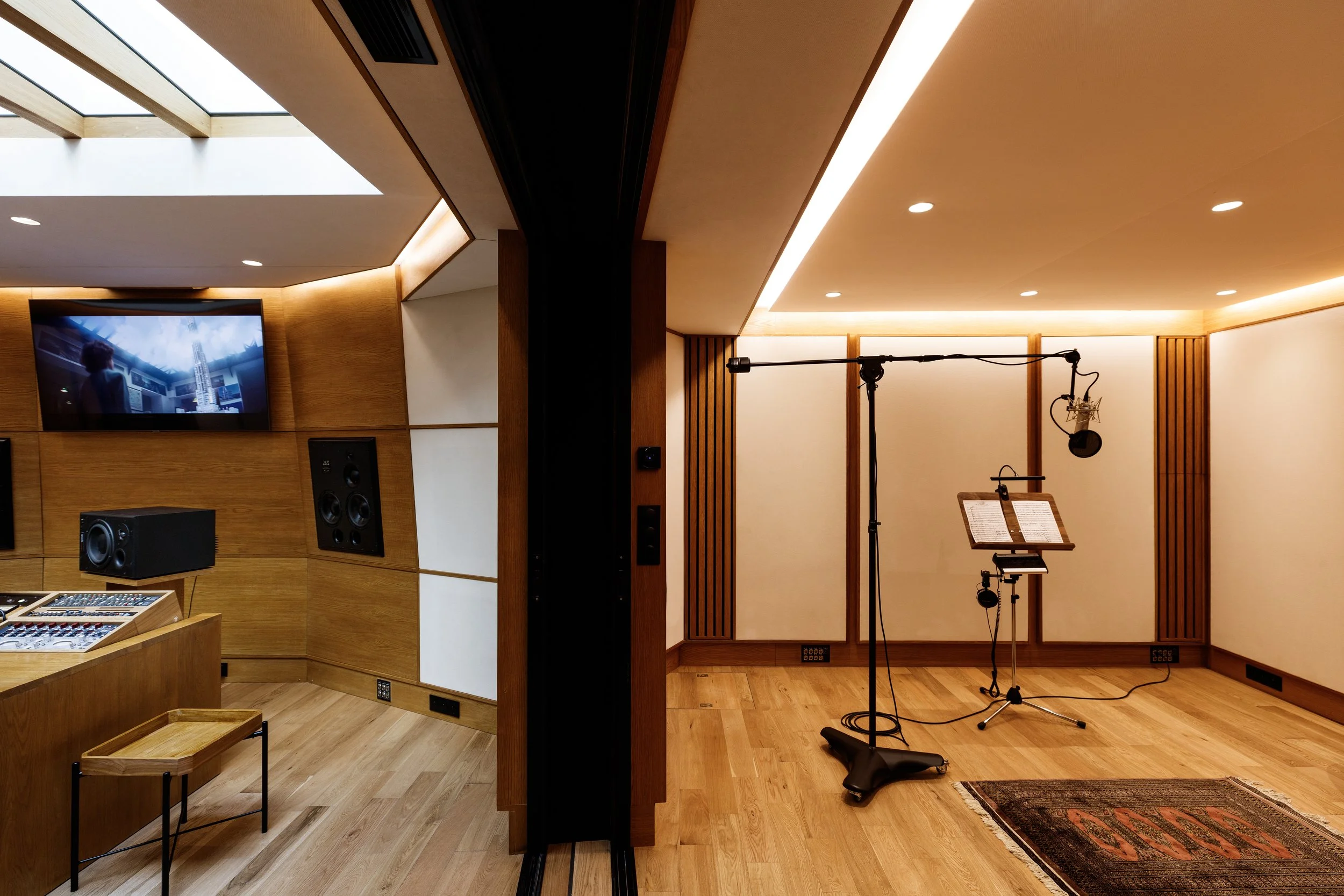
16. Multi-booth "Amp Closet" isolation setup
A dedicated, ventilated micro-booth soundproofed to house roaring guitar amplifiers during live band
17. Immersive Dolby Atmos multi-speaker setup
A calibrated multi-speaker layout featuring surround and overhead monitors designed for Dolby Atmos specifications. This configuration future-proofs your room for modern streaming and cinema standards.
18. Floating acoustic cloud for ceiling control
Suspended acoustic panels catch early reflections from your monitors before they bounce off the ceiling. This treatment sharpens the stereo image right at the listening position.
19. Multi-angle geometric wall design
Designing non-parallel walls during the construction phase naturally prevents standing waves and flutter echoes. This built-in acoustic control reduces the need for heavy corrective treatment later.
20. Client lounge integration within the studio
Create a comfortable and elegant relaxation area right inside the studio, designed for artists, managers, and clients. This allows those recording at studio to feel comfortable and relaxed without disrupting the sound engineer’s workflow.
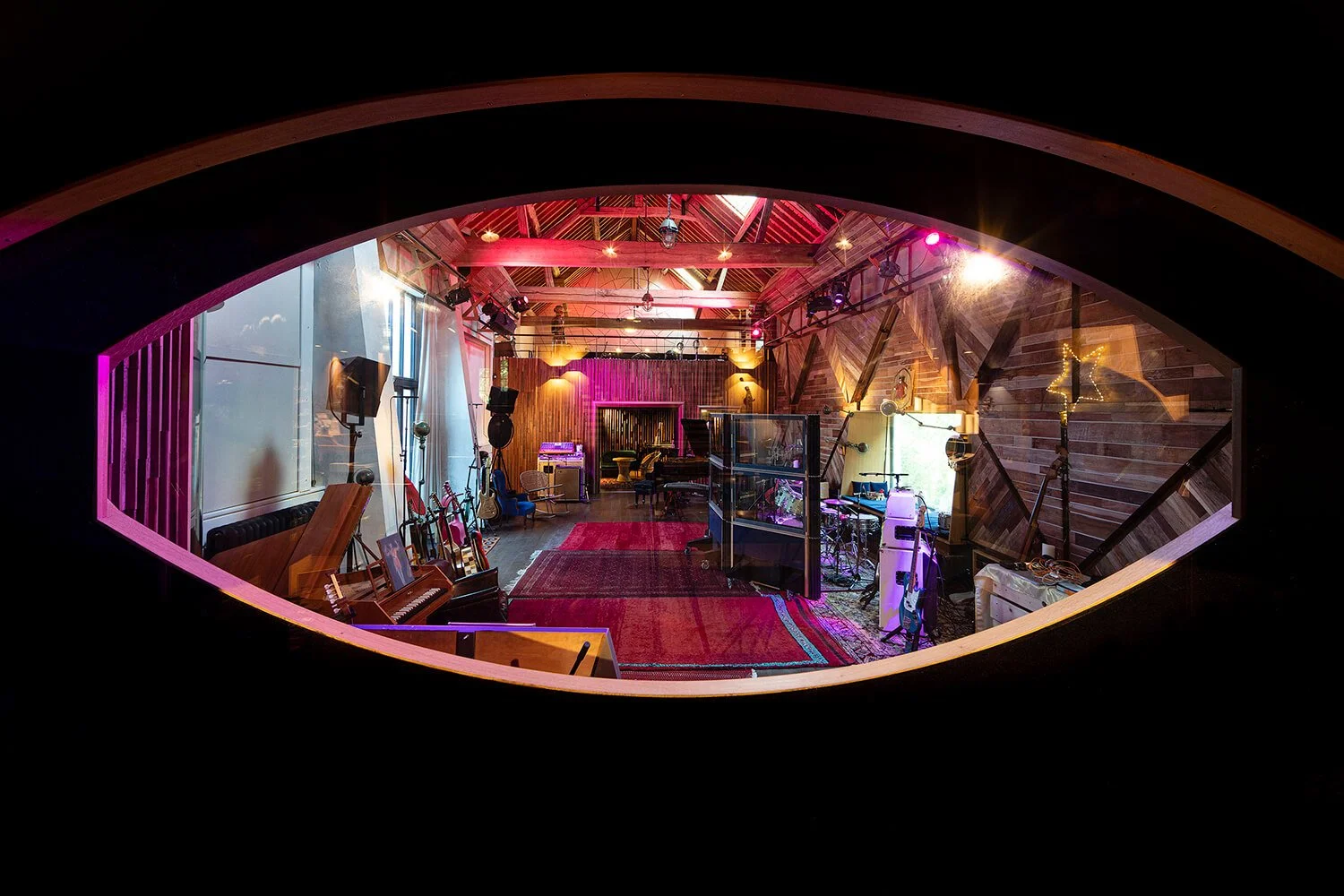
21. Content creation & hybrid video backdrop studio
Design your studio angles specifically with cameras and lighting in mind to double as a high-end video set. This layout makes filming tutorials, podcasts, or social media content seamless.
22. Minimalist Scandinavian home studio design
This style focuses on light wood, neutral fabric panels, and clutter-free surfaces for a calm workspace. It proves professional acoustics can blend beautifully into a modern residential home.
23. Space-saving corner-mounted bass traps
Placing triangular bass traps in wall corners targets high-pressure low frequencies without eating up valuable floor real estate. It is the most efficient way to treat small rooms.
24. Vintage vibe analog hideaway
This retro aesthetic combines 1970s design elements like warm textiles and vintage rugs with professional modern acoustic sub-structures. It provides an immediate, inspiring vibe that feels timeless.
25. High-ceiling warehouse conversion studio
Converting old industrial spaces allows you to take advantage of huge room volume and towering ceilings. This architecture yields a massive, natural acoustic depth that digital plugins cannot replicate, making it an incredible asset if you are looking to acquire a unique property or a custom recording studio for sale.
How to choose the right recording studio design?
Choosing the perfect layout depends entirely on your specific workflow, available space, and acoustic goals. Whether you are building a streamlined garage recording studio or a multi-room commercial facility, every choice impacts how sound behaves in your room. To avoid costly mistakes and pinpoint exactly what your space needs, tailored guidance through our acoustic consulting services can help you map out the ideal technical and aesthetic blueprint. When planning your room layout, never underestimate the power of visual environment. Incorporating smart studio lighting into your setup is just as important as choosing your gear, as it directly impacts your focus, comfort, and creative workflow during long production sessions.
Why work with experts to design your recording studio?
A professional studio is much more than just standard home recording studio equipment or acoustic panels on a wall; it requires precise structural isolation, custom furniture integration, and detailed modal analysis to achieve absolute sonic accuracy. Whether you are building a boutique control room or a large open modern recording studio, partnering with seasoned specialists like Red House ensures your room is mathematically optimized to deliver flawless, translation-ready mixes while future-proofing your investment. Let our team handle the complexities of soundproofing, geometric design, and ergonomics so you can focus entirely on your music.
Recording studio ideas: frequently asked questions
-
The best recording studio ideas for beginners focus on simplicity, cost-effective setups, and ergonomics. When setting up your first home studio, you don't need to invest in complex professional recording studio equipment right away; instead, start with a reliable digital audio workstation (DAW) paired with a solid USB audio interface. For capturing high-quality audio recording, a versatile dynamic microphone or an affordable condenser microphone with a pop filter will easily deliver excellent tracks.
-
Learning how to design a recording studio at home requires a strategic balance between your recording gear layout and room acoustics. First, dedicate a specific recording space or room where you can position your main workstation desk away from corners to prevent low frequency build-up. Connect your studio monitors and hardware, like a midi keyboard or synthesizer, to your audio interface using high-quality xlr cables. To ensure your home studio provides accurate playback for mixing music, place basic acoustic panels at your primary reflection points and use deep bass traps to control standing waves.
-
If you are working with limited real estate, the most creative recording studio ideas for small spaces involve modular furniture and multi-functional studio equipment. Maximize your desktop footprint by using a single control surface and a compact midi controller to manage your recording software parameters inside Pro Tools, Logic Pro, or Ableton Live. Instead of building a permanent, bulky vocal booth, optimize a corner of the room with localized sound isolation shields or heavy curtains to deaden background noise when tracking voice overs or acoustic guitars. Utilizing rolling equipment racks and wall-mounted brackets for your mics also keeps the floor clear, allowing your small project studio to stay organized and highly productive
-
The total amount you will spend to build a recording studio depends entirely on whether you are aiming for a basic home recording project or a state of the art, commercial-grade recording facility. A functional setup for independent music creation can cost anywhere from a few hundred to a few thousand dollars, primarily covering essentials like a laptop, plugins, an audio interface, and a standard studio monitor pair. However, a professional recording studio engineered for high-end audio production, mixing and mastering, or tracking live drums requires a much higher investment. Commercial spaces often spend tens of thousands of dollars on extensive soundproofing, complex architectural isolation, high-end outboard gear, and analog mixing console frameworks to meet strict industry standards
-
Yes, acoustic treatment is absolutely essential if you want your recordings and final mixes to sound professional outside of your specific room. Without proper absorption and diffusion panels, acoustic energy bounces off hard walls, creating an uncontrolled reverberation and severe echo that distorts what you hear through your speakers. Implementing targeted treatment allows your sound engineer or mastering engineer to accurately hear the true frequency response of the audio, free from artificial room coloration. Implementing targeted treatment allows your sound engineer or mastering engineer to accurately hear the true frequency response of the audio, free from artificial room coloration. Discovering the right professional acoustic solutions ensures that your tracking sessions are clean, tight, and ready for commercial release