
Recording Studio for Sale: Should You Buy or Build Your Own?
Published on April 16, 2026
Reading time: 8min
By Lucas Medus - Studio & Acoustics Expert at Red House
Sommaire
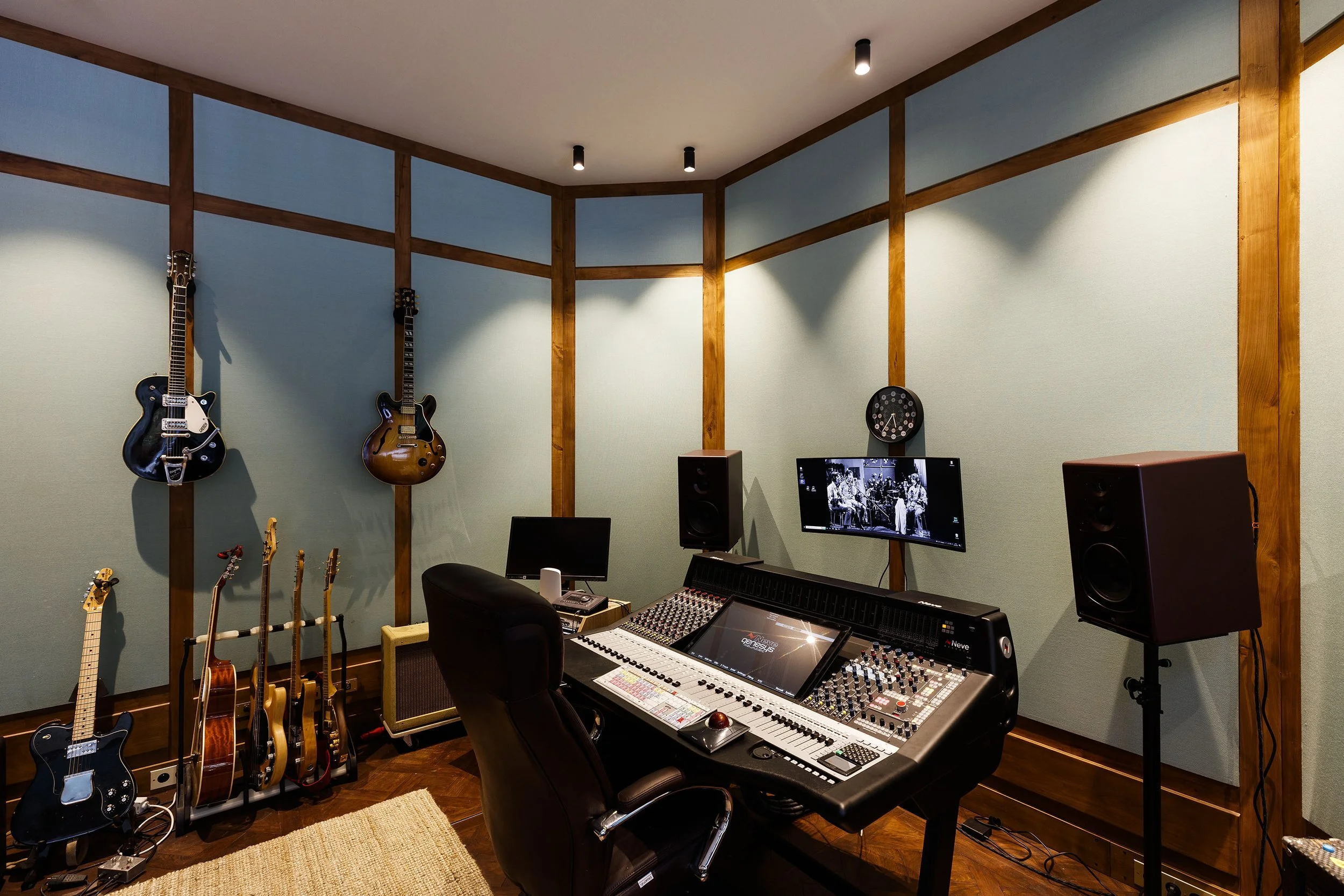
When you record at studio, investing in a professional recording studio is an attractive venture for any music producer or audio engineer, but it is far more complex than a standard real estate transaction.
A true music studio is a specialized environment where room acoustics, soundproofing, and the integration of professional recording studio equipment dictate the property's actual value. Whether you are looking at a recording studio for sale with existing outboard gear and a built-in vocal booth, or considering starting from scratch in a raw space with your own DAW and studio monitors, the decision impacts your workflow and long-term music production goals.
Is it better to buy a turnkey recording room or build your own custom home recording studio tailored to your specific recording sound?
Why Are So Many Recording Studios for Sale?
The current music industry is witnessing a significant transition, leading to an influx of recording studios for sale. This trend is primarily driven by the massive digital shift; as digital recording technology becomes more accessible, many artists are moving away from large commercial facilities in favor of a sophisticated home recording studio. This evolution in music production means that massive mixing consoles and expansive live recording rooms are no longer the absolute requirement they once were.
Furthermore, rising operating costs, including urban real estate prices and the high price of maintaining vintage analog gear, have made it difficult for traditional recording services to remain profitable. We are also seeing post-COVID market corrections, where facilities that relied heavily on studio time bookings are consolidating or closing. Finally, a major factor in the resale market is the presence of studios built without proper acoustic planning. Many owners realize too late that high-end recording gear cannot compensate for poor isolation or lack of acoustical treatment, leading them to list their properties as they struggle to compete with industry standard environments.
What to Check Before Buying a Recording Studio for Sale?
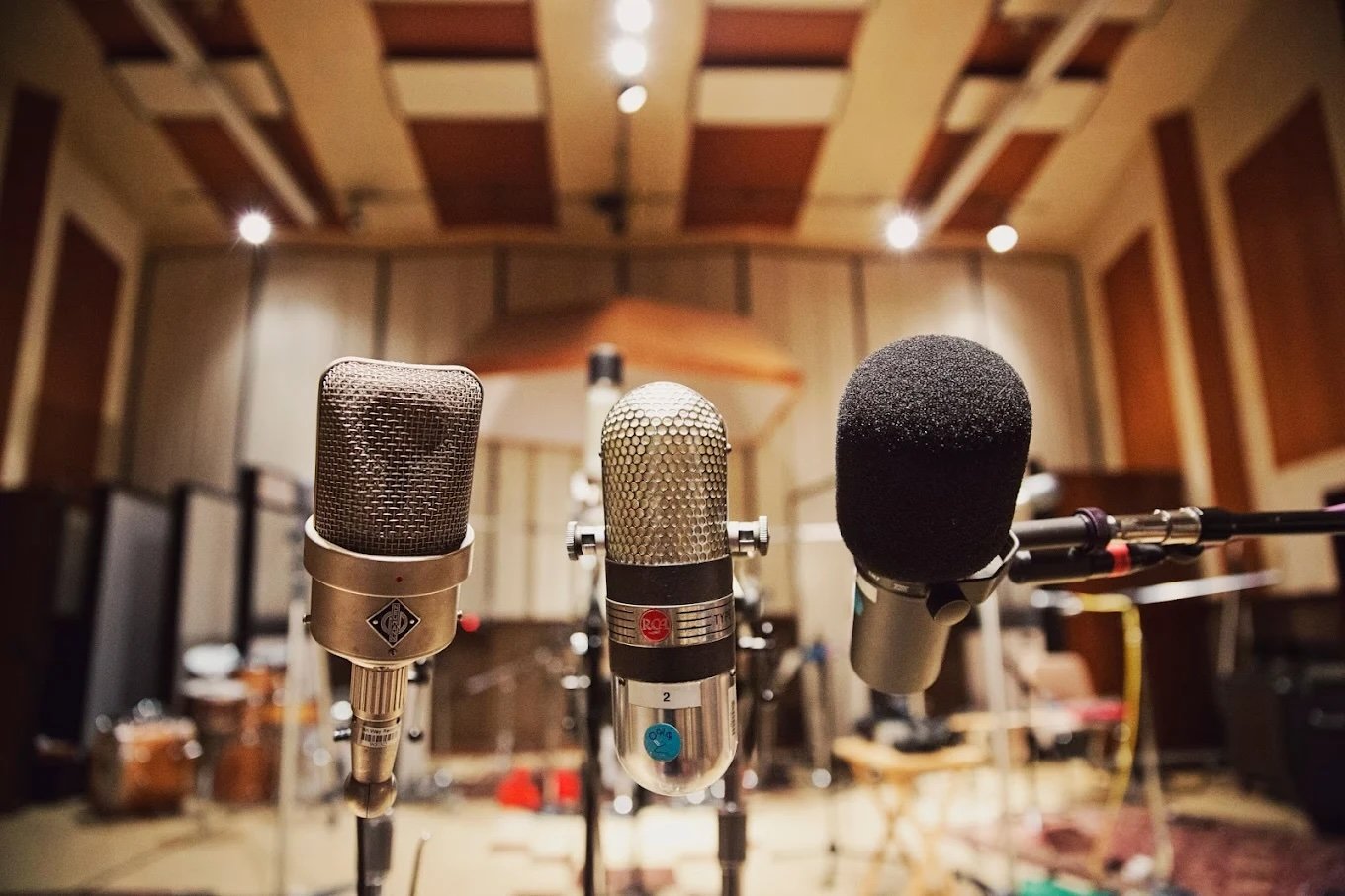
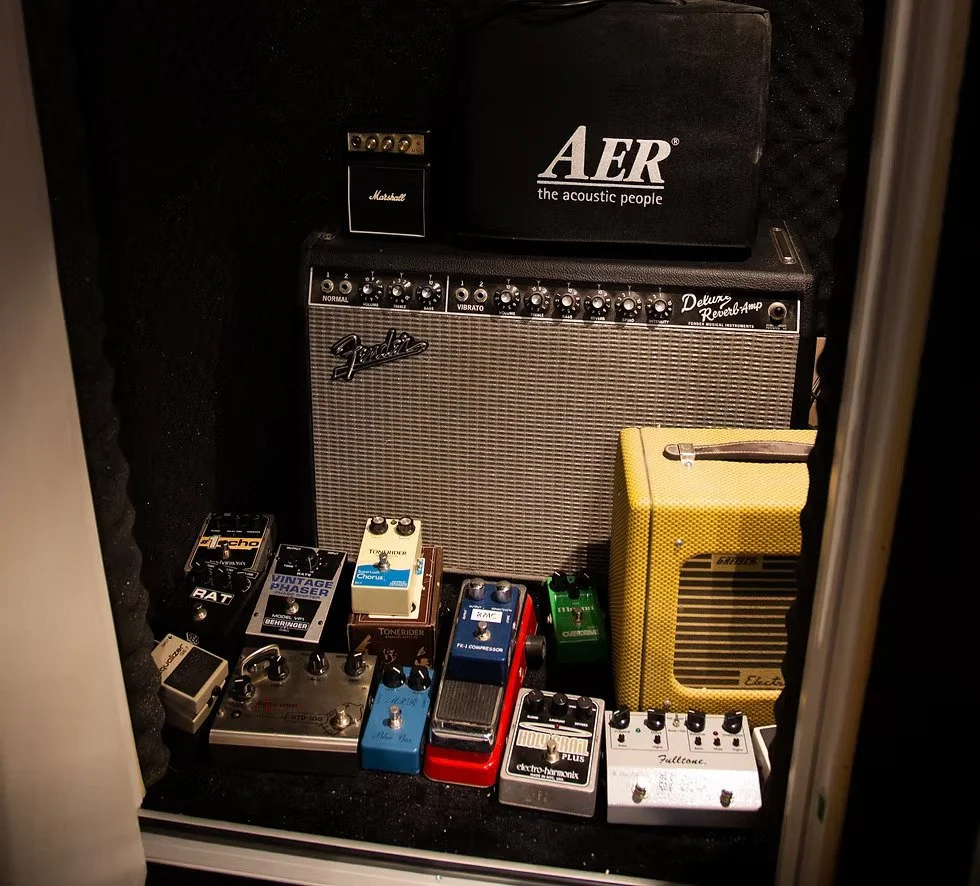
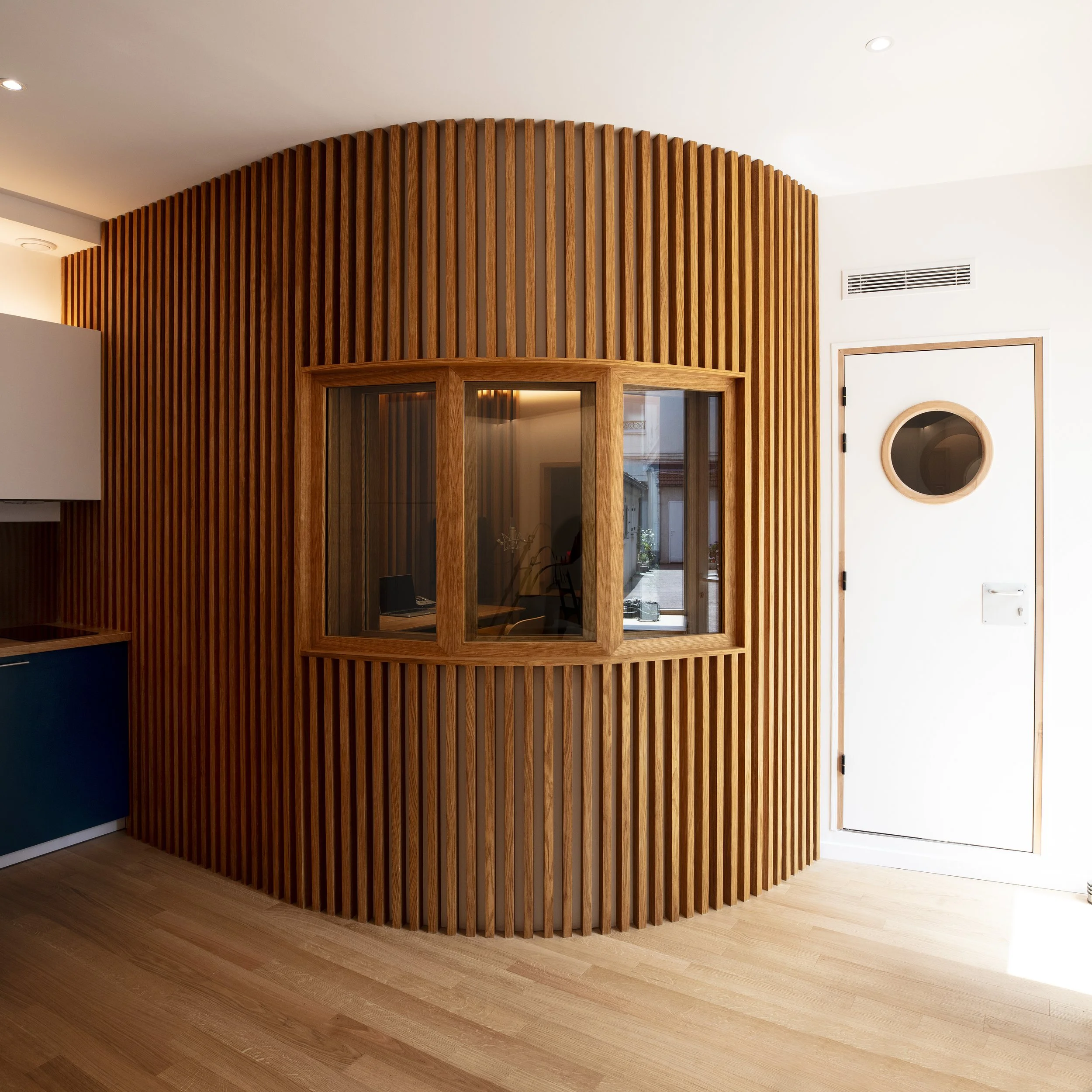
Acoustic performance and room design
The most critical factor in any professional recording studio is how the room actually sounds. Before committing, you must evaluate the acoustical properties of the recording room and control room. Check for the presence of bass traps, diffusers, and specialized acoustically treated surfaces. A poorly designed room with bad frequency response will ruin the accuracy of your recording sound, regardless of how many expensive microphones you use.
Isolation and structural integrity
True soundproofing is built into the bones of the building. Investigate the isolation between the vocal booth and the main live recording area. You need to ensure there is no leakage from external traffic or neighboring businesses. Check the soundproof seals on doors and the double-glazing of windows to confirm the facility can handle loud amps and drums without disturbing the peace.
Equipment condition and obsolescence
When a studio is sold "loaded," you must audit the professional recording studio equipment. Is the mixing console well-maintained, or does it need a costly refurbishment? Check if the audio interface and converters are still industry standard or if they use outdated connections like Firewire. Ensure the recording gear, including preamps and outboard processors, is fully functional to avoid immediate reinvestment costs.
Monitoring system and room calibration
A high-end monitoring setup is useless in an uncalibrated room. Test the studio monitors (like Yamaha or KRK Rokit) to see if the playback is transparent. Ask for the room's calibration data to ensure the reference monitor provides a flat response. This is essential for any audio engineer or mastering engineer who needs to trust their mixes.
Building compliance and regulations
Running a music recording studio involves specific legal requirements. Verify that the recording studios comply with local fire safety, electrical codes (especially for high-voltage amplifiers), and noise ordinances. If the space was a DIY home studio converted into a commercial one, ensure all structural modifications were permitted to avoid future legal headaches.
Lease vs property ownership
Decide if the recording studio for sale includes the real estate or just the business and studio gear lease. Buying the property offers more security for long-term acoustical investments, while a lease might be more flexible for a growing music production business. Review the terms carefully to ensure you won't be evicted after spending a fortune on soundproofing and setting up your dream music studio
Hidden Costs of Buying a Recording Studio
Purchasing a facility is just the starting point; budget overruns often hide beneath the surface of a seemingly turnkey music studio. When evaluating a recording studio for sale, consider these potential financial burdens:
Acoustic corrections: Even a professional space might require acoustic solutions : new bass traps or diffusers to suit your specific monitoring needs and ensure a flat frequency response.
Equipment upgrades: Transitioning a studio to your workflow often means replacing an aging audio interface, updating plugins, or investing in new condenser microphones to meet industry standard expectations.
Electrical & HVAC adjustments:Professional recording studio equipment generates significant heat. You may need to upgrade silent HVAC systems or install dedicated power lines to prevent interference with your preamps and amplifiers.
Rewiring and cabling: The cost of high-quality XLR cables, patch bays, and digital audio networking (like Dante or Thunderbolt systems) can quickly reach thousands of dollars during a studio setup.
Renovation of control room geometry: If the previous owner’s mixing and mastering style differed from yours, you might need to physically alter walls or partitions to optimize the acoustical sweet spot.
Compliance updates: Bringing an older recording room up to modern fire safety or accessibility codes is a common hidden expense that beginners often overlook when setting up a commercial venture.
Is Buying a Recording Studio a Good Investment?
Determining the ROI (Return on Investment) of an existing facility is a complex calculation that often creates more questions than answers. While acquiring a turnkey professional recording studio seems efficient, you must ask if you are buying a thriving business where artists routinely choose to submit your music to a recording studio or simply someone else's outdated overhead. The location impact is a double-edged sword; a studio in a prime urban area may offer prestige, but rising rents and noise complaints can quickly erode your margins, making a high-end home setup or a converted garage recording studio in a quieter district look more financially sound.
Furthermore, a pre-existing client base is never guaranteed to stay after a change in ownership. Music is a relationship-driven business, and artists often follow the audio engineer, not the studio gear. Without the original "ear" of the house, your branding might lose its luster, leaving you with expensive outboard gear and a mixing console that sits idle. Finally, consider scalability: many older recording studios are physically limited by their original acoustical design. Before buying, it is essential to inspect the construction constraints of any built-in recording studio booth to ensure it meets modern isolation requirements. Unlike a modern digital audio workstation setup that can be expanded easily, a structural vocal booth or control room is difficult and costly to resize. Before you sign, evaluate if the "legacy" of the space is an asset or a restrictive anchor for your future music production goals.
Why Build Instead of Buying a Recording Studio for Sale?
»Full acoustic control
When you build from scratch, you aren't inheriting someone else's acoustical mistakes. You have the power with an acoustic consulting to implement isolation and soundproofing from the ground up, ensuring that every wall angle and bass trap is mathematically optimized for your specific studio monitors. This level of acoustic control is rarely found in a pre-existing recording studio for sale, where you might be stuck with permanent structural issues that compromise your recording sound.
»Custom recording studio layout
Building allows you to create a music studio that fits your specific genre and needs. Whether you require a large open modern recording studio for drums and live ensemble tracking, or multiple small vocal booths for podcasting and voice over work, a custom layout ensures every square foot is productive. You can design the control room to be the perfect ergonomic hub for your mixing console and outboard gear.
»Long-term scalability
A custom-built facility is designed with the future in mind. By installing advanced rewiring, high-speed Thunderbolt or USB audio networks, and extra machine room space, you ensure your music production hub can grow. Unlike an older professional recording studio with limited expansion options, a new build can easily adapt as you add more synths, drum machines, or a larger multitrack setup.
»Designed for your workflow
Every audio engineer has a unique way of working. Building your own recording room means the placement of your patch bay, mic preamps, and MIDI controllers is exactly where you need them. This seamless integration between your DAW (like Pro Tools or Ableton) and your physical hardware eliminates friction, allowing you to focus entirely on the music creation process without fighting a legacy layout.
»Higher asset value
While the initial investment in setting up a new studio is high, the resulting asset value is significantly greater. A modern, compliant, and acoustically perfect facility is a premium commodity in the music industry. By using industry standard materials and documented soundproof construction, you create a tangible asset that retains value much better than a repurposed space with aging, mismatched studio gear.
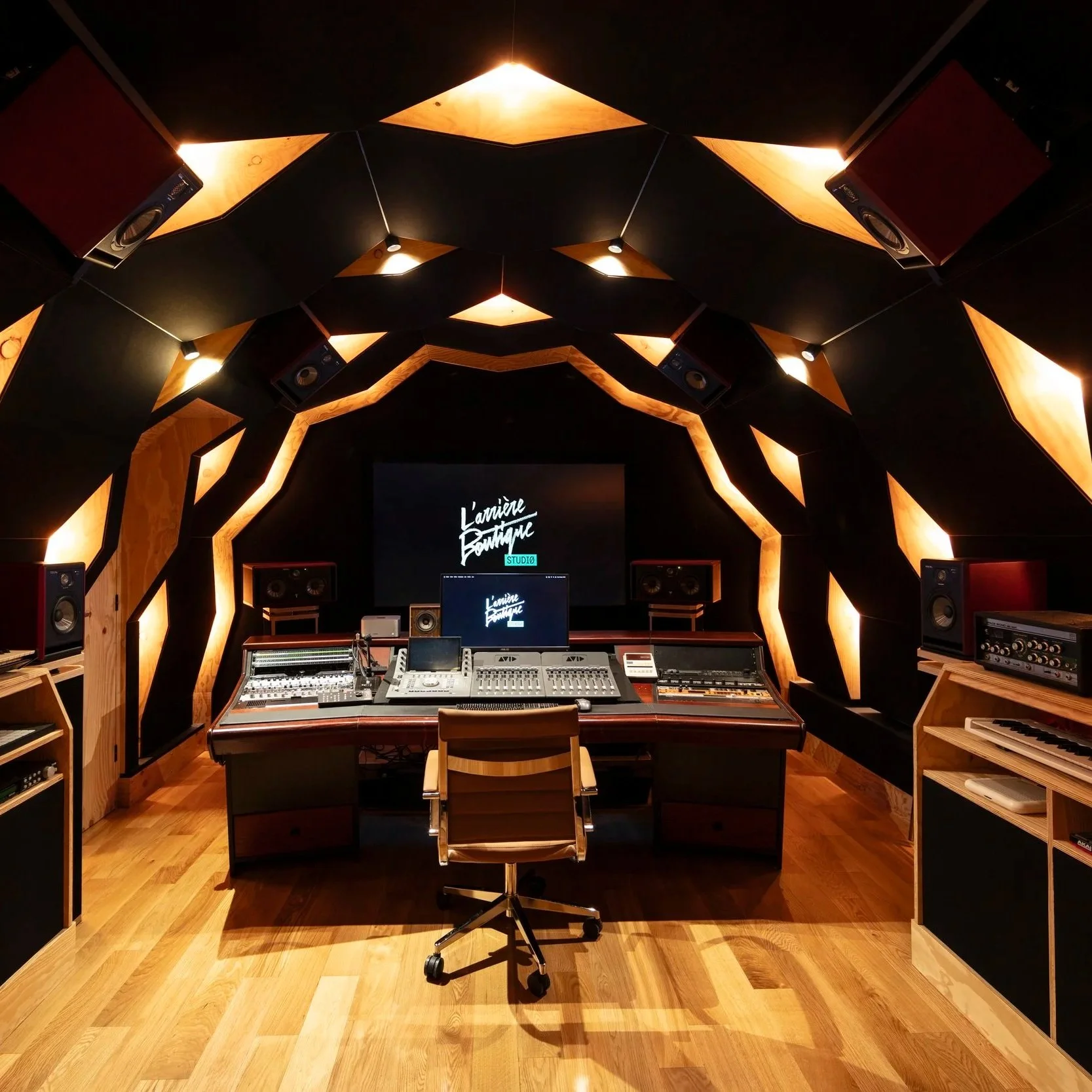
L’arrière boutique by Red House
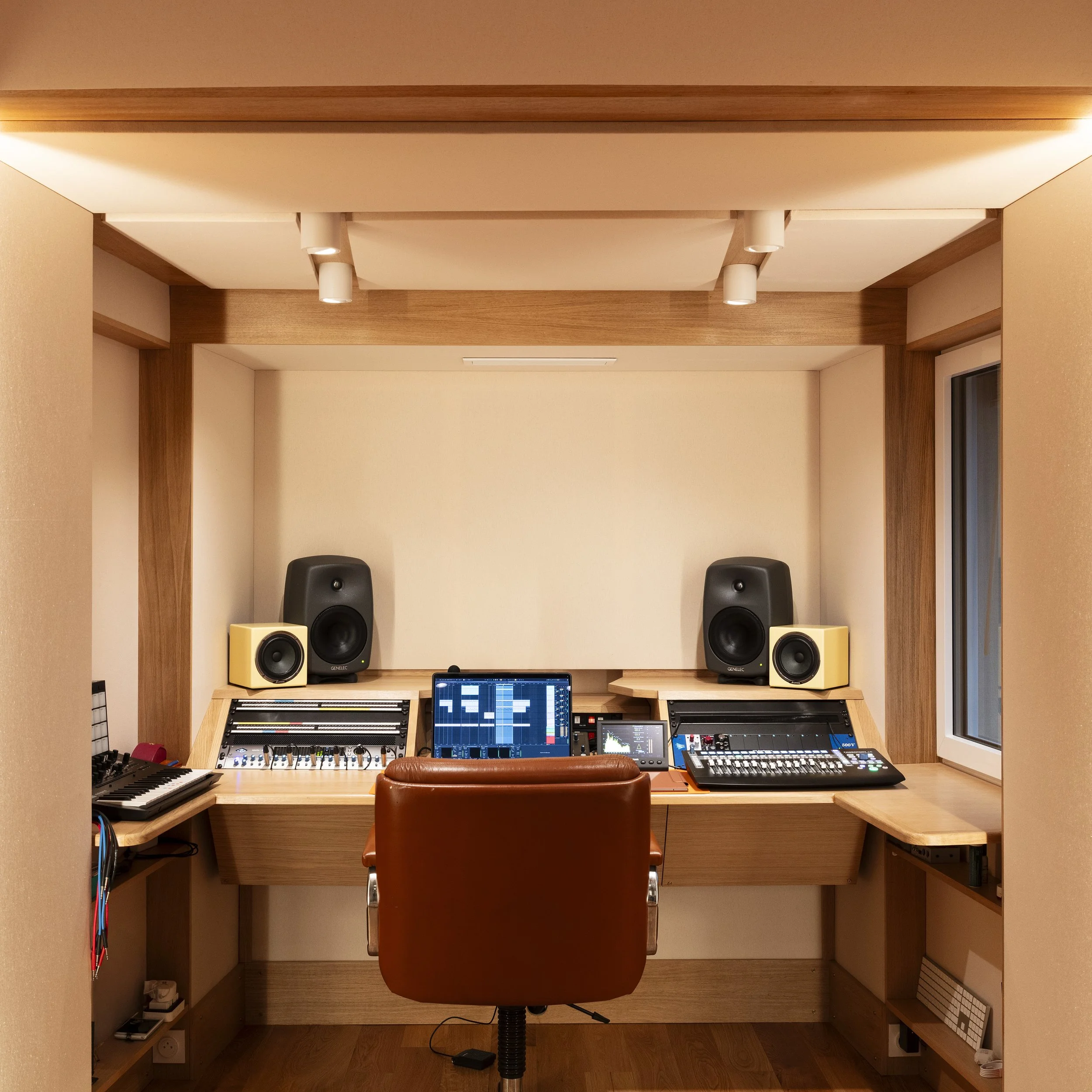
After Touch by Red House
Thinking About Buying or Building a Recording Studio?
| Feature | Buying an Existing Studio | Building a New Studio |
|---|---|---|
| Pros (Advantages) |
|
|
| Cons (Disadvantages) |
|
|
| Best For | Commercial recording services looking for immediate studio time revenue. | Specialized audio engineers or producers seeking an industry standard custom environment. |
When It Makes More Sense to Build a Custom Recording Studio?
Building a custom music studio is the superior choice when your project requires specific acoustical standards that a standard recording studio for sale simply cannot provide. If your goal is to establish an industry standard facility, starting from scratch allows for the integration of advanced soundproofing, specialized bass traps, modern studio lighting systems, and a control room geometry tailored to your high-end studio monitors.
This path is particularly relevant for a recording engineer or music producer focusing on high-fidelity music creation, such as orchestral tracking or precision mastering. By building your studio, you make sure that every piece of recording studio equipment, from microphone preamps and patch panels to audio interface, is positioned to optimize your workflow While the initial setting up phase requires more time, the ability to create a perfectly isolated vocal booth and a live recording space with a unique frequency response results in a professional environment that elevates the quality of every recording session.
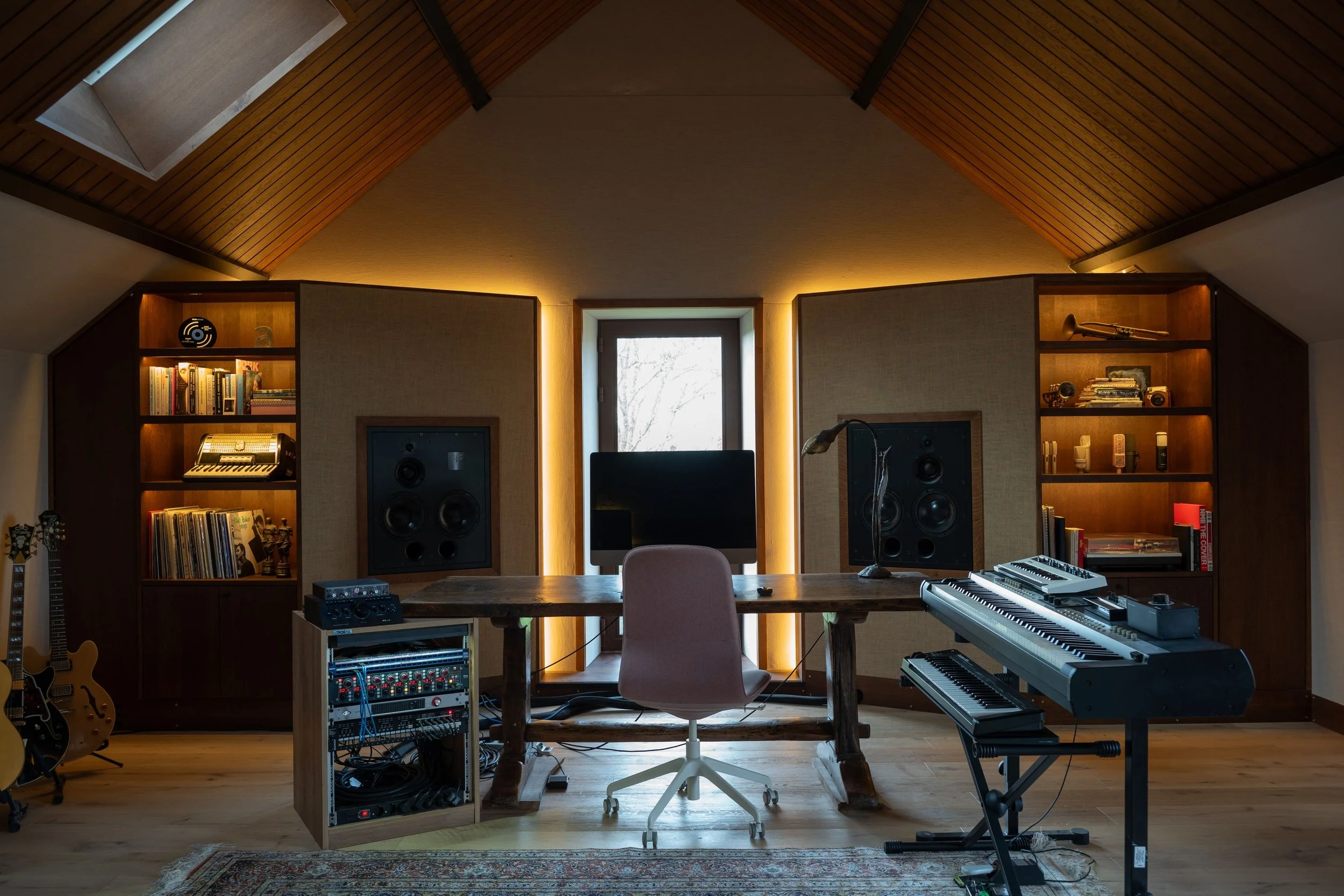
Ready to Build a High-Performance Recording Studio?
Recording studio For sale: frequently asked questions
-
The price of a recording studio for sale varies significantly based on its location, the quality of its acoustical treatment, and the included recording gear. A small home recording studio setup might be priced similarly to residential real estate, while a professional recording studio with a large mixing console, vintage analog outboard gear, and multiple vocal booths can cost hundreds of thousands of dollars. Buyers should evaluate if the price includes the audio interface systems, microphones, and studio monitors, or if they are only purchasing the recording facility itself.
-
Before purchasing, you should conduct a thorough audit of the recording equipment and the building’s isolation. It is essential to verify the condition of the microphone preamps, compressors, and the digital audio workstation (DAW) like Pro Tools HD or Logic Pro. You must also ensure that the recording room has a balanced frequency response and that the soundproofing is up to industry standard, preventing external noise from ruining a recording session.
-
Yes, it is highly risky to buy a recording studio without a professional acoustic audit. Without measuring the room acoustics, you might inherit a space with severe standing waves or poor monitoring accuracy. An audit by a qualified audio engineer ensures that the control room and live recording areas provide a transparent recording sound. Failing to do this could mean spending a fortune on plugins and high-end mics only to find that your mixes do not translate well outside of that specific room.
-
Whether it is cheaper to buy or build depends on the level of customization required for your music production. Buying an existing music studio can be more cost-effective if it already includes expensive soundproofing and a functional patch bay. However, building a new one allows you to design a custom recording studio layout specifically for your workflow, potentially saving money on unnecessary outboard gear while ensuring you have the latest USB audio interface and digital recording technology from the start.
-
A recording studio for sale can be a good long-term investment if the facility is versatile enough to serve various audio engineering needs, from songwriting to voice over and post production. The value lies in the quality of the acoustical design and the studio's reputation within the music business. As long as the studio is equipped with industry standard tools like Ableton Live, Universal Audio interfaces, and reliable studio monitors (such as KRK Rokit), it can remain a profitable hub for music creation and recording services.