
Recording Studio Equipment: What You Really Need for a Professional Setup?
Published on April 16, 2026
Reading time: 7min
By Lucas Medus - Studio & Acoustics Expert at Red House
Sommaire
In the world of high-end audio production, your sound is only as good as your weakest link.
Whether you are building an home studio or upgrading a commercial space, choosing the right gear is a blend of science and art. Our Professional Recording Studio Equipment Guide explores the essential tools—from precision microphones to advanced acoustic monitoring—required to capture, process, and master world-class audio.
What Equipment Do You Really Need for a Recording Studio?
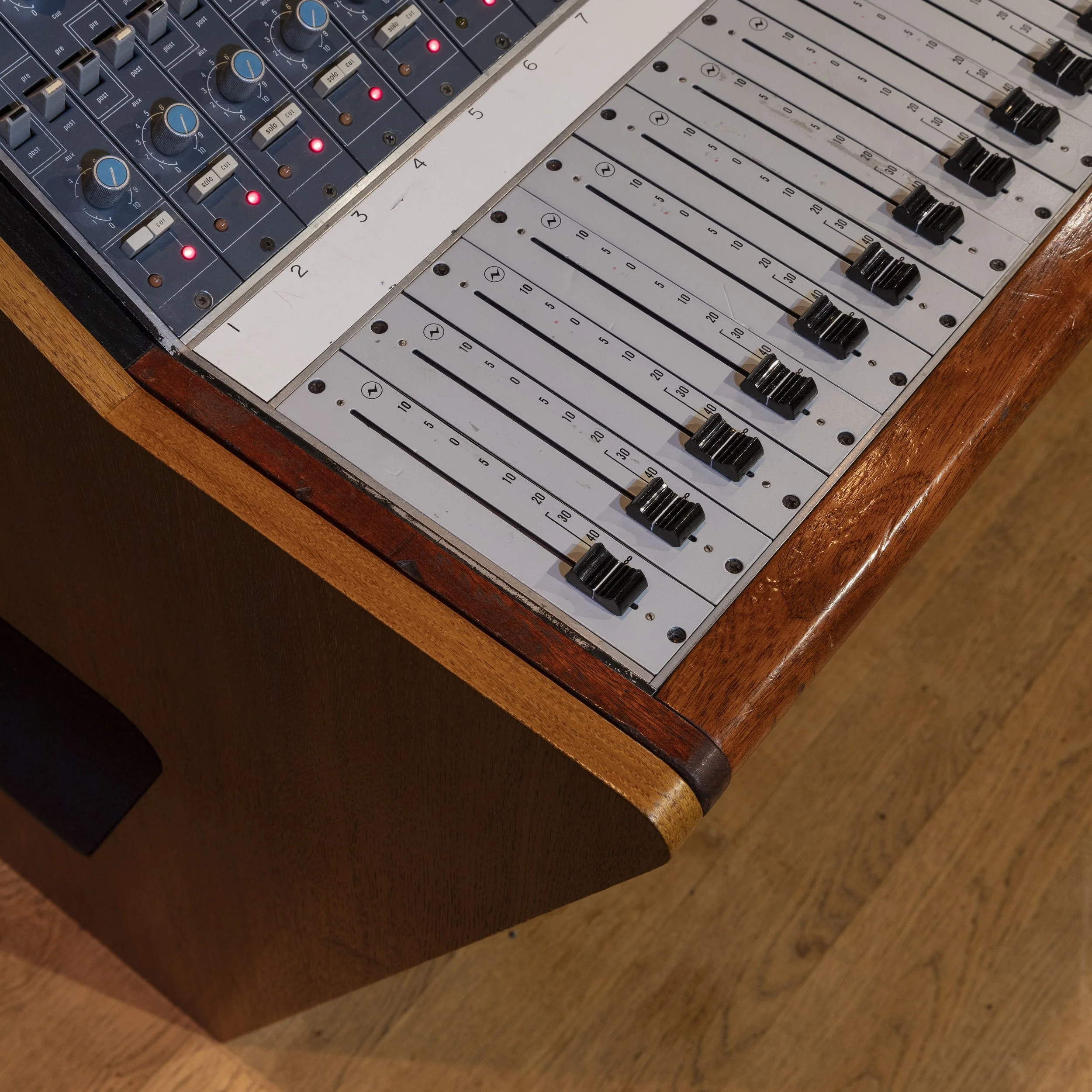
Audio Interface
The audio interface is the heart of your digital studio. It acts as the bridge between the analog world and your computer, converting electrical signals into data. A professional interface ensures high-fidelity conversion, low latency, and clean preamps, which are crucial for preserving the integrity of your sound from the very first take.
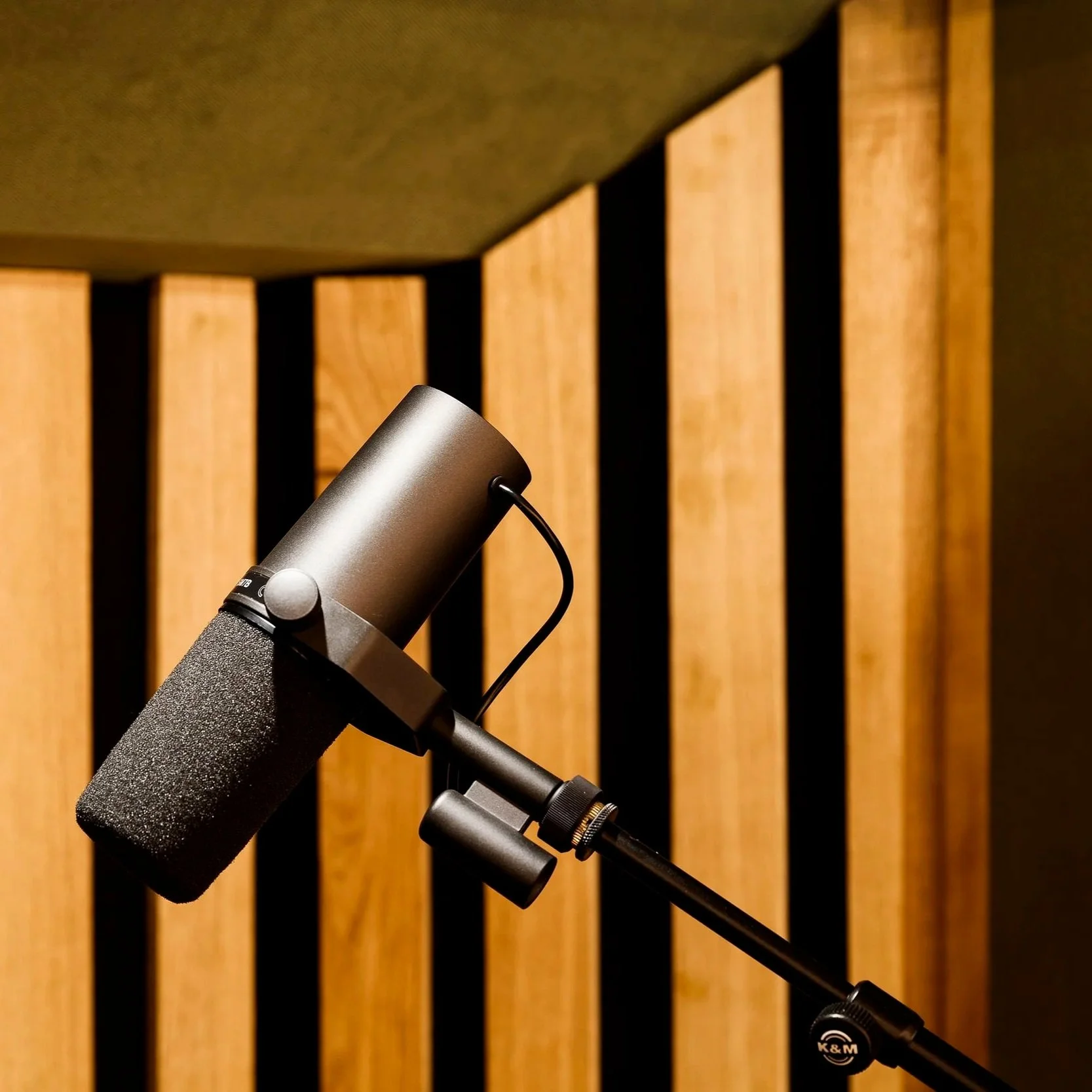
Microphones
Your microphones are your primary "ears." In a professional setting, having a versatile selection ranging from large-diaphragm condensers for vocals to rugged dynamic mics for instruments, allows you to capture the unique character and nuance of every performance with absolute transparency. To truly isolate these high-end microphones from background ambient noise, pairing them with a dedicated recording studio booth is crucial for capturing a pristine, dry signal.
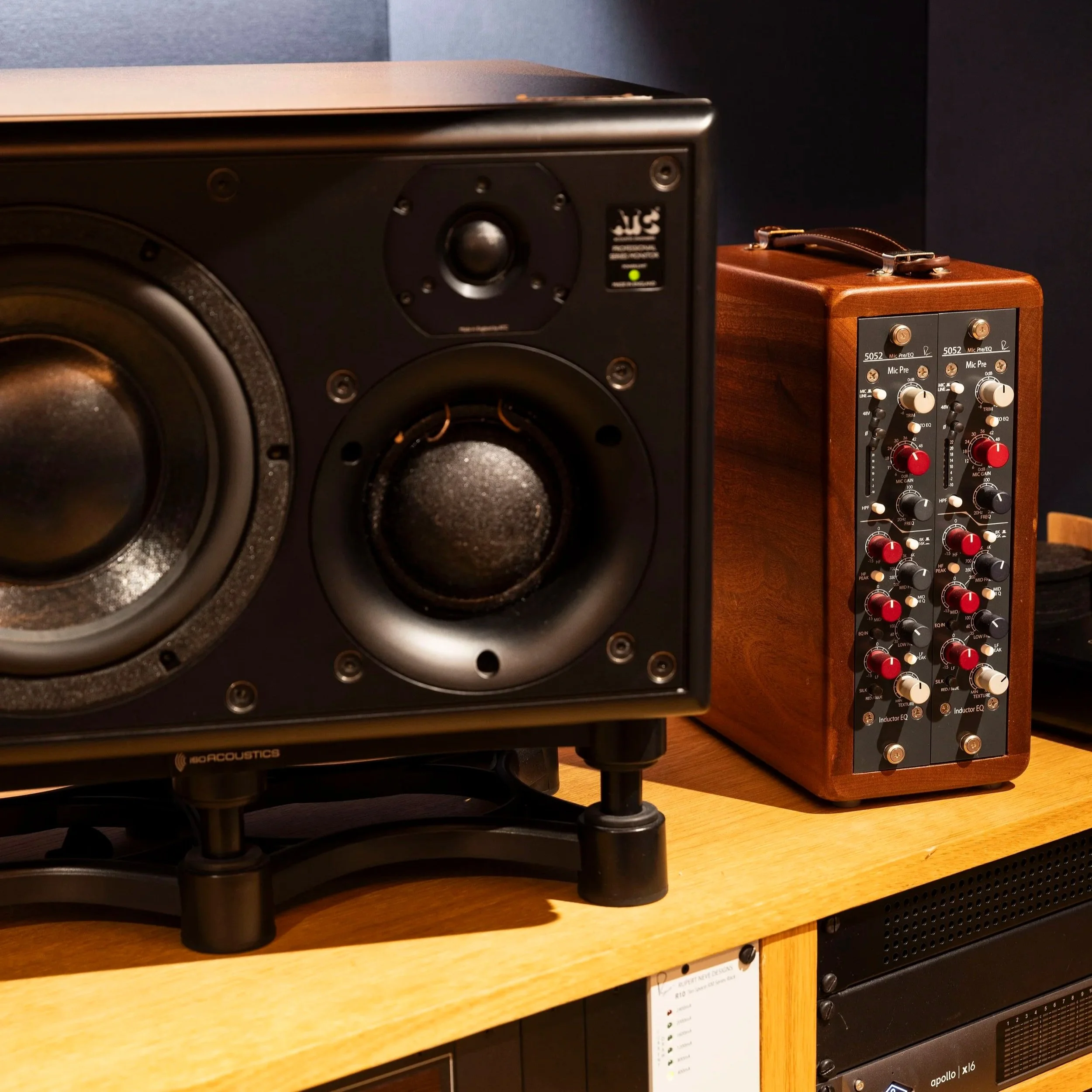
Studio Monitors
Unlike standard speakers, studio monitors are designed to provide a "flat" or neutral frequency response. They don't flatter your music; they tell you the truth. This accuracy is vital for making critical mixing decisions, ensuring your tracks translate perfectly across all playback systems.
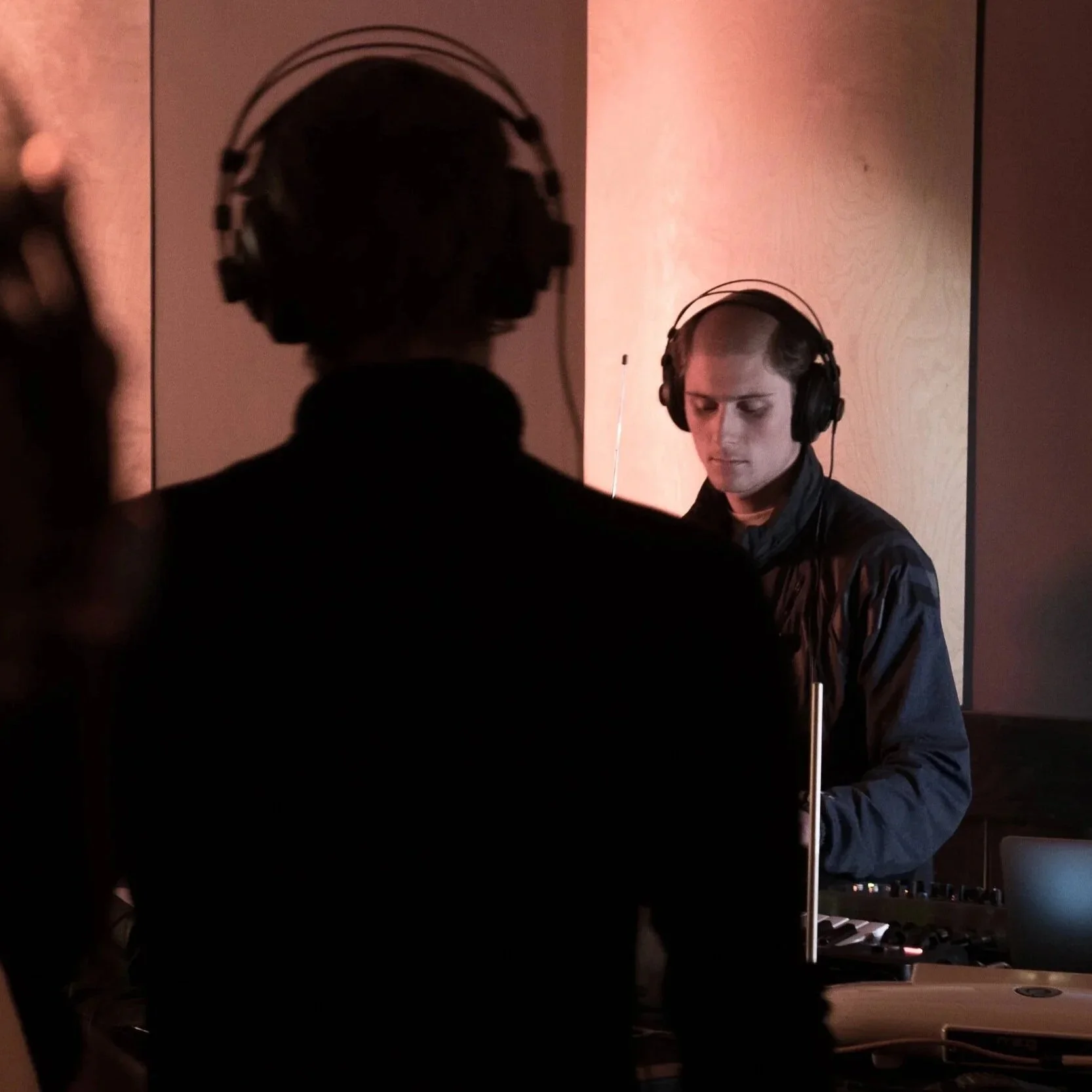
Headphones
High-quality studio headphones are indispensable for detailed monitoring and tracking. Closed-back models prevent sound leakage into the microphone during recording, while open-back designs offer a natural soundstage for critical listening and long mixing sessions without ear fatigue.
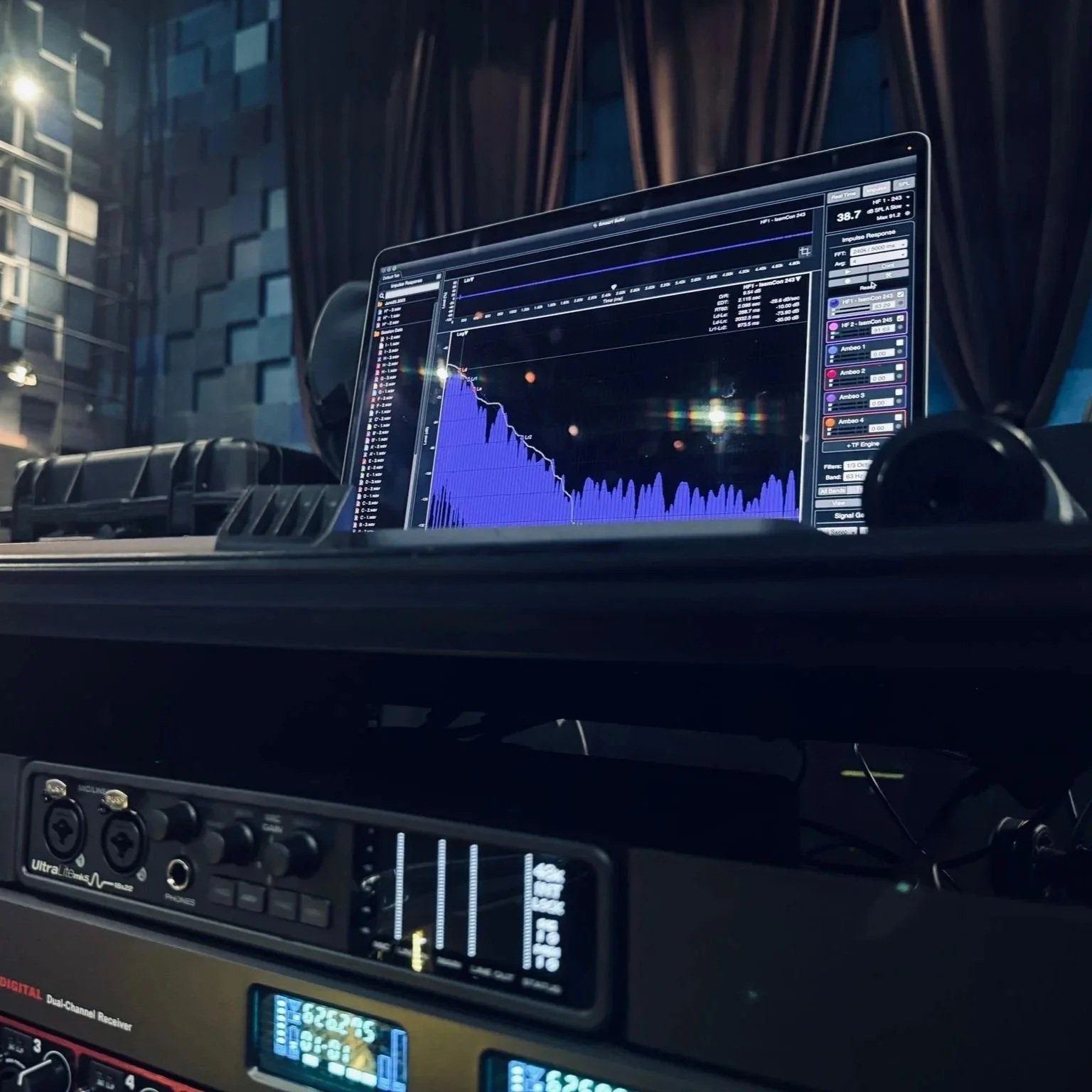
DAW (Digital Audio Workstation)
The DAW is your virtual production center. Whether it’s Pro Tools, Logic Pro, or Ableton Live, this software is where your recording, editing, mixing, and mastering happen. It provides the complex routing and processing power needed to handle professional-scale projects.
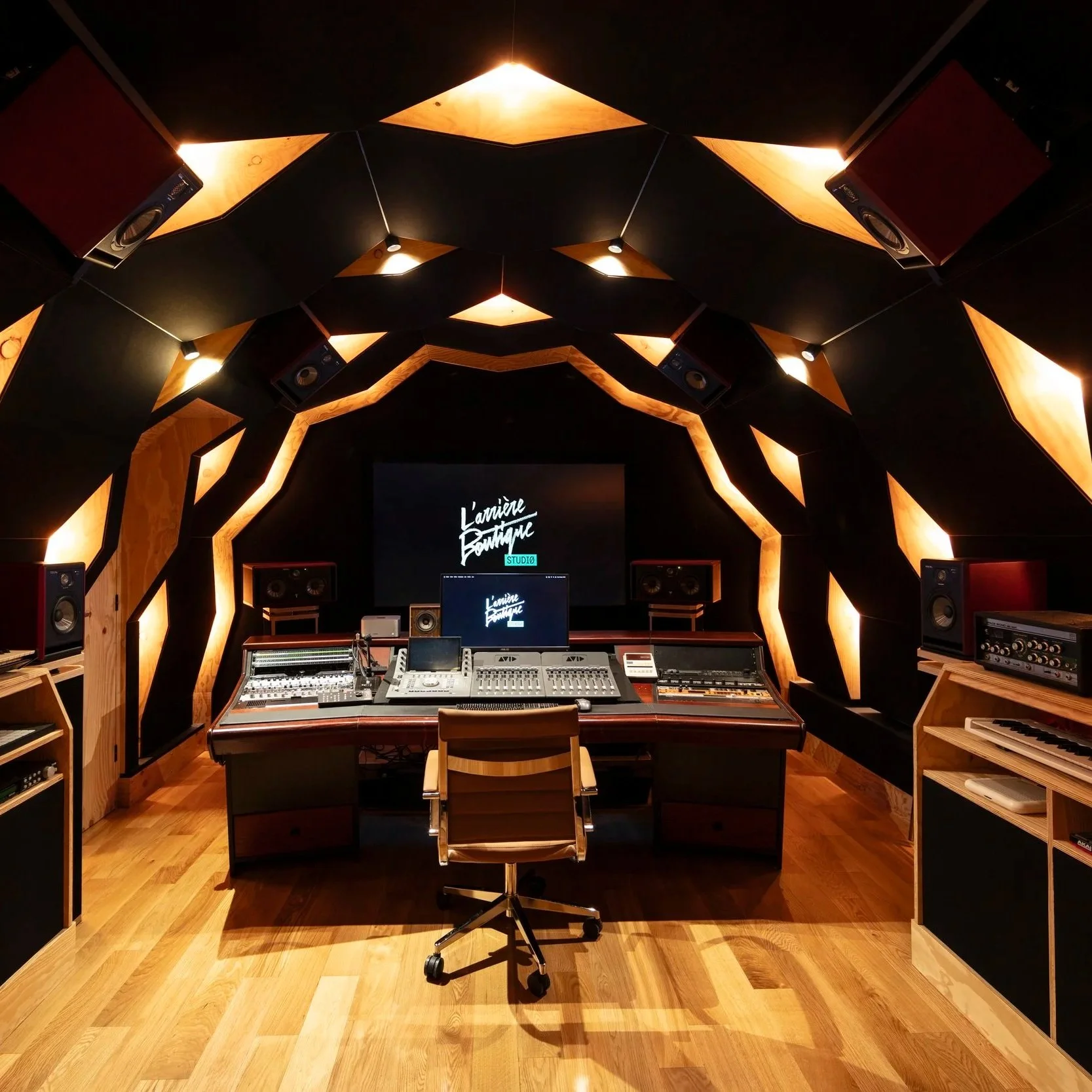
Acoustic Treatment
Often overlooked but absolutely critical, acoustic treatment is what separates a bedroom recording from a professional production. By using absorbers, diffusers, and bass traps, you control the "room sound," ensuring that your microphones capture the source accurately and your monitors reflect the true audio without room-induced coloration.
Core Recording Studio Equipment Explained
To achieve a professional sound, understanding the technical nuances of your hardware is essential. Each component in the signal chain plays a specific role in capturing and shaping the audio energy. These are factors that should not be overlooked, especially when looking for a studio for sale.
Audio Interfaces and Converters
The audio interface serves as the central hub of the modern studio. Its primary role is to ensure high-fidelity AD/DA conversion, transforming analog electrical signals into digital data with minimal loss. Professional interfaces are defined by their dynamic range, clocking stability to prevent jitter, and the quality of their internal circuitry. For high-end productions, low-latency performance is crucial to allow artists to monitor themselves in real-time without distracting delays.
Microphones (Dynamic, Condenser, Ribbon)
Choosing the right microphone is about selecting the correct tool for the source.
Dynamic Microphones are rugged and handle high SPL (Sound Pressure Levels), making them ideal for drums and loud amplifiers.
Condenser Microphones offer superior sensitivity and a fast transient response, perfect for capturing the breath and detail in vocals.
Ribbon Microphones are prized for their natural, bidirectional (figure-8) pickup pattern and a smooth, "darker" high-end that provides a classic vintage character.
Studio Monitors and Monitoring Systems
Professional studio monitors provide a "flat" frequency response, ensuring that the audio is reproduced without artificial bass boost or treble enhancement. This transparency allows engineers to identify and correct frequency imbalances. Advanced monitoring systems often include dedicated subwoofers for low-end management and digital room correction to compensate for the specific acoustic signature of the workspace.
Headphones for Tracking and Mixing
Headphones are essential for both isolation and detailed analysis. For tracking, closed-back designs are mandatory to prevent "click-track bleed" from leaking into the microphone. For mixing, open-back headphones provide a more natural soundstage and better spatial imaging, reducing the "closeness" fatigue associated with long hours of critical listening.
Preamps, Compressors, and Outboard Gear
Before the signal reaches the DAW, it often passes through outboard gear. A high-quality preamp provides the initial gain, often adding desirable "harmonic saturation." Hardware compressors and EQs allow for dynamic control and tonal shaping in the analog domain, offering a tactile response and a specific sonic "weight" that is often difficult to replicate purely with software plugins.
DAW and Software Tools
The DAW (Digital Audio Workstation) is the powerhouse where all elements converge. Beyond simple recording, it hosts the complex routing, automation, and software plugins used in modern production. A professional DAW setup must be optimized for stability, allowing for high track counts and the integration of virtual instruments (VSTi) while maintaining the integrity of the original high-resolution audio files.
Home Recording Studio Equipment vs Professional Studio Equipment
When building your workspace, understanding the gap between home recording studio equipment and professional studio equipment is essential to making the right investment.
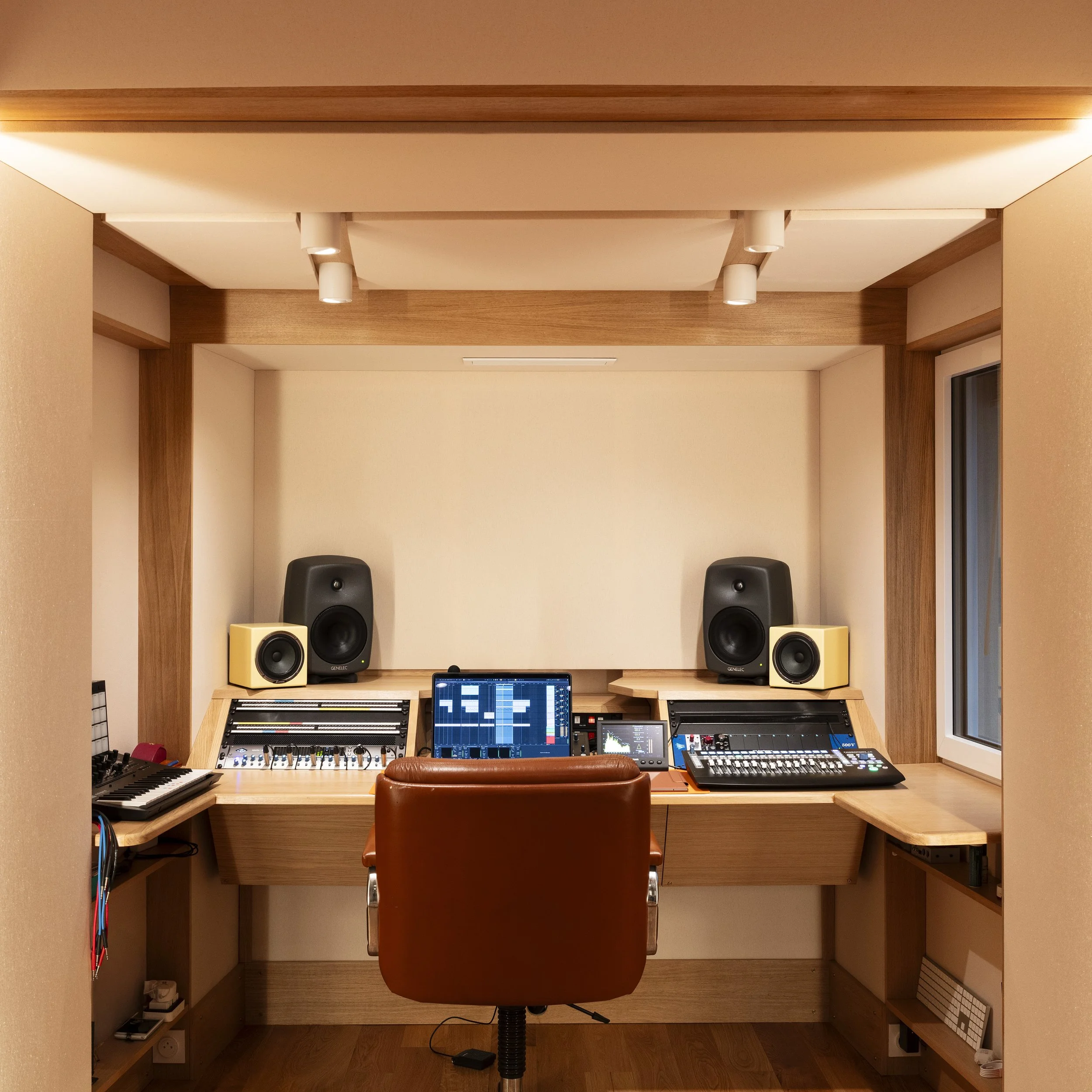
After Touch by Red House
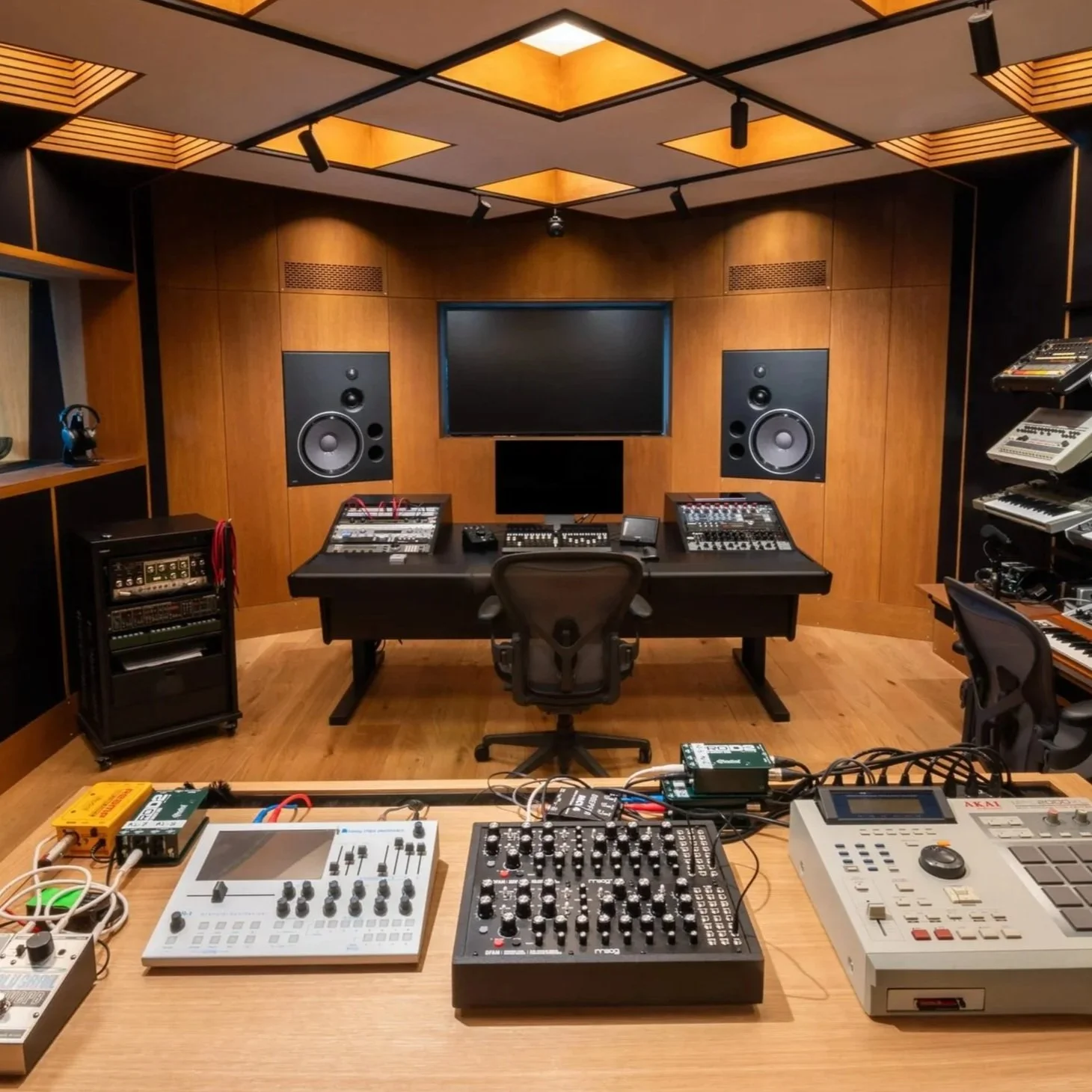
After Now by Red House
| Feature | Home Recording Studio | Professional Recording Facility |
|---|---|---|
| Budget Priorities | Versatile, "all-in-one" gear (USB mics, entry-level interfaces) for general use. | High-end signal chains (discreet preamps, dedicated converters) for maximum sonic depth. |
| Scalability | "Plug-and-play" devices with limited connectivity for small setups. | Modular systems using standardized networking (Dante, MADI) for complex, multi-room routing. |
| Room Limitations | Monitors often suffer from poor "translation" due to untreated or small spaces. | Calibrated environments with expert acoustic treatment and DSP room correction for total accuracy. |
| Overall Philosophy | Focus on accessibility and convenience for independent creators. | Focus on uncompromising reliability and consistent, world-class results through specialized consulting. |
The Most Common Equipment Mistakes in Studio Setup
Building a high-end studio is a complex process where even small oversights can lead to costly disappointments.
Here are the most frequent pitfalls to avoid:
Overspending on Microphones: Many creators believe an elite microphone is a shortcut to professional sound. However, a top-tier mic cannot reach its full potential without a premium preamp and high-quality converters to back it up.
Ignoring Acoustics: Assuming that expensive hardware can compensate for a poor-sounding room is a major error. Even the best microphone will capture reflections, standing waves, and "boxiness" if the environment isn't professionally treated.
Poor Monitoring Placement: Placing speakers directly against walls or in corners creates a distorted low-end. Without proper calibrated placement (like the equilateral triangle) and isolation pads, you risk making bad mixing decisions based on inaccurate sound.
Underestimating Room Treatment: Relying on thin foam or makeshift solutions like egg cartons is a common mistake. Professional results require dense, scientific materials like rockwool and bass traps to manage the full frequency range, especially the low-end.
Why Acoustic Design Matters More Than Equipment
It is a common misconception in the audio world that high-end gear is a shortcut to a professional sound. In reality, even the most legendary microphones and monitors are at the mercy of the room they are placed in. Without a balanced acoustic environment, your equipment will simply reproduce the flaws of your space with greater detail. This is where the bridge between hardware and high-fidelity sound is built.
At Red House, we believe that the room is the most important instrument in your studio. Our approach to acoustic consulting ensures that your investment in professional recording studio equipment isn't wasted on a poor acoustic foundation. We specialize in transforming raw spaces into precision-tuned environments where your gear can perform at its theoretical limit.
Planning a recording studio ?
How to Build a Scalable Recording Studio Setup?
A professional studio is rarely "finished"; it is an evolving ecosystem. The key to a smart investment is ensuring that your core infrastructure, from your foundational recording studio chair to your signal chain, doesn't become obsolete as your needs grow.
Future Upgrades: When selecting core components like audio interfaces, prioritize those with expandable I/O (such as ADAT or MADI). This allows you to add more preamps or outboard gear later without replacing your primary unit.
Hybrid Analog/Digital: The most successful modern studios leverage a hybrid approach. By combining the tactile warmth of analog hardware (preamps, EQs) with the surgical precision of digital software, you create a workflow that is both flexible and sonically superior.
Modular Systems: Think of your studio in modules. Start with a world-class vocal chain (Mic > Preamp > Interface) and expand into specialized instrument tracking or multi-channel mixing as your client base diversifies.
Workflow-driven Layout: A scalable setup is only as good as its accessibility. Center your workspace around a functional desk studio recording workstation and implement patch bays and organized cable management from day one to ensure that adding a new piece of gear takes minutes, not hours of troubleshooting.
Recording Studio Equipment for Different Studio Types
The "perfect" gear list depends entirely on your primary output. Each specialized environment requires a different technical focus:
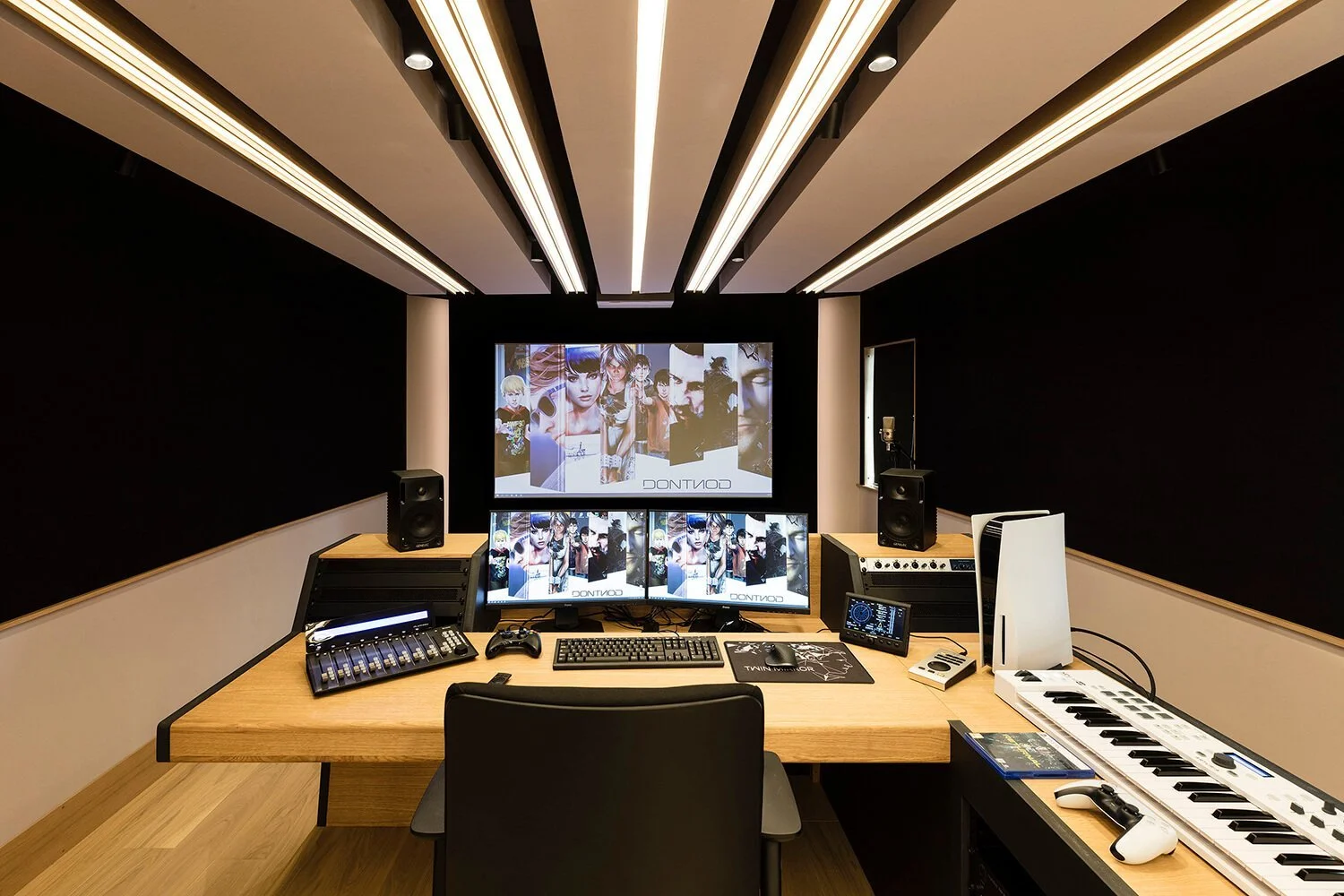
Music Production Studios
In production-focused spaces, the emphasis is on creative speed and MIDI integration. High-end virtual instruments, versatile controllers, and near-field monitors with accurate low-end are essential for crafting modern beats and arrangements.
Vocal Recording Studios
For vocal-centric facilities, the vocal chain is king. A premium large-diaphragm condenser microphone paired with a "character" preamp and a dedicated acoustic booth ensures that every breath and emotion is captured with clinical clarity.
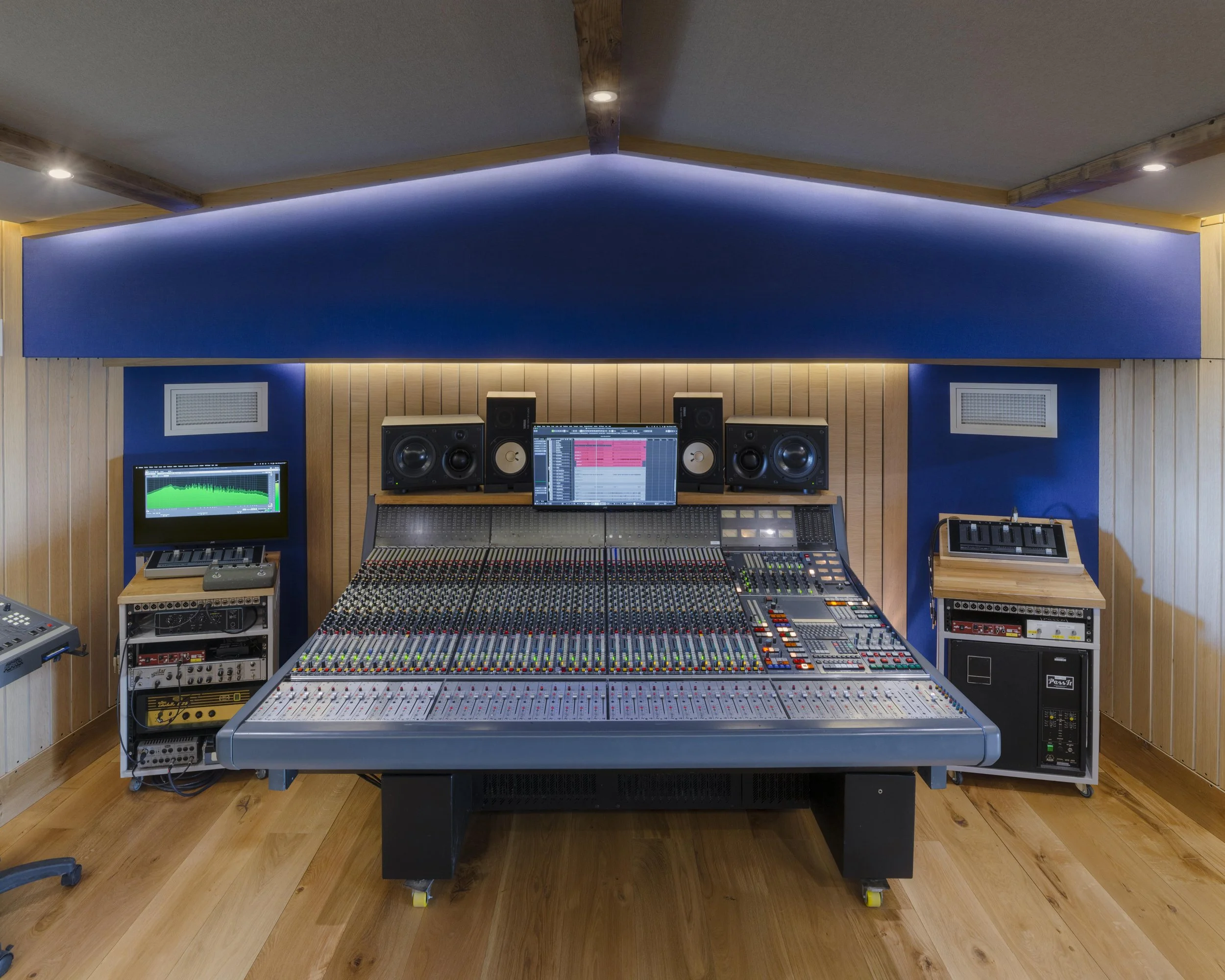
Podcast Studios
Podcast setups prioritize voice intelligibility and ease of use. Broadcast-style dynamic microphones (like the SM7B), multi-channel mixers with integrated phone-call routing, and specialized boom arms are the hallmarks of a professional podcasting environment.
Commercial Tracking Rooms
Large-scale commercial rooms require high track counts and massive connectivity. These facilities invest heavily in high-SPL microphones for drums, extensive headphone distribution systems for bands, and large-format consoles to manage complex signal routing.
How Much Should You Budget for Recording Studio Equipment?
Understanding the financial landscape is crucial for a sustainable business model. Here is a general breakdown of what to expect at different tiers:
Entry-Level ($1,500 - $5,000): Focuses on a solid "prosumer" interface, a versatile condenser mic, and basic acoustic treatment. Ideal for high-quality demos and solo content creation.
Semi-Pro ($5,000 - $20,000): Moves into specialized outboard gear, a diverse mic locker, and dedicated studio monitors. At this level, acoustic consulting becomes a mandatory part of the budget to justify the hardware cost.
Professional ($20,000+): This tier involves high-end AD/DA conversion, premium analog consoles or summing mixers, and structural acoustic design. At this level, every piece of equipment is chosen for its specific "sonic fingerprint" and long-term reliability.
Red House helps clients make the most of their budget by avoiding “gimmicky” purchases in favor of durable equipment.
Ready to Build a Professional Recording Studio?
Recording studios equipment: frequently asked questions
-
To build a functional home recording studio, you need a few core pieces of professional recording studio equipment. At the heart of every setup is the Digital Audio Workstation (DAW), such as Pro Tools, Ableton Live, Logic Pro, or FL Studio, running on a reliable computer. You’ll need a USB audio interface (like the Focusrite Scarlett 2i2) to connect your microphones—typically a condenser microphone for recording vocals and a dynamic microphone like the Shure SM57 for amps or drums.
Additionally, you must have studio headphones or studio monitors (such as KRK Rokit or Yamaha speakers) for accurate playback. Don’t forget the basics: XLR cables, a mic stand, and a pop filter to ensure a clean recording sound.
-
Yes, you can absolutely create professional recording results with a streamlined studio setup. Many modern hits are produced using just a MIDI controller, a high-quality audio interface, and plugins. While a massive mixing console and racks of outboard gear are impressive, a skilled audio engineer can achieve a radio-ready mastered track using software like Cubase or Studio One.
The key is "quality over quantity." High-quality preamps, a solid condenser mic, and a well-treated recording room matter more than having dozens of cheap synths or pedals.
-
The cost varies wildly depending on your goals. A beginner setup for music production using an interface like a PreSonus or M-Audio, a USB microphone, and GarageBand or Reaper can cost under $500.
However, a professional recording studio often invests thousands into industry standard tools like Universal Audio Apollo interfaces, Avid Pro Tools HD systems, and high-end microphones from Rode or Audio-Technica. Beyond the gear, you must also budget for soundproofing, bass traps, and acoustical treatment, which are vital for a true control room environment.
-
In today's music industry, digital audio is often more than enough. Digital recording offers incredible flexibility with sequencer tools and audio editing capabilities that analog tape simply cannot match.
That said, many sound engineers still love analog equipment for its "warmth." You might integrate a tube preamp, a solid state compressor, or a hardware equalizer to add character before the signal hits the converter. Ultimately, whether you use vintage outboard gear or modern plug-ins from Native Instruments or Waves, the "ear" of the recording engineer is what defines the final mixes.
-
Most experts agree that acoustics and the recording room environment matter more than the price of your microphone preamp. Even the best condenser microphone will pick up unpleasant reflections if the isolation is poor or the booth isn't treated.
Investing in soundproof materials, acoustic instruments placement, and a dedicated vocal booth will yield better results than buying a more expensive digital recorder. If your studio record environment is acoustically balanced, your reference monitors will provide a much more accurate representation of your audio recording.
-
Choosing an audio interface depends on your specific needs for music creation. If you are a singer-songwriter, a simple 2-channel USB audio interface with phantom power for your mic is sufficient. If you are tracking a full drum kit, you will need a multitrack interface with multiple XLR inputs and perhaps ADAT connectivity for expansion.
Consider the connection type—USB, Thunderbolt, or the older Firewire—and ensure compatibility with your workstation. Brands like Universal Audio, Focusrite Saffire Pro, Tascam, and Behringer Xenyx offer various options for every level, from podcasting to high-end audio engineering. Always check the frequency response and the quality of the analog to digital converters to ensure the highest fidelity for your recording session.