
Large Open Modern Recording Studio: Design Ideas and Layout
Published on September 8, 2026
Reading time: 5min
By Lucas Medus - Studio & Acoustics Expert at Red House
Sommaire
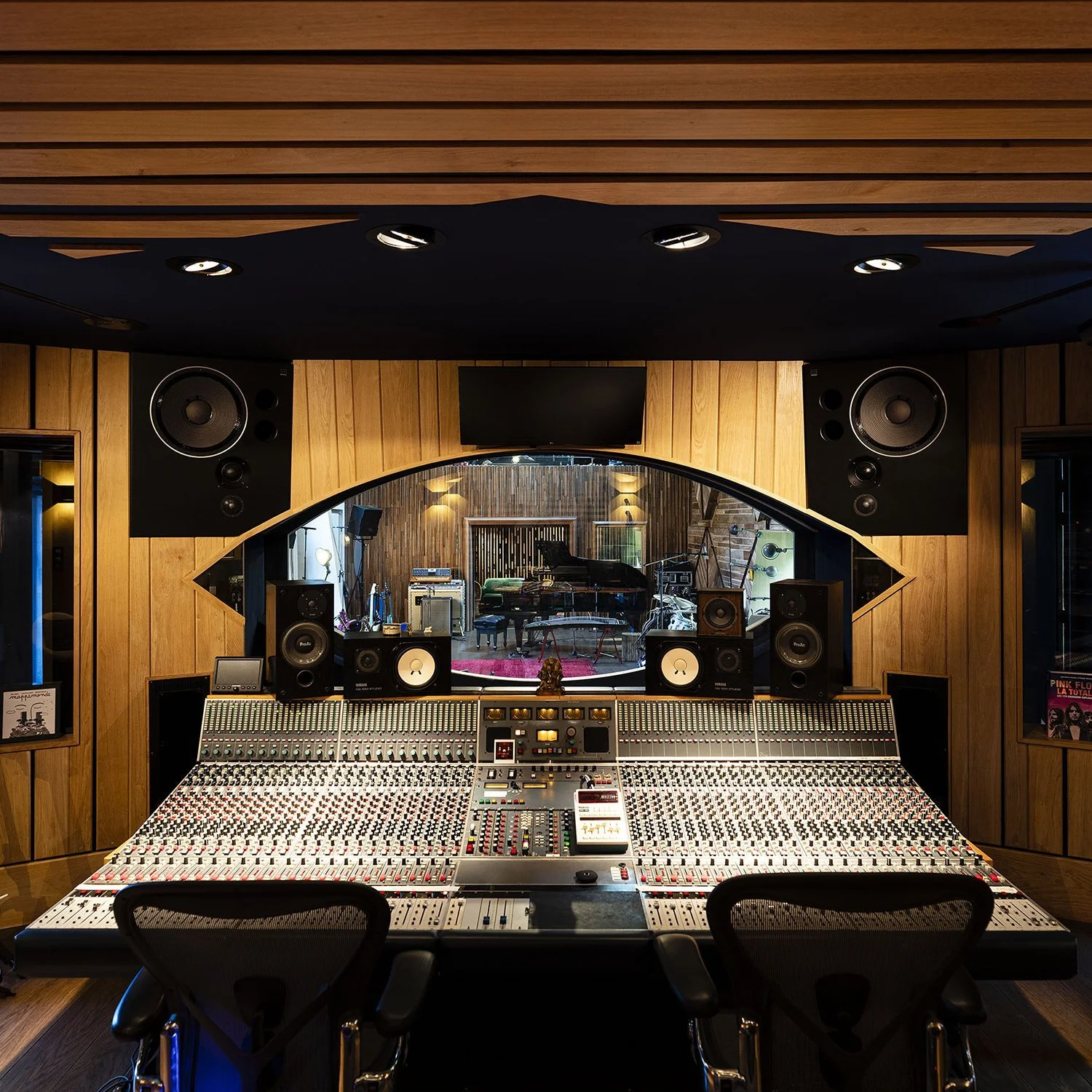
Modern recording studios are moving away from dark, enclosed rooms to embrace open, flexible environments.
Designing a large-format space requires a holistic approach balancing precise acoustics with smooth workflow, natural light, and overall artist comfort.
Discover how smart spatial layout enhances creativity and seamless collaboration, and explore innovative recording studio ideas to transform your high-end production space.
What is a large open modern recording studio?
A large open modern recording studio redefines traditional studio architecture by replacing cramped, isolated rooms with expansive, multi-functional spaces. Unlike conventional setups or compact garage recording studio projects that strictly separate the control room from performance areas, this modern approach prioritizes fluid movement, visual connection, and adaptable acoustics. By merging high-performance acoustic treatment with open layout design, natural lighting, and ergonomic zones, these studios foster organic collaboration while maintaining the rigorous audio control required for professional music production.
Large open modern recording studio: the best design ideas
Transforming a garage into a functional recording environment requires a clear two-step strategy: stopping sound transmission (soundproofing) and controlling sound behavior inside (acoustic treatment).
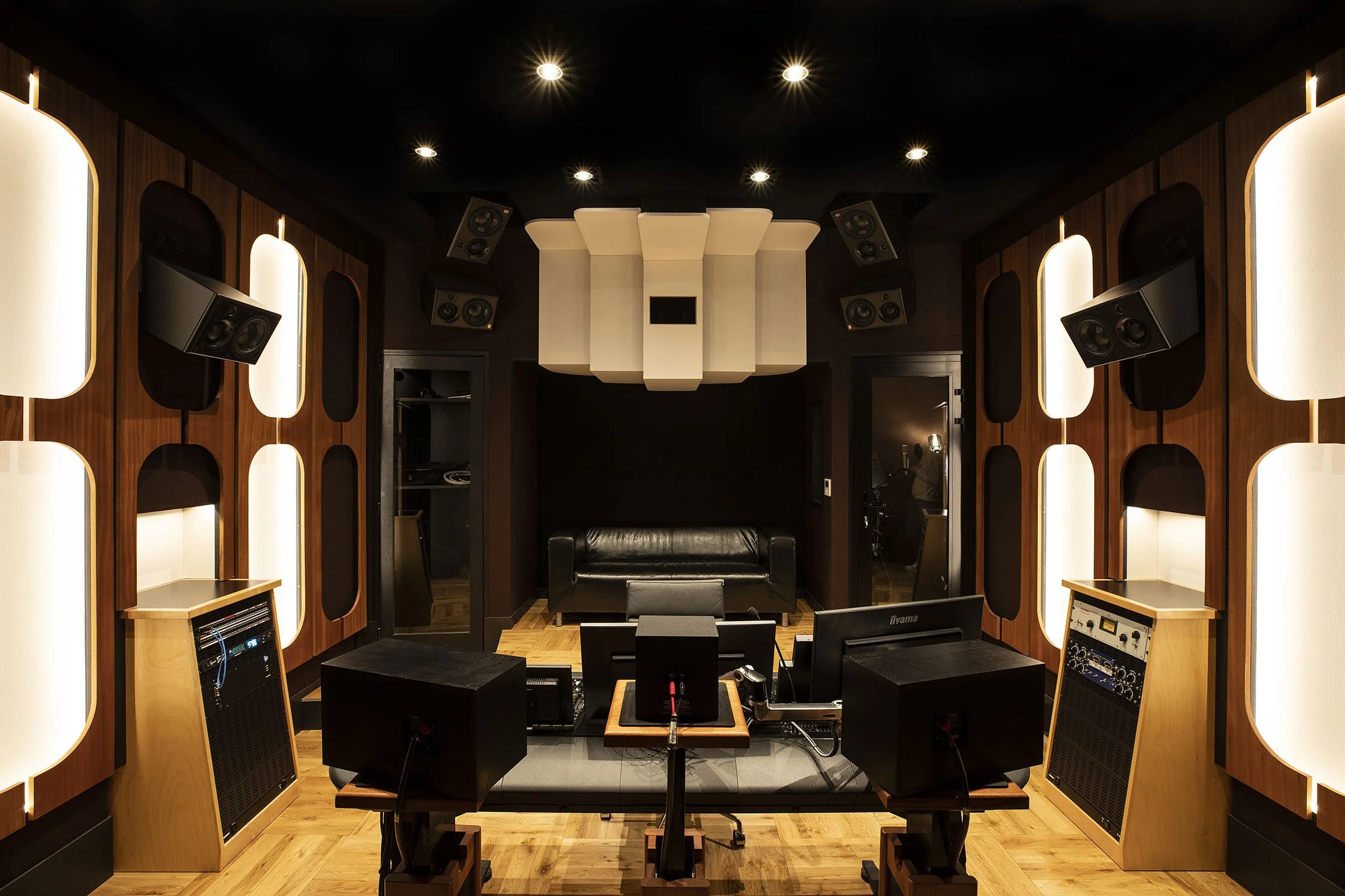
Open recording studio with central control room
Positioning the mixing desk at the exact acoustic center creates ideal structural symmetry and precise stereo imaging. This layout eliminates phase issues caused by asymmetrical side walls and maximizes monitoring accuracy.
Why it works: Perfect left-to-right acoustic balance allows sound waves to reflect evenly, guaranteeing reliable monitoring for mixing and mastering.
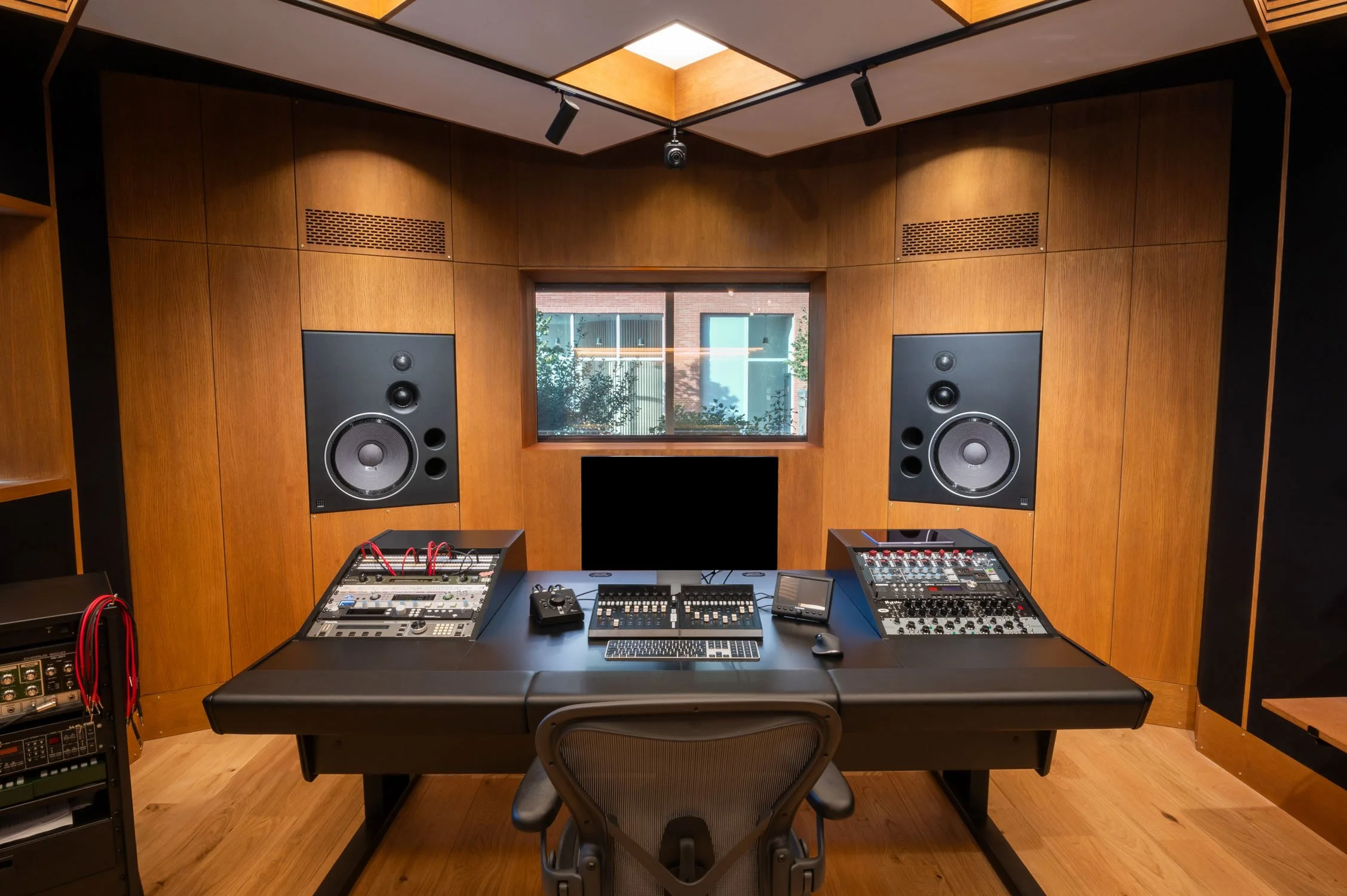
Recording studio with wood acoustic design
Incorporating natural timber wall paneling and slatted diffusers provides organic sound scattering while taming high-frequency flutter echoes.
Why it works: Wood delivers a controlled diffusion response that keeps the room sounding lively yet clear, creating a warm aesthetic and a comfortable sonic environment.
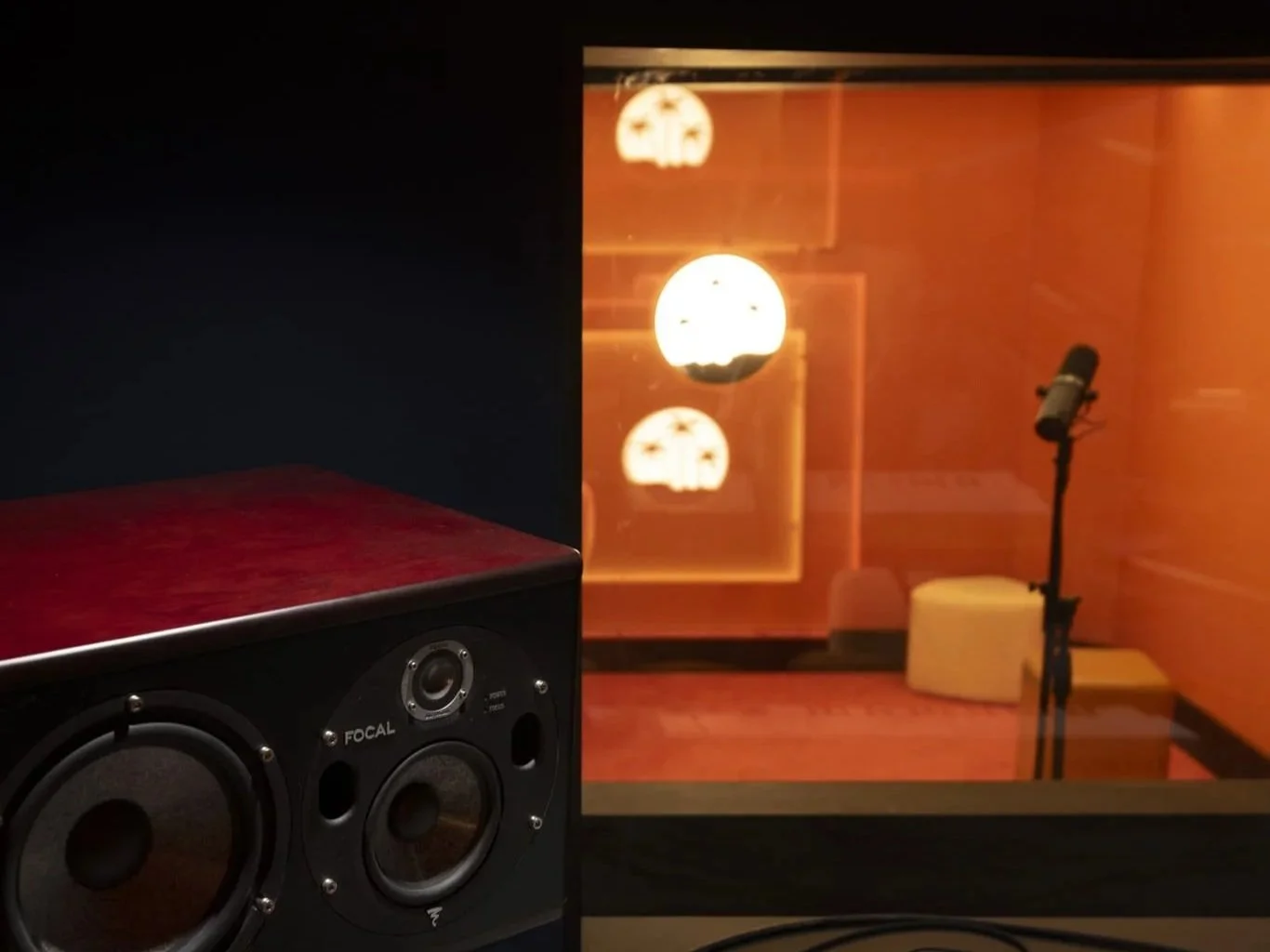
Open studio with separate recording booth
Combining an expansive main room with a dedicated soundproof vocal or amp booth offers maximum versatility.
Why it works: Musicians can record live together in the open space while isolating high-SPL instruments or vocals in the booth, avoiding signal bleed without sacrificing visual connection.
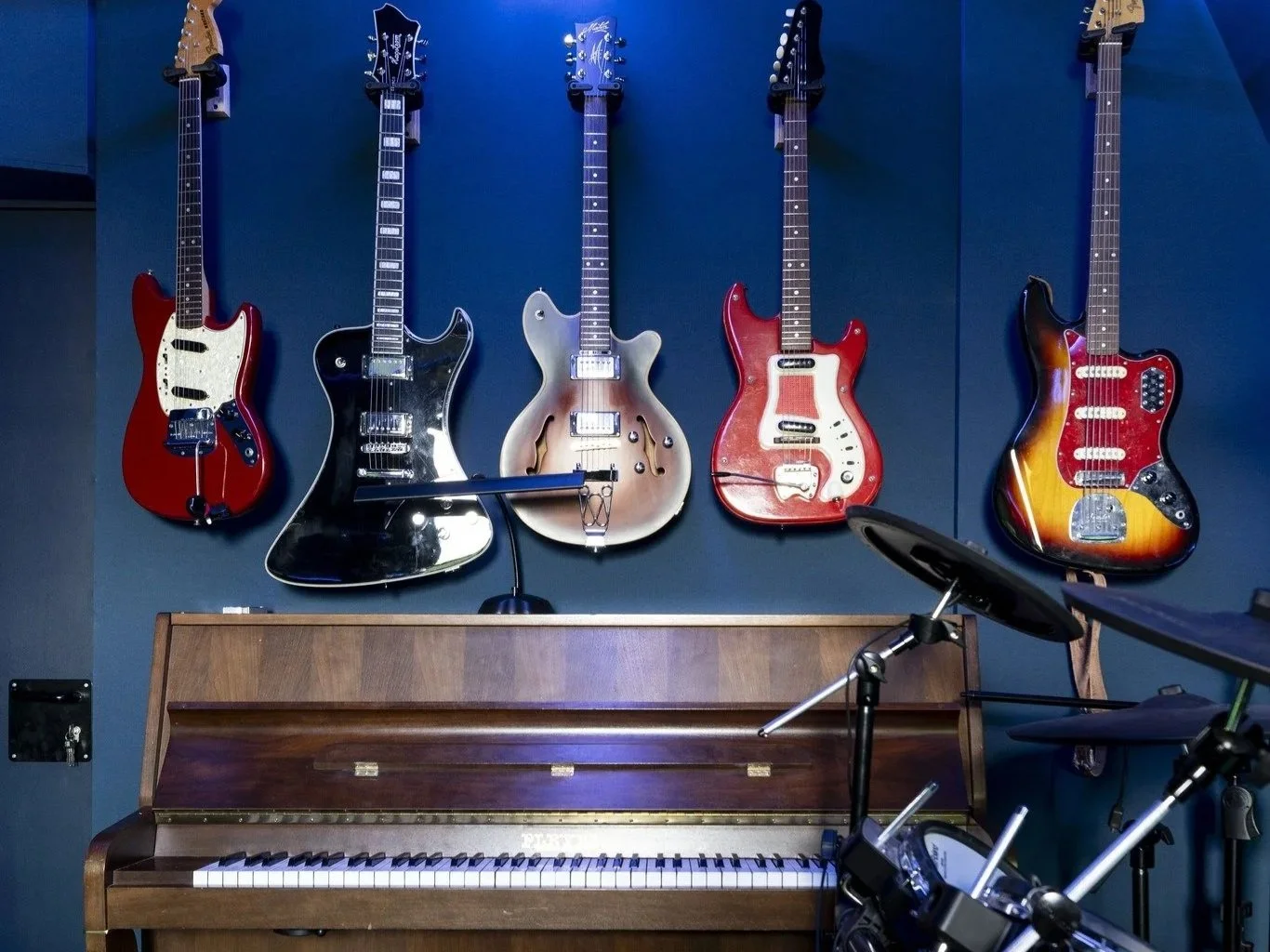
Recording studio with integrated instruments and gear
Designing custom wall mounts, racks, and accessible storage for guitars, synthesizers, and outboard hardware keeps instruments ready to play.
Why it works: Removing physical friction during creative sessions encourages spontaneous experimentation and keeps the workflow dynamic.
Want to design your own custom recording studio?
Red House supports you from concept to final build, combining acoustic expertise, design and technical integration to create a studio tailored to your needs.
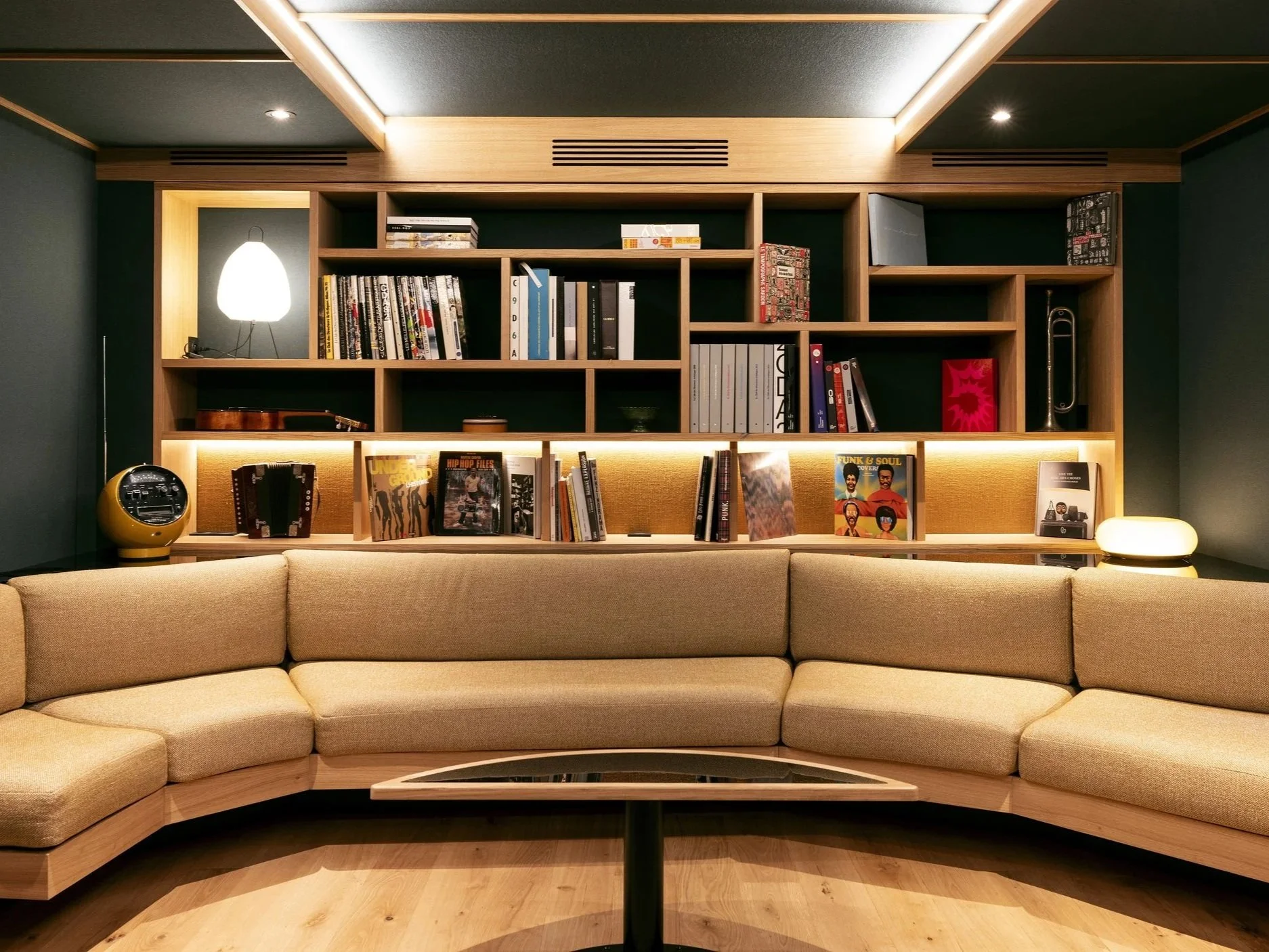
Studio with lounge and creative space
Integrating a dedicated lounge zone with comfortable seating directly into the main studio volume allows artists to relax between takes without disconnecting from the session.
Why it works: Long tracking sessions demand mental breaks; an integrated lounge keeps fatigue low while maintaining creative momentum.
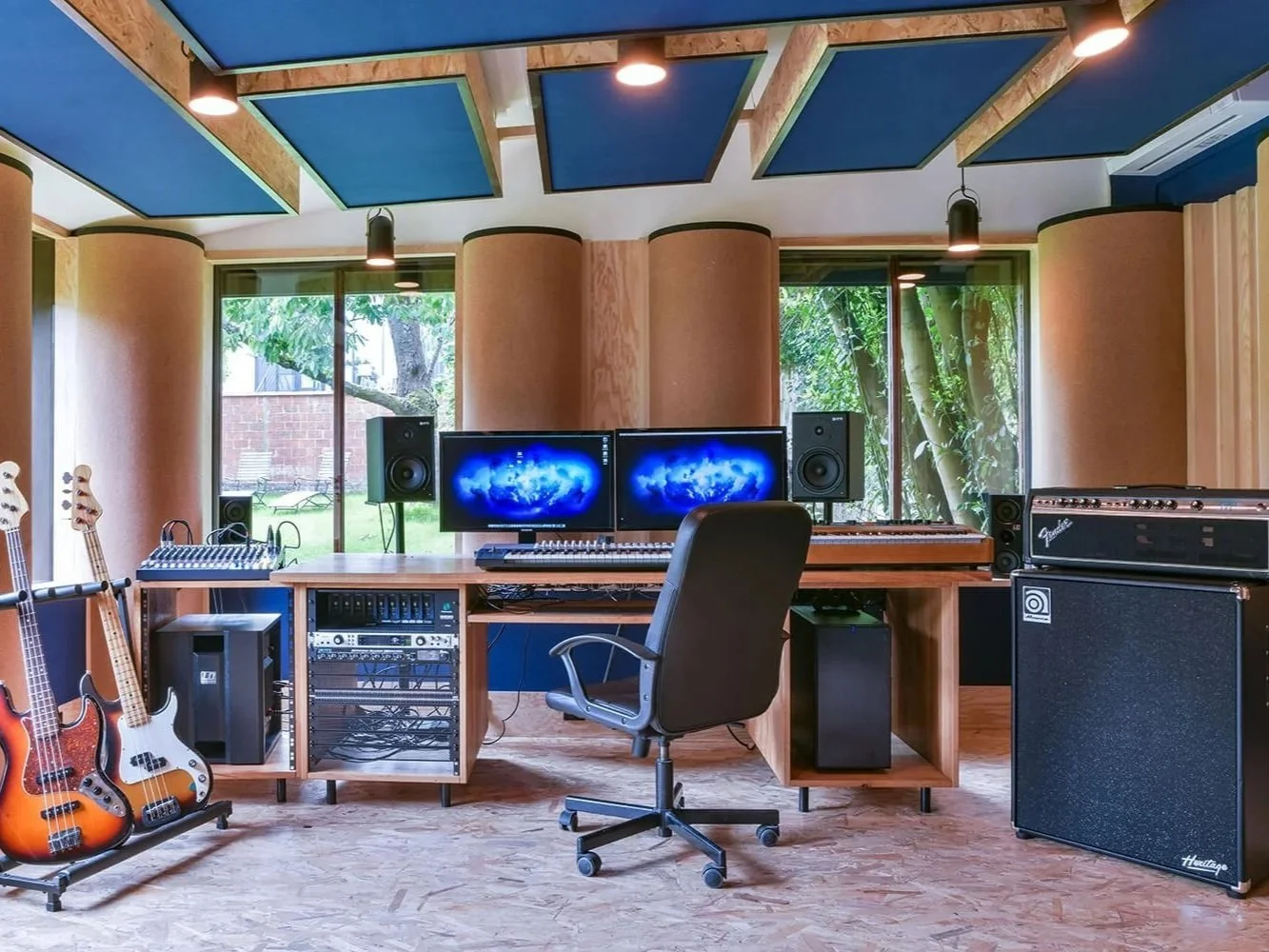
Open studio with natural light
Large window panels treated with acoustic double-glazing allow natural daylight into the workspace while keeping exterior noise out.
Why it works: Daylight reduces eye strain, maintains circadian rhythm during long hours, and creates an inspiring environment for production.
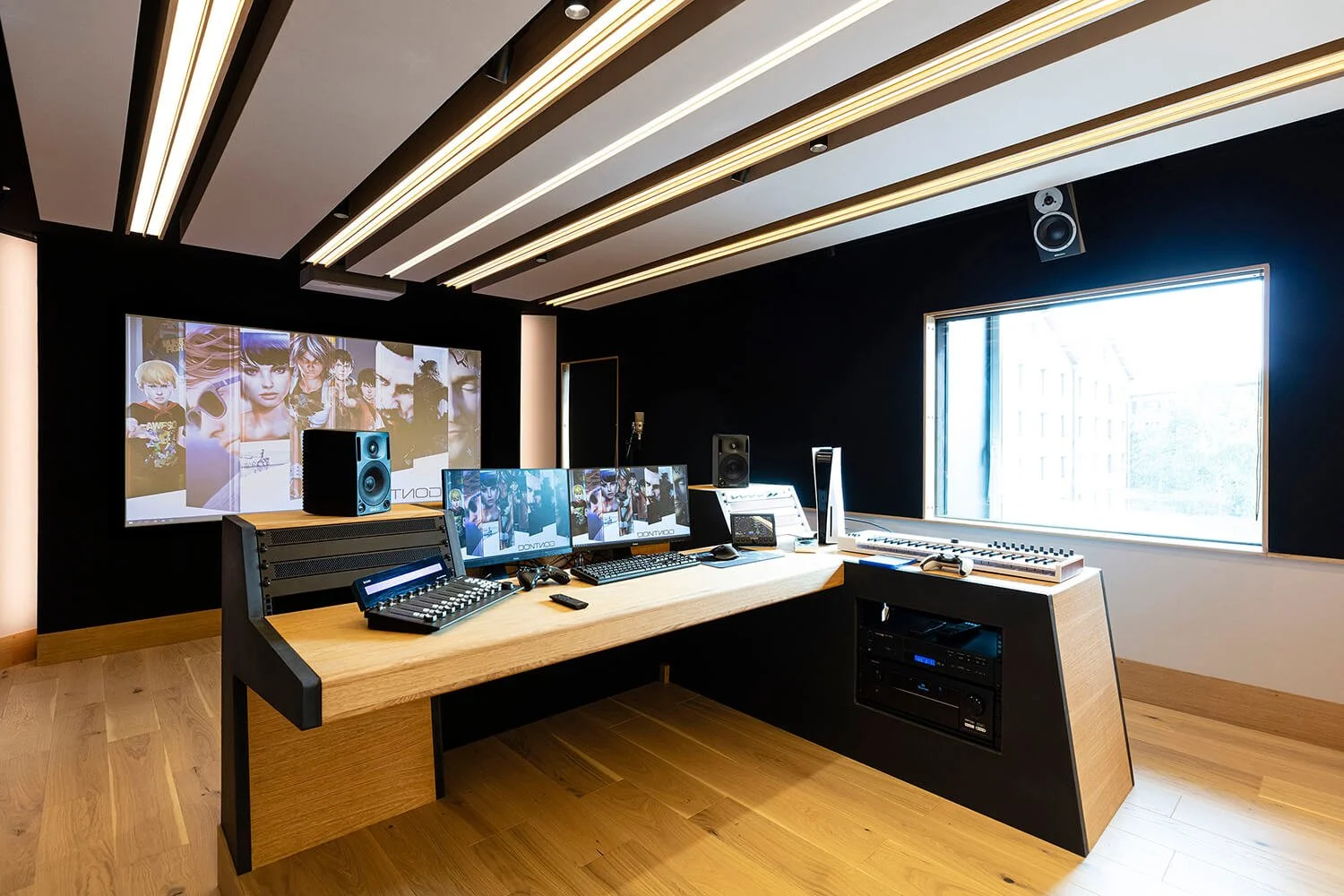
Hybrid recording studio layout (production + recording)
A hybrid design merges DAWs, hardware synths, and live recording zones into a single seamless floor plan.
Why it works: Modern producers often write, engineer, and mix simultaneously; a hybrid layout eliminates room-switching and accelerates production.
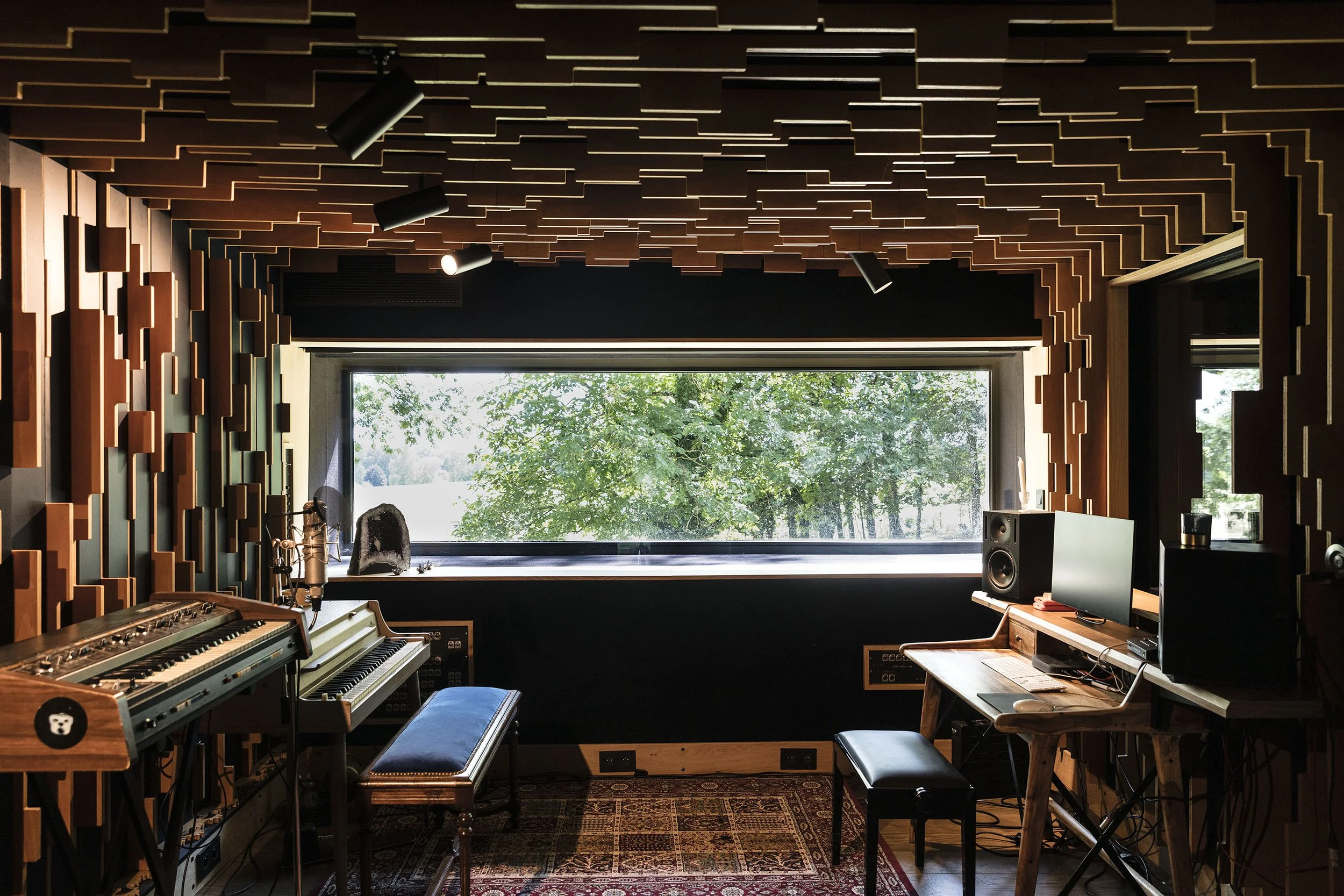
Seamless acoustic treatment integration
Integrating acoustic absorption and diffusion directly into architectural features (slanted ceilings, concealed bass traps) prevents flutter echo without making the space feel clinical.
Why it works: Hidden low-frequency control maintains a sleek design while keeping bass response flat across the room.
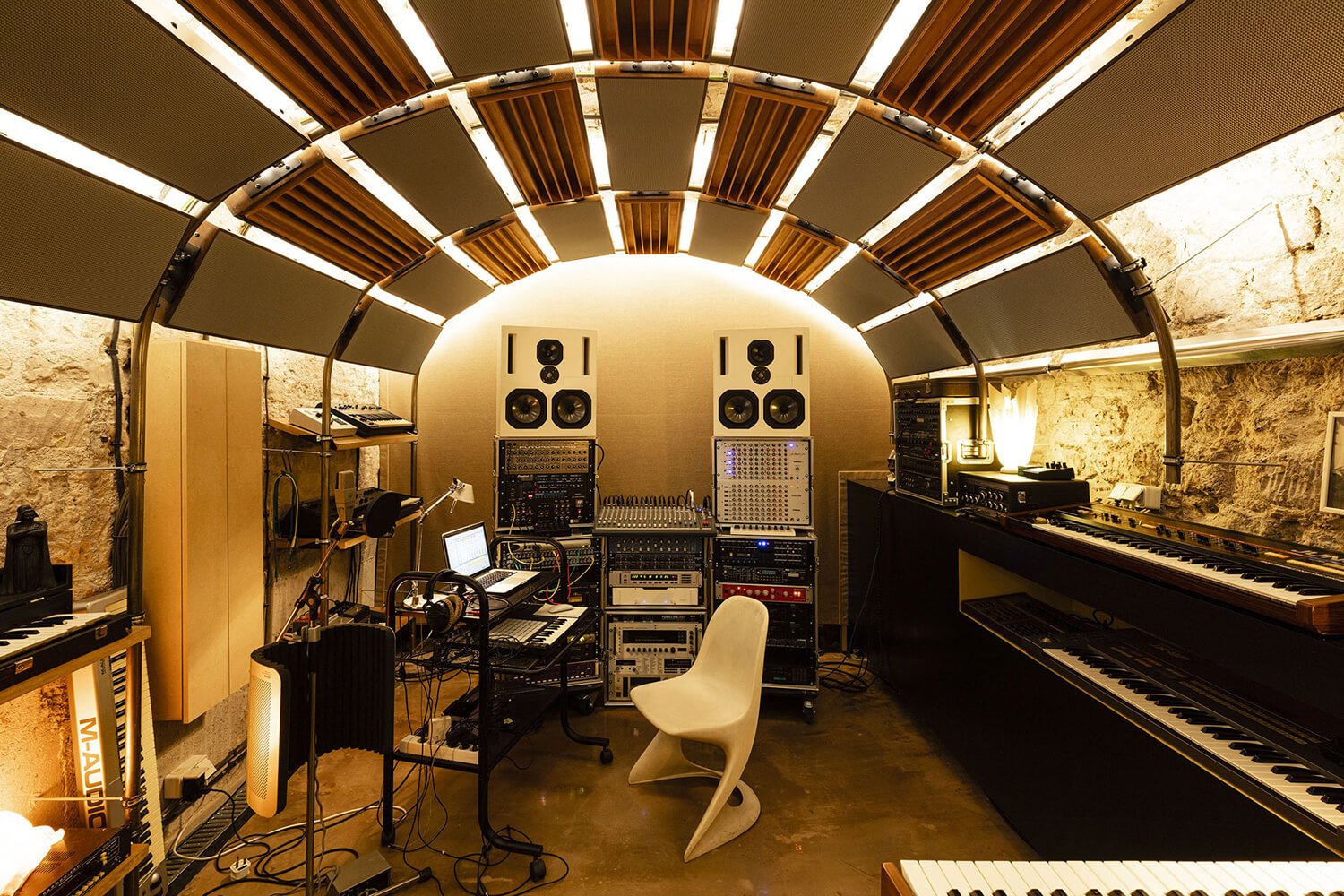
Flexible zoning with mobile acoustic baffles
Using movable acoustic gobos and partitions allows the studio layout to reconfigure on the fly for solo artists, full bands, or video shoots.
Why it works: Adaptable boundary controls allow instant tuning of live room reverberation time according to instrument type.
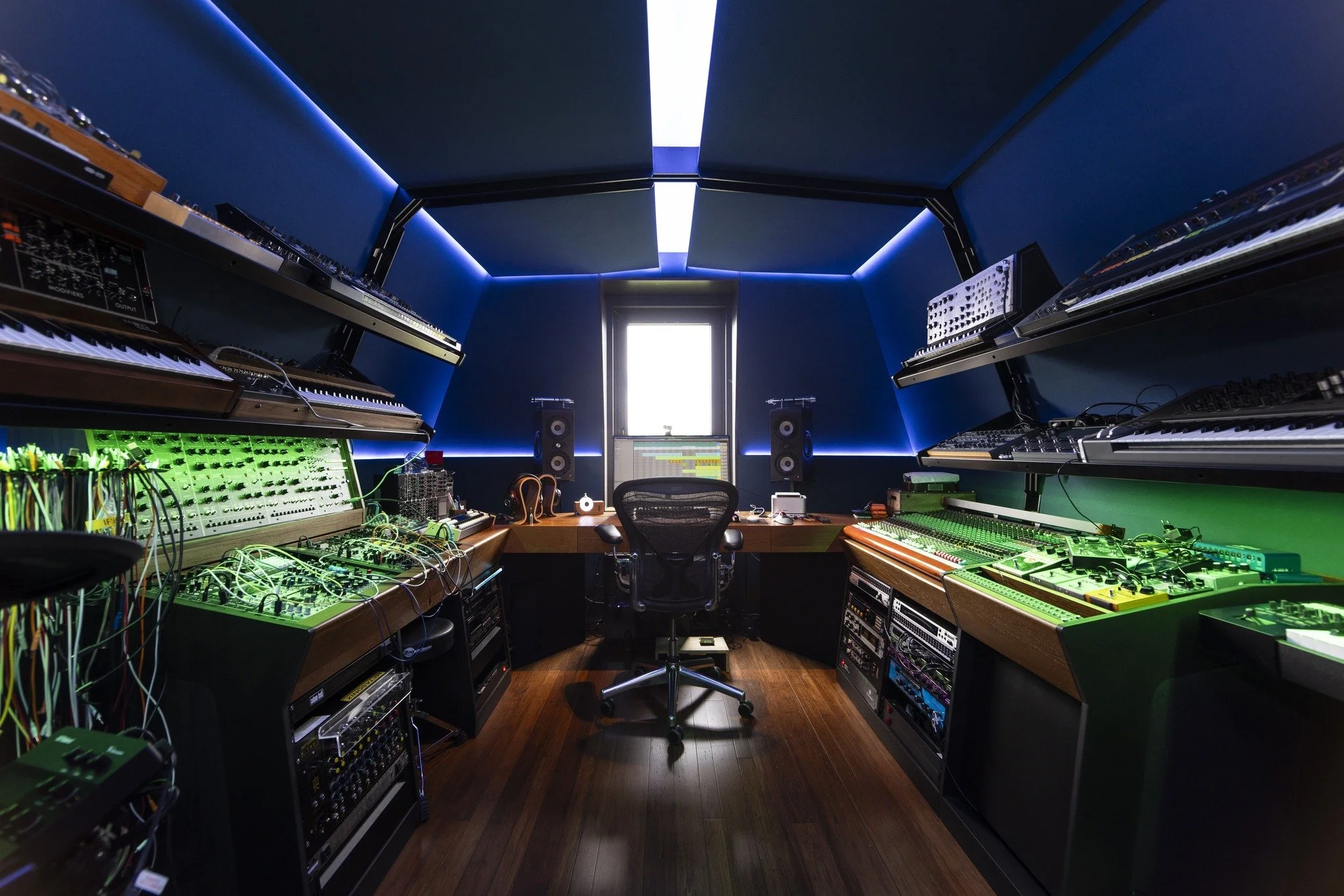
Architectural LED mood lighting
Custom indirect LED strips and dimmable accent lighting create tailored visual atmospheres that match the mood of the recording session.
Why it works: Lighting directly influences mood and focus, helping artists stay relaxed or energized as needed.
Why open studio design is becoming the standard?
The shift toward open studio architecture reflects a fundamental change in how modern music is created, recorded, and produced. Traditional studio setups defined by thick isolation doors, tiny live booths, and rigid boundaries between engineer and artist often build physical and creative walls. Open studio design removes these barriers to align with contemporary workflows:
Enhanced creative collaboration: Removing the physical separation between the control room and tracking area fosters immediate communication, spontaneous creative decisions, and a shared group energy while recording at studio sessions.
Modern production workflows: With hybrid setups, modern producers often engineer, write, and mix simultaneously. An open floor plan keeps all instruments, synths, and monitoring controls immediately accessible without room-hopping.
Superior room volume for acoustics: Larger open volumes naturally distribute low-frequency room modes better than small, cramped booths, leading to clearer, more predictable bass response when properly treated—a key advantage over finding a turnkey recording a studio for sale that may lack custom spatial optimization.
Aesthetic and psychological comfort: Flooding large spaces with natural light, open sightlines, and integrated lounge areas significantly reduces fatigue, helping artists and engineers stay inspired during long sessions.
Ready to design a large open modern recording studio that truly fits your creative workflow?
Red House supports you from concept to final build, combining acoustic engineering, architecture and design to create a studio that performs as good as it looks.
Large open modern recording studio: frequently asked questions
-
Yes, an open layout can deliver exceptional sound quality. Larger air volumes naturally reduce the buildup of problematic low frequency resonance and standing waves compared to small rooms. When paired with proper acoustic treatment such as bass traps, acoustic panels, and strategically placed diffusers an open layout ensures a smooth frequency response across the entire recording space. Whether you are capturing a dynamic drum kit, tracking acoustic instruments, or setting up an orchestra, an open floor plan allows sound waves to decay naturally, giving your multitrack recording a rich, three-dimensional depth before any audio editing or mixing and mastering.
-
Managing room acoustics in an open layout relies on precise spatial zoning rather than rigid permanent walls. Audio engineers use custom mobile gobos, absorption screens, and heavy acoustic drapes to control reverberation and flutter echo around specific performance areas. Positioning the primary mixing console or digital audio workstation (DAW) in an acoustically symmetrical zone ensures accurate playback through your studio monitor setup. Additionally, placing a condenser mic or large-diaphragm condenser with a tight cardioid pickup patternsupported by a robust mic stand and pop filter helps capture pristine recording vocals or guitar amp tracks without unwanted bleed from other instruments.
-
Yes, soundproofing and isolation remain essential even in an open layout. While internal acoustics manage how sound behaves inside the room, structural isolation prevents external environmental noise from entering the recording facility and keeps loud sessions, like tracking a full drummer or cranked amps, from disturbing surroundings. High-end sound studios achieve this through floating floors, double-leaf wall structures, and heavy acoustic glass windows. For delicate voice over or quiet instrumental takes, many layouts complement the open tracking area with a dedicated vocal booth or isolated recording booth to ensure total silence during a recording session.
-
Building a professional recording studio with an open design typically ranges from $50,000 for a high-end project studio to over $500,000 for a commercial, state of the art audio studio. Costs depend heavily on structural acoustic construction, custom HVAC attenuation, and the integration of studio equipment. Beyond the architectural build, outfitting the space requires substantial investment in recording gear: high-end microphones (like a classic Neumann or Shure), preamps, a mixing board, premium audio interface units (such as Universal Audio or Focusrite Scarlett), outboard gear, and industry-standard studio software like Avid Pro Tools, Logic Pro, or Ableton Live.
-
Absolument. Combining live tracking, audio mixing, and client relaxation zones into a unified layout is a hallmark of modern music production. An open layout allows a music producer, studio engineer, and artist to interact freely without physical barriers. Musicians can move seamlessly from a comfortable couch to an analog synth, grand piano, or midi keyboard whenever inspiration strikes. This fluid environment speeds up the music creation process, simplifies playback review on monitor speakers, and creates a welcoming atmosphere for artists preparing their final tracks for a professional music submission to a recording label or distributor.