
The Best Recording Studio Desks for Your Setup
Published on September 10, 2026
Reading time: 8min
By Lucas Medus - Studio & Acoustics Expert at Red House
Sommaire
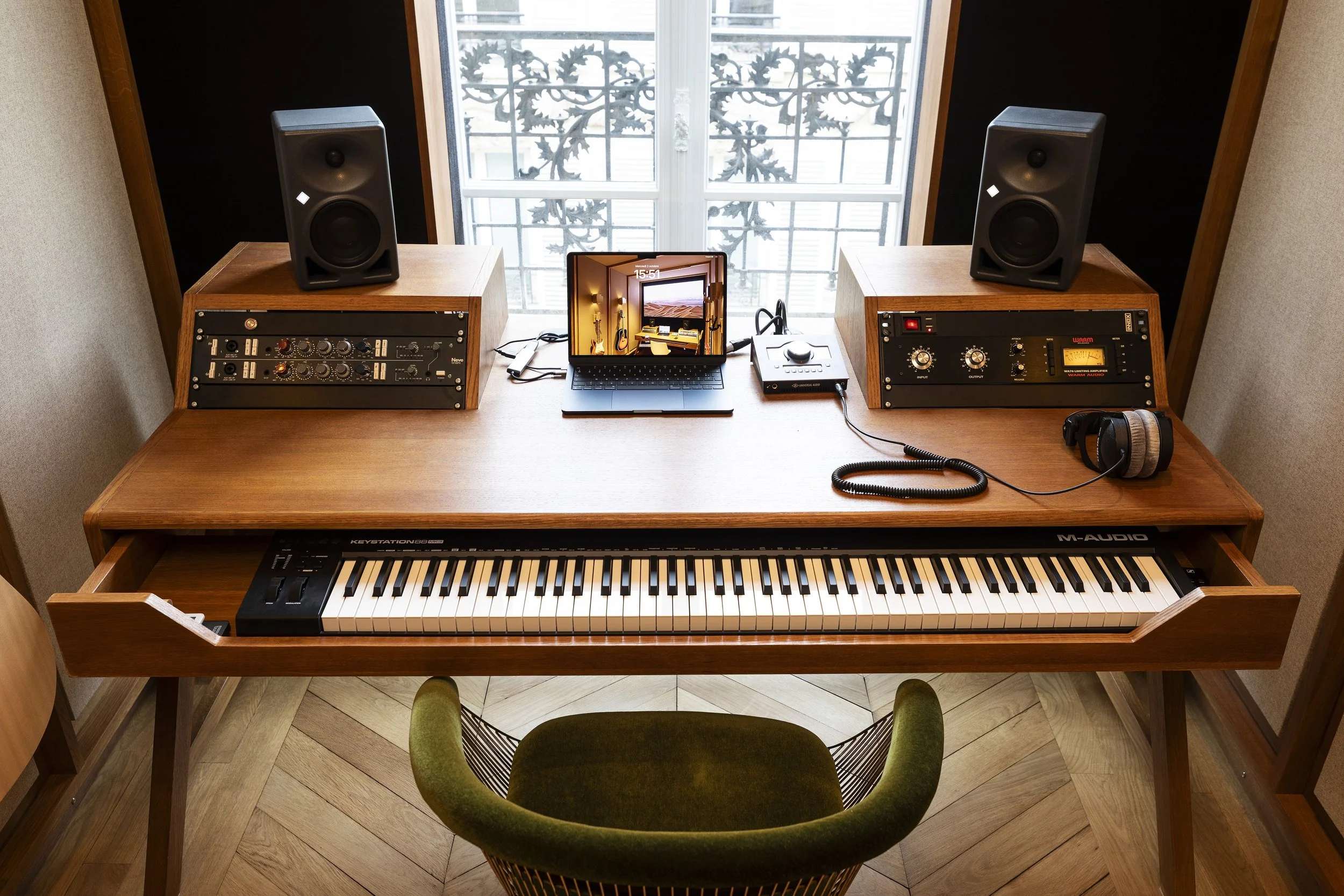
A professional studio desk is much more than a piece of furniture. It’s the absolute centerpiece of your workflow. Whether you’re configuring a compact home recording studio desk or a full-scale production suite, superior organization, smart ergonomics, and seamless gear accessibility directly impact your daily productivity and creative flow. From traditional setups to an adaptable standing recording studio table, finding the right workstation transforms how you produce, mix, and create music.
What is a recording studio desk and why does it matter?
A recording studio desk is a specialized workstation specifically engineered to integrate audio hardware, monitors, controllers, and cabling into a single cohesive environment. Unlike a standard office desk which only offers a flat surface, a dedicated studio desk is designed to optimize both acoustics and workflow.
In audio production and recording studio equipment, every detail counts. Standard furniture often creates unwanted acoustic reflections that distort your monitoring accuracy, while offering no solution for gear management. A dedicated studio desk addresses this by positioning studio monitors at the ideal ear-level height, managing acoustic reflections, and keeping rack units, keyboards, and cables instantly accessible. By placing your essential tools within arms' reach, it turns a scattered setup into a streamlined creative center.
The different types of recording studio desks
Home recording studio desk: Designed for compact spaces, balancing a reduced footprint with essential features like monitor stands and keyboard trays.
Standing recording studio table: An height-adjustable workstation that allows seamless switching between sitting and standing during long session hours.
Large studio workstation: Built for heavy-duty production environments, offering expansive surface area and maximum hardware storage.
Desk with rack integration: Features built-in 19-inch rack space to keep outboard gear, preamps, and audio interfaces organized and accessible.
Compact desk for small studios: Optimized for minimal room setups where every square inch matters, without sacrificing basic ergonomics
The best recording studio desk ideas for your setup
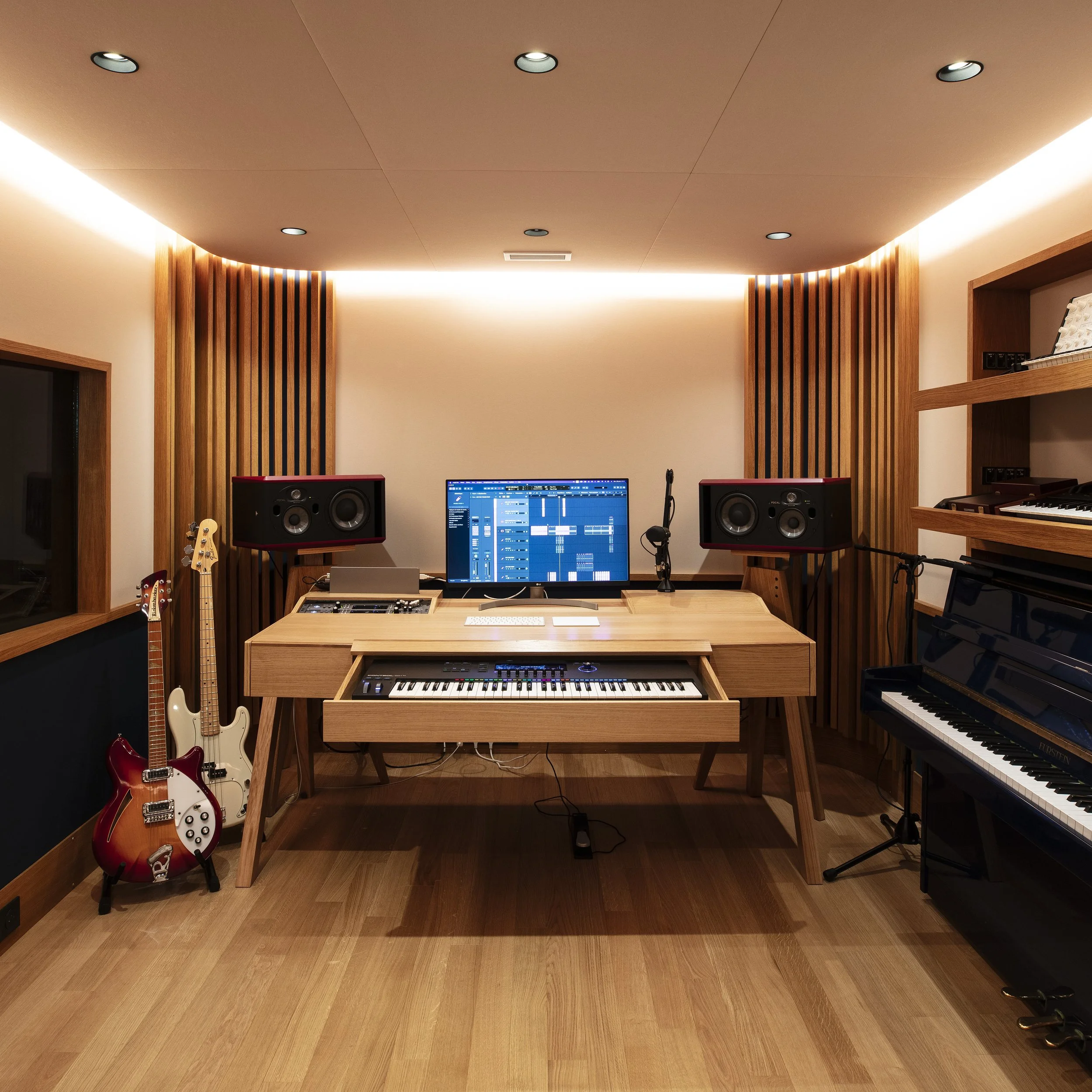
Minimal home recording studio desk setup
Idea: A streamlined, compact workstation focusing purely on laptop or desktop integration, primary audio interface, and nearfield monitors.
Benefits: Eliminates visual clutter, reduces physical friction, and delivers maximum efficiency without overwhelming limited room space.
Best usage: Ideal for beginners, home producers, beatmakers, and podcasters working in small bedrooms or shared living areas.
Want to design your own recording studio?
Explore our custom design solutions
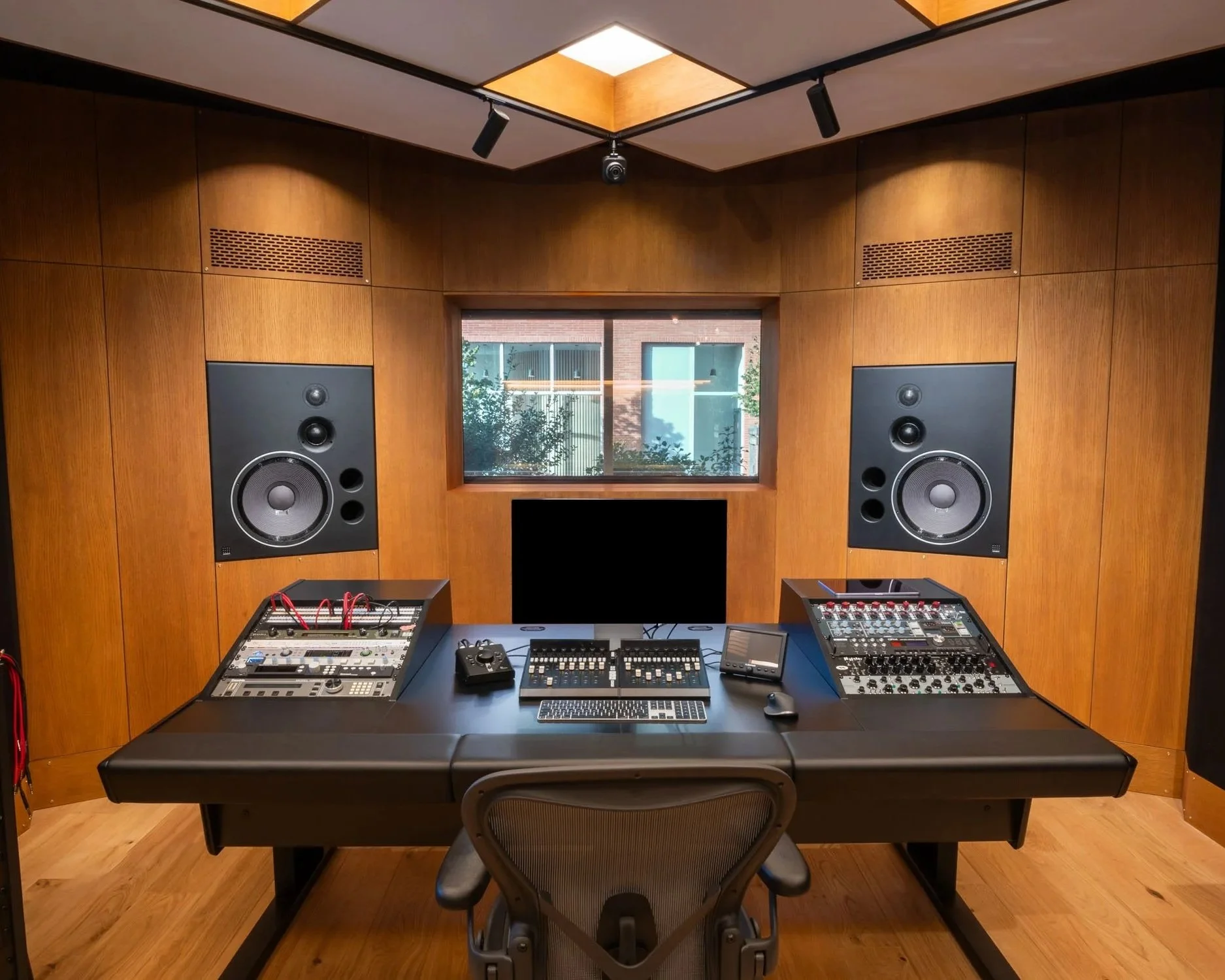
Large studio desk with rack integration
Idea: A professional-grade workstation featuring dedicated built-in rack slots (RU) directly within the engineer’s line of sight and reach.
Benefits: Provides lightning-fast workflow and professional organization by eliminating extra cable runs and keeping outboard gear instantly tweakable.
Best usage: Perfect for commercial facilities, mixing engineers, and advanced producers operating extensive hardware chains.
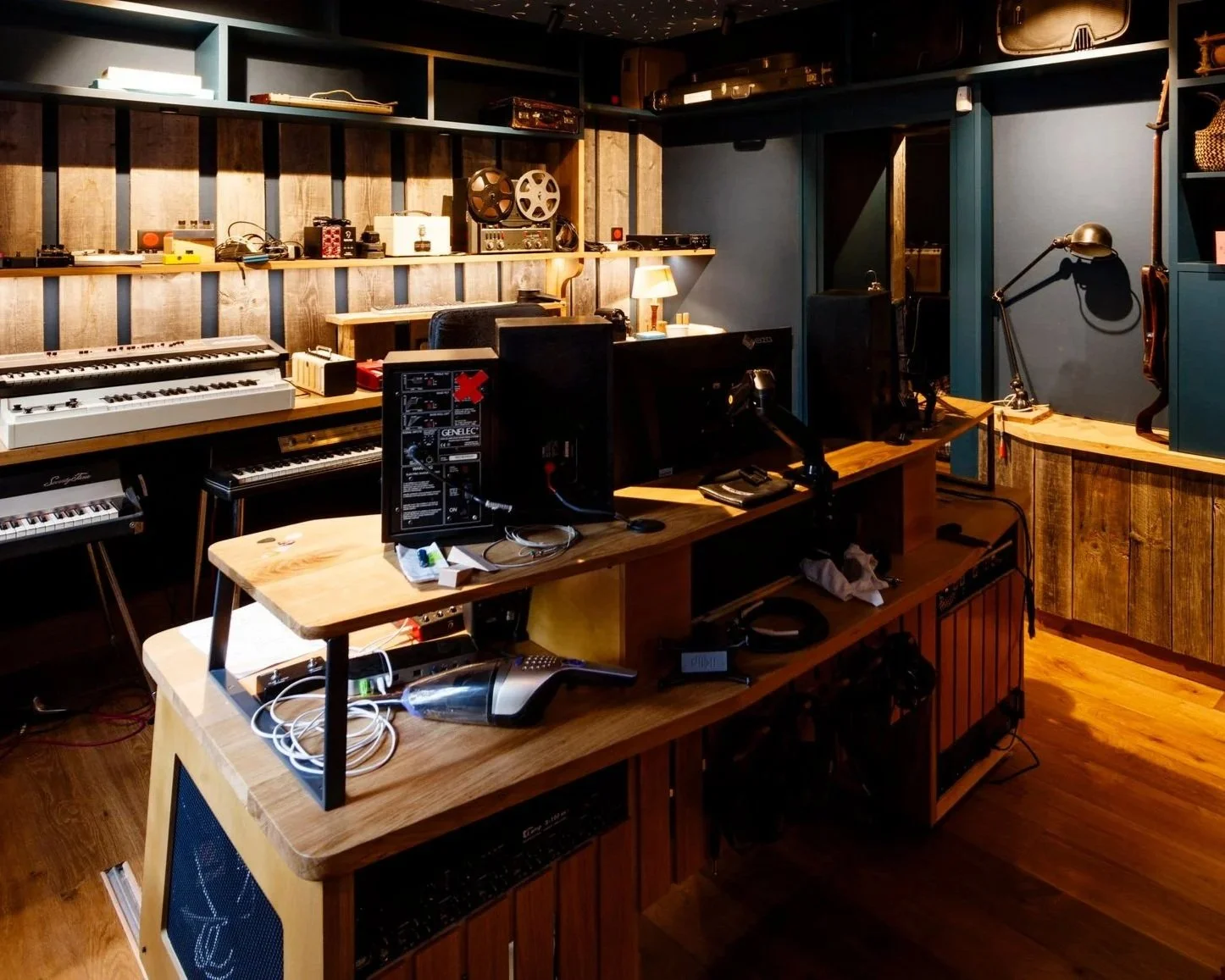
Standing recording studio table setup
Idea: An ergonomic height-adjustable studio workstation engineered to sustain heavy equipment loads while transitioning smoothly between positions.
Benefits: Alternating between sitting and standing drastically improves posture, reduces physical fatigue during marathon sessions, and boosts energy levels.
Best usage: Excellent for composers, arrangers, and sound designers who spend extended hours actively producing in the studio.
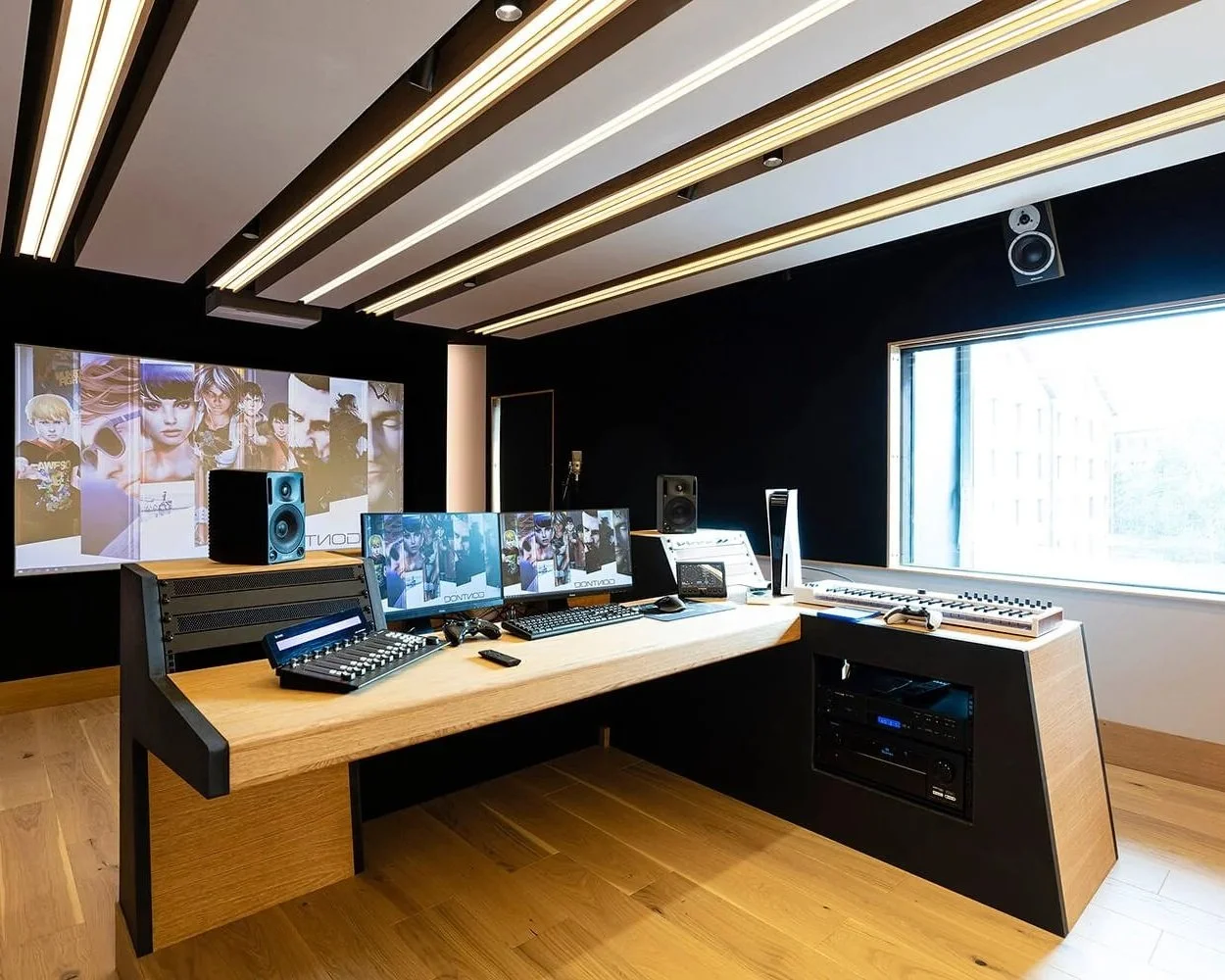
L-shaped recording studio desk
Idea: A corner-maximizing desk layout that separates mixing, synth/hardware control, and computer-based editing into distinct workspace zones.
Benefits: Perfect for multi-screen configurations, expanding usable physical real estate without pushing gear out of comfortable physical reach.
Best usage: Suited for advanced production environments, film scoring, and creators who blend heavy hardware control with digital workflows.
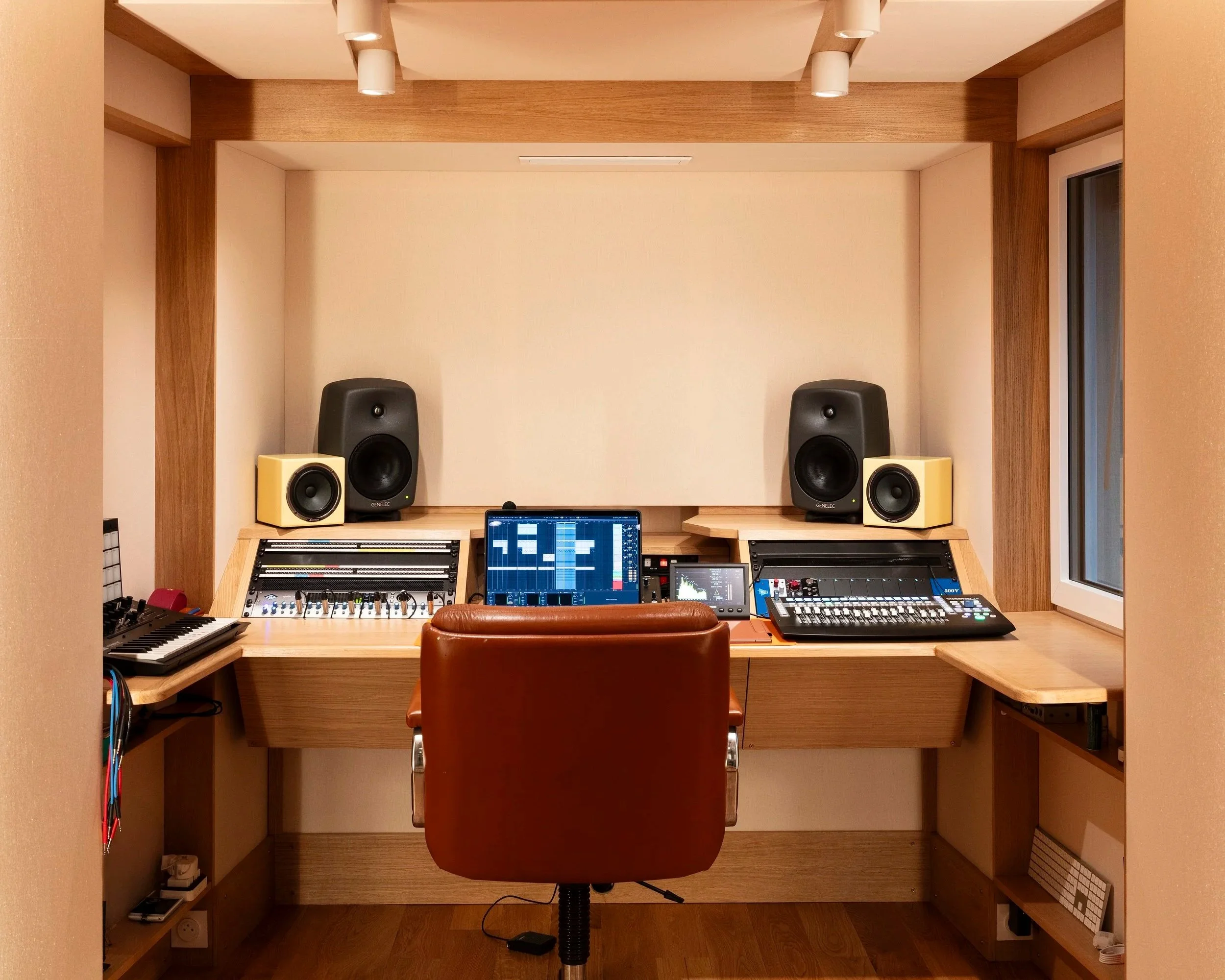
Modern recording studio desk with clean layout
Idea: A modern, minimalist workstation prioritizing concealed cable management, hidden storage bays, and sleek structural aesthetics.
Benefits: Maintains a distraction-free visual environment that enhances creative focus while protecting sensitive wiring from clutter.
Best usage: Ideal for modern creative spaces, client-facing commercial studios, and media composition suites where aesthetics match performance.
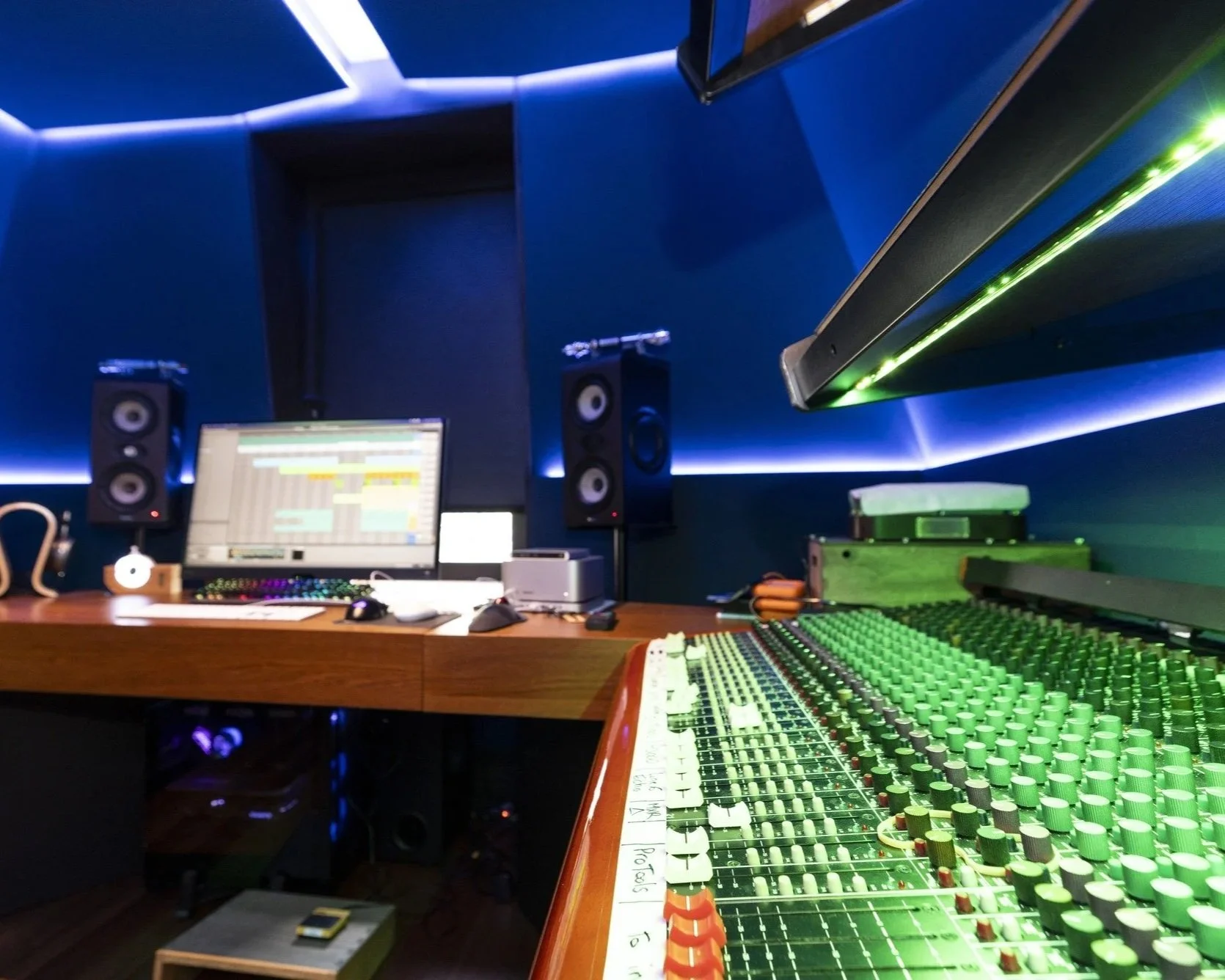
Recording desk with acoustic positioning
Idea: A desk layout specifically engineered to maintain perfect room symmetry and optimal speaker decoupling, ensuring precise monitor alignment with the listening position.
Benefits: Eliminates early reflections, improves stereo imaging, and guarantees accurate monitoring by aligning speaker height and distance directly with your ears.
Best usage: Critical for mixing and mastering engineers who rely on flawless frequency response and detailed listening precision.
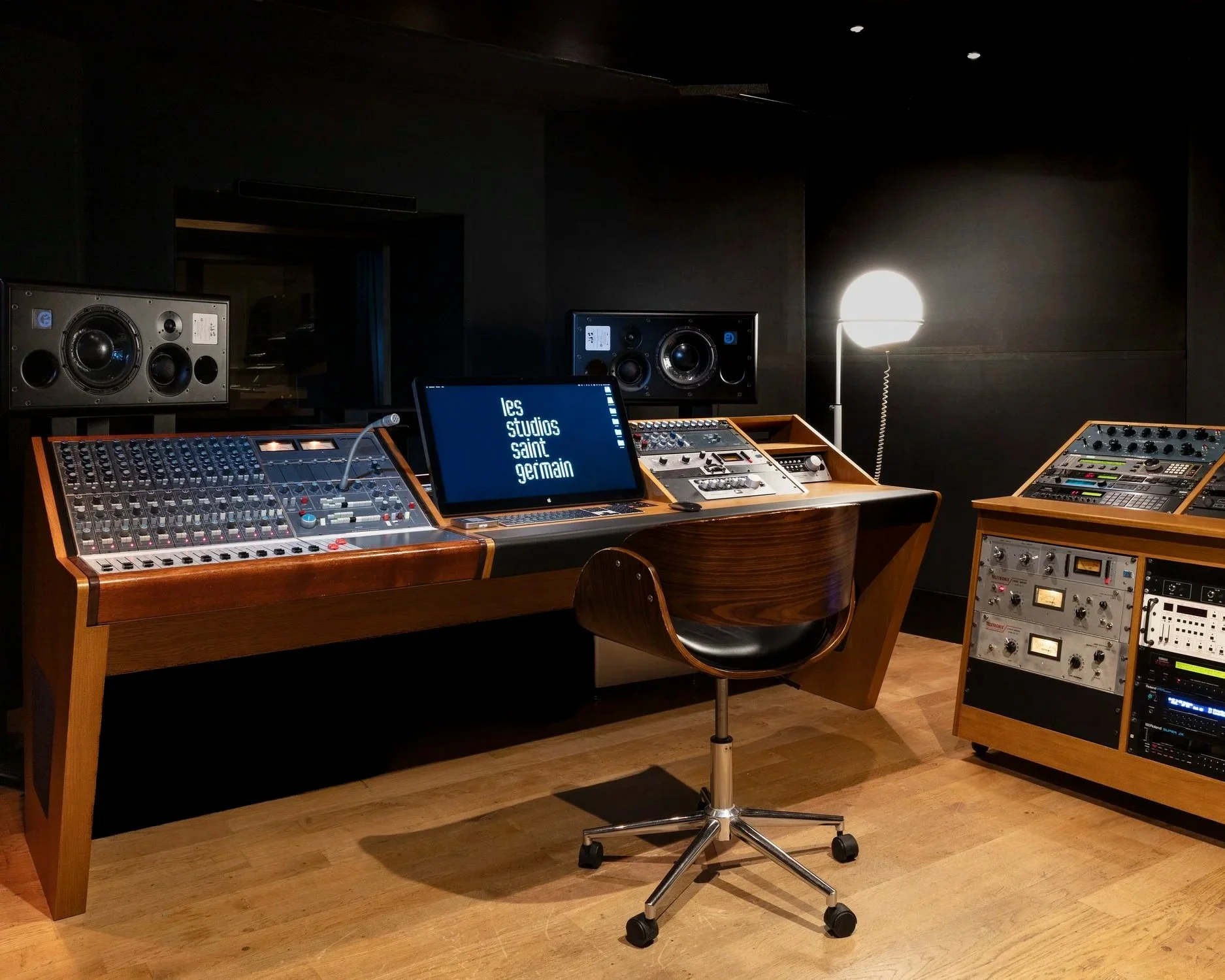
Hybrid recording desk setup (production + mixing)
Idea: A dual-purpose workstation design that features dedicated, separate zones for creative music production (MIDI controllers, synths) and mixing tasks (outboard gear, main console).
Benefits: Optimizes workflow efficiency by allowing seamless transitions between composing and mixing without rearranging gear or compromising space.
Best usage: Perfect for producer-engineers and modern music creators who handle every step of production in a single studio space.
What should you look for in a recording studio desk?
Choosing the right workstation requires balancing physical build quality with long-term functionality. Modern studio desks are engineered specifically to streamline your global workflow, helping you maintain focus without physical fatigue. First and foremost, ergonomics play a vital role; adjustable heights, slide-out keyboard trays, and angled rack mounts keep controls within easy reach while preventing body strain during long production sessions.
Beyond physical comfort, practical utility is equally essential. Integrated cable management channels route power and audio lines neatly, keeping your essential home recording studio equipment organized without visual clutter or signal interference. Dedicated 19-inch rack space allows seamless housing for outboard preamps, interfaces, and processors right at your fingertips. Furthermore, matching the desk’s size and footprint to your room dimensions ensures comfortable movement, whether positioned in an open mixing room or alongside a dedicated recording studio booth. Finally, selecting sturdy materials such as solid wood, steel, or high-density composites, minimizes unwanted acoustic resonances while safely supporting heavy hardware loads over time.
How to set up your recording studio desk properly?
Proper placement of your workstation is critical to achieving accurate monitoring and a comfortable working environment:
Monitor position: Place your studio monitors on isolated stands or built-in shelves so the tweeters sit directly at ear level.
Listening distance: Form an equilateral triangle between your head and the two monitors to ensure a precise stereo image.
Desk height: Adjust your recording studio chair and desk surface so your arms rest at a 90-degree angle, reducing tension in your shoulders and wrists.
Room symmetry: Position the desk symmetrically along the room’s short wall to balance low-frequency response and acoustic reflections.
How desk design impacts your workflow and sound?
The design of your studio desk plays a dual role in your creative environment: it optimizes physical efficiency while directly supporting acoustic performance. The table below illustrates how specific design elements enhance both your daily workflow and listening accuracy.
| Desk Design Element | Impact on Workflow | Impact on Sound & Acoustics |
|---|---|---|
| Integrated Hardware Racks | Provides immediate, fast access to outboard processors and interfaces without disrupting your creative flow. | Keeps cable runs short and organized, reducing electromagnetic interference and signal degradation. |
| Ergonomic Layout & Symmetry | Enhances physical comfort, allows better organization, and reduces visual clutter and technical errors during long sessions. | Maintains acoustic symmetry across the stereo field, ensuring balanced sound reflections from side boundaries. |
| Speaker Mounts & Shelves | Clears main desktop surface area for MIDI controllers, keyboards, and documentation. | Elevates monitors to ear level and decouples them from the desk surface, eliminating muddy bass resonances and early reflections. |
| Cable Management Systems | Speeds up troubleshooting, routing adjustments, and gear swaps with clearly separated power and audio channels. | Prevents accidental unplugging and unwanted ground hums caused by tangled power and audio cables. |
Common mistakes when choosing a studio desk
Selecting a desk that is too small: Underestimating future hardware growth often leads to overcrowded surfaces and poor ergonomics.
Neglecting ergonomics: Prioritizing appearance over proper monitor heights and keyboard placement causes long-term physical fatigue.
Poor room placement: Placing the desk directly against back walls or off-center distorts acoustic symmetry and compromises listening accuracy.
Overloading the workspace: Cramming too much equipment onto the main desk surface blocks acoustic paths and creates unnecessary visual clutter.
Ready to build a studio desk tailored to your workflow?
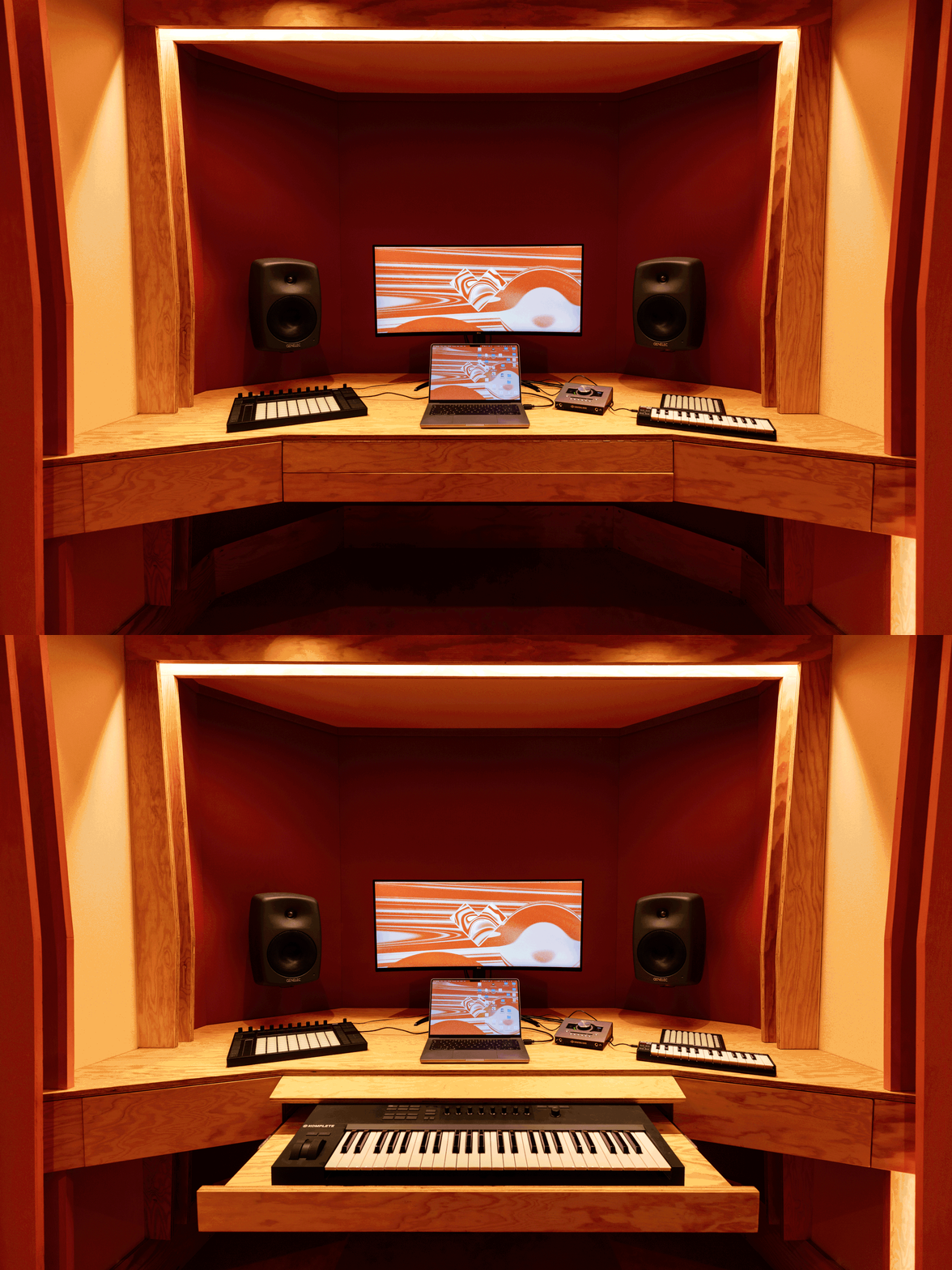
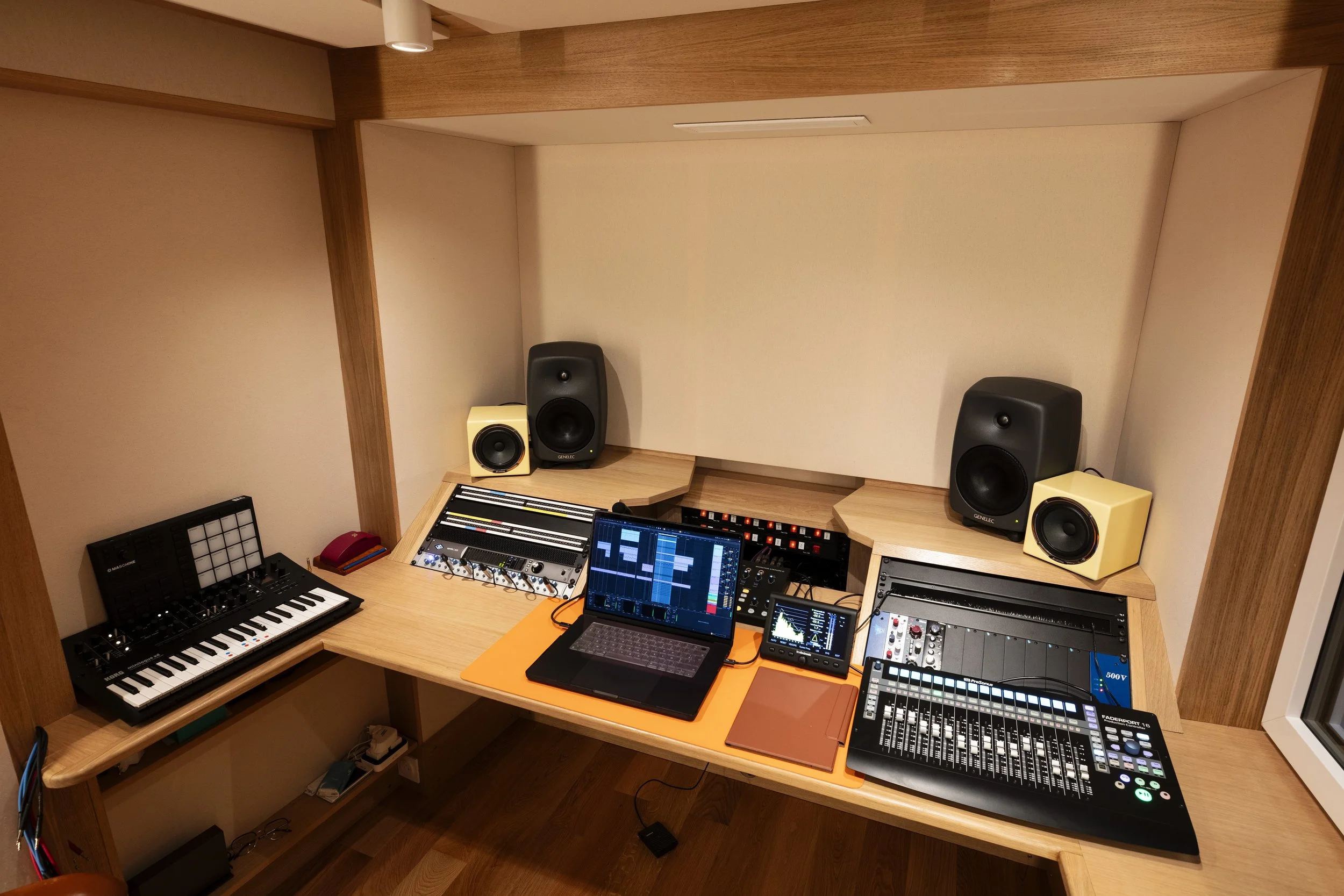
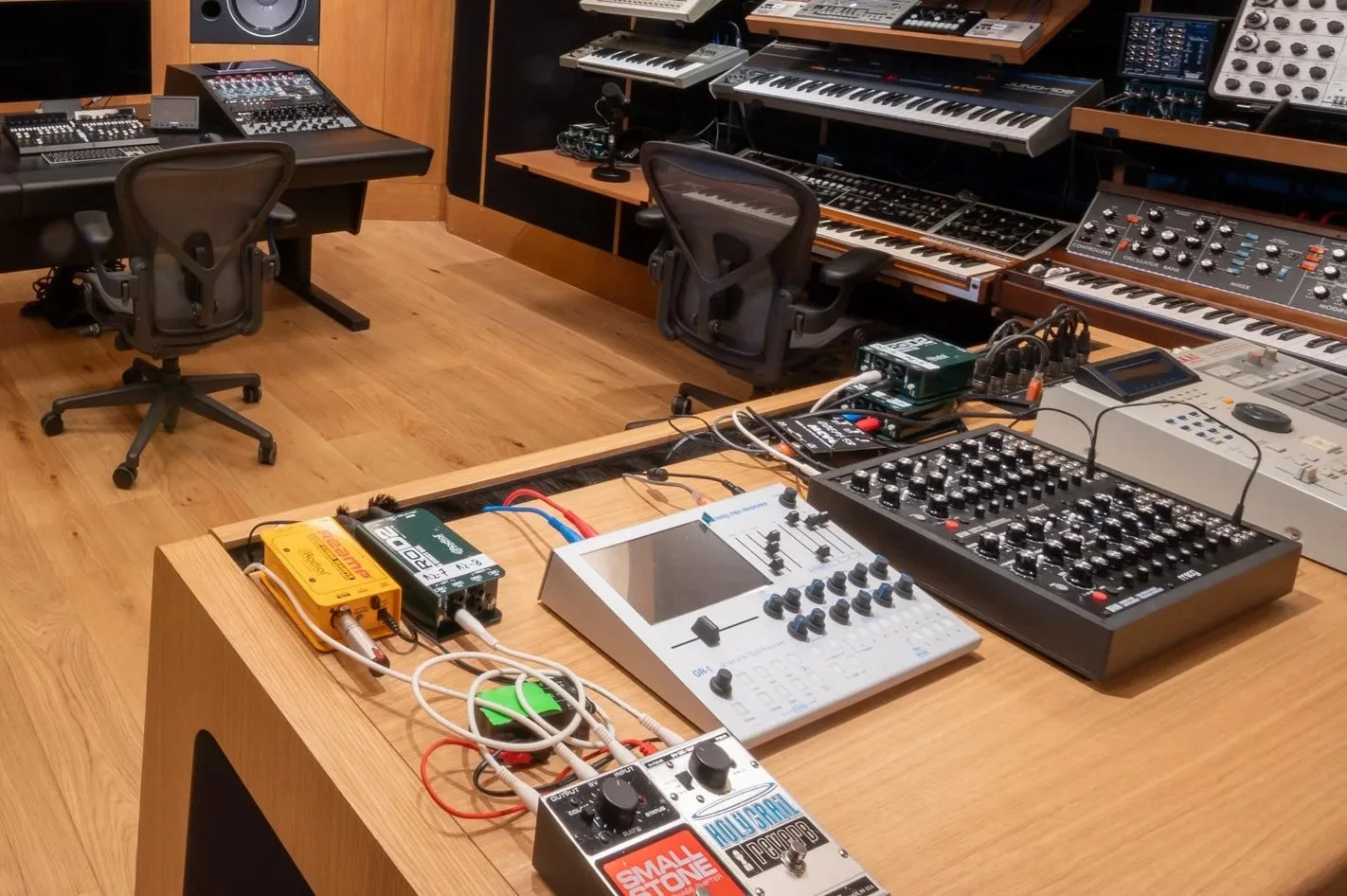
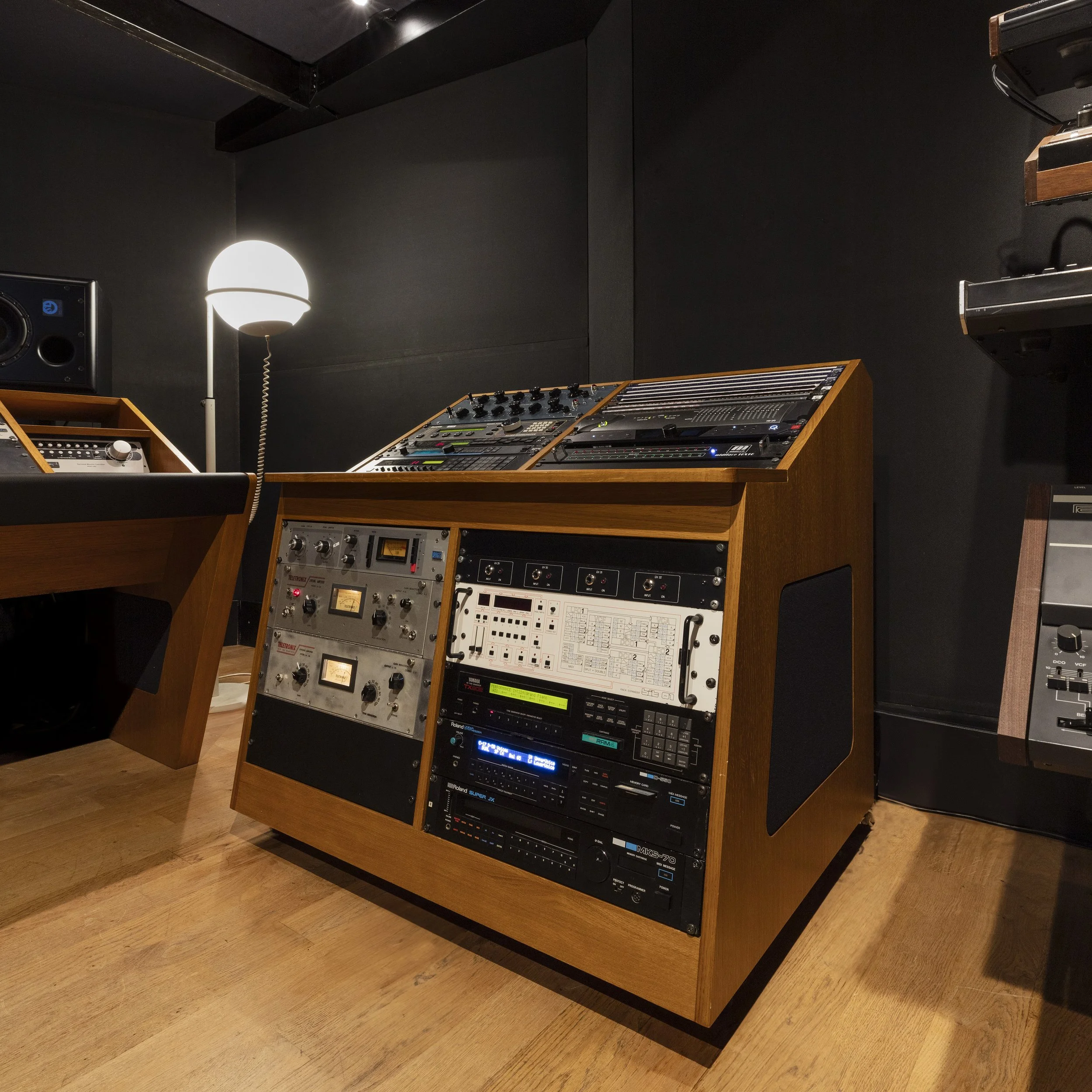
Real recording studio desk designs by Red House
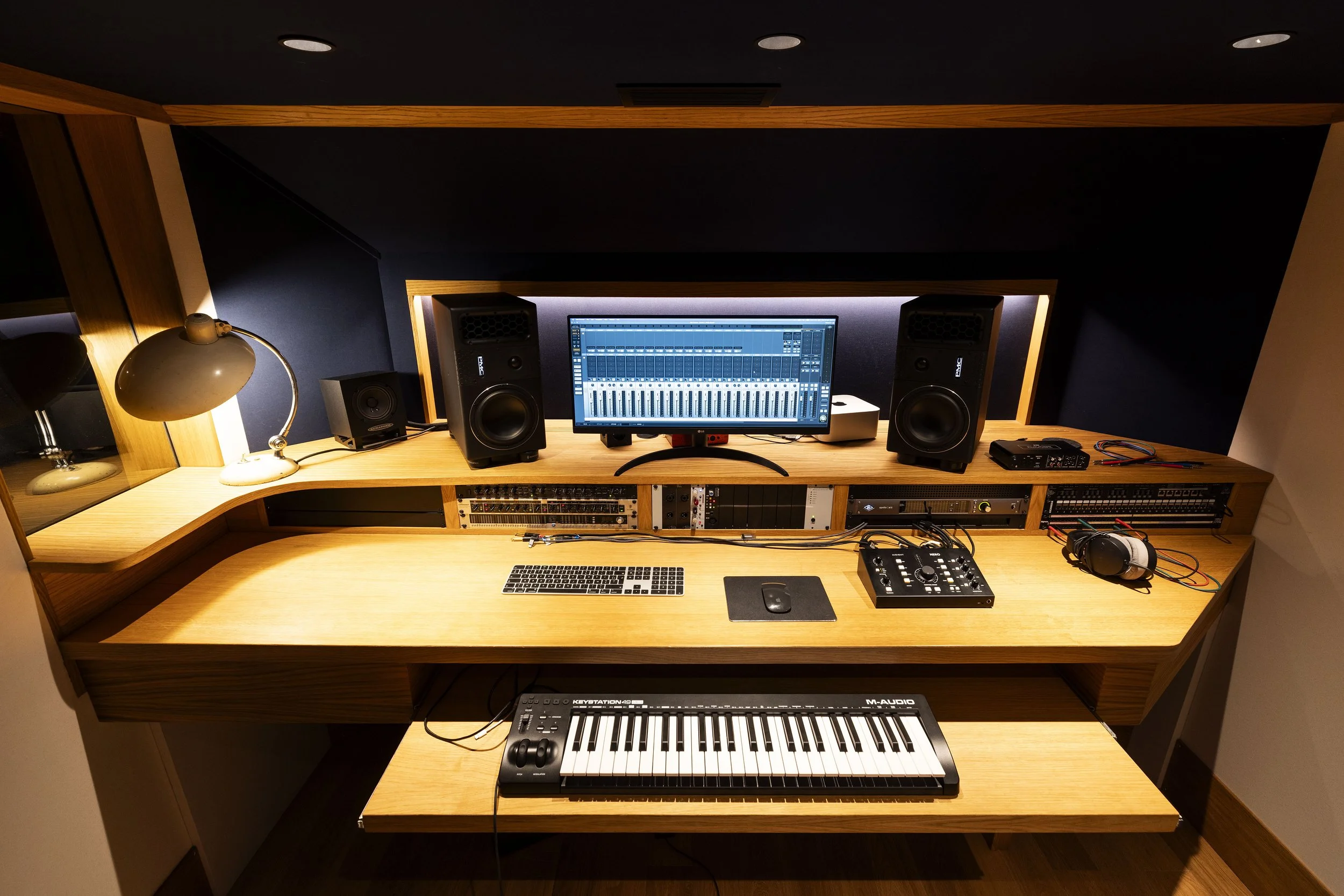
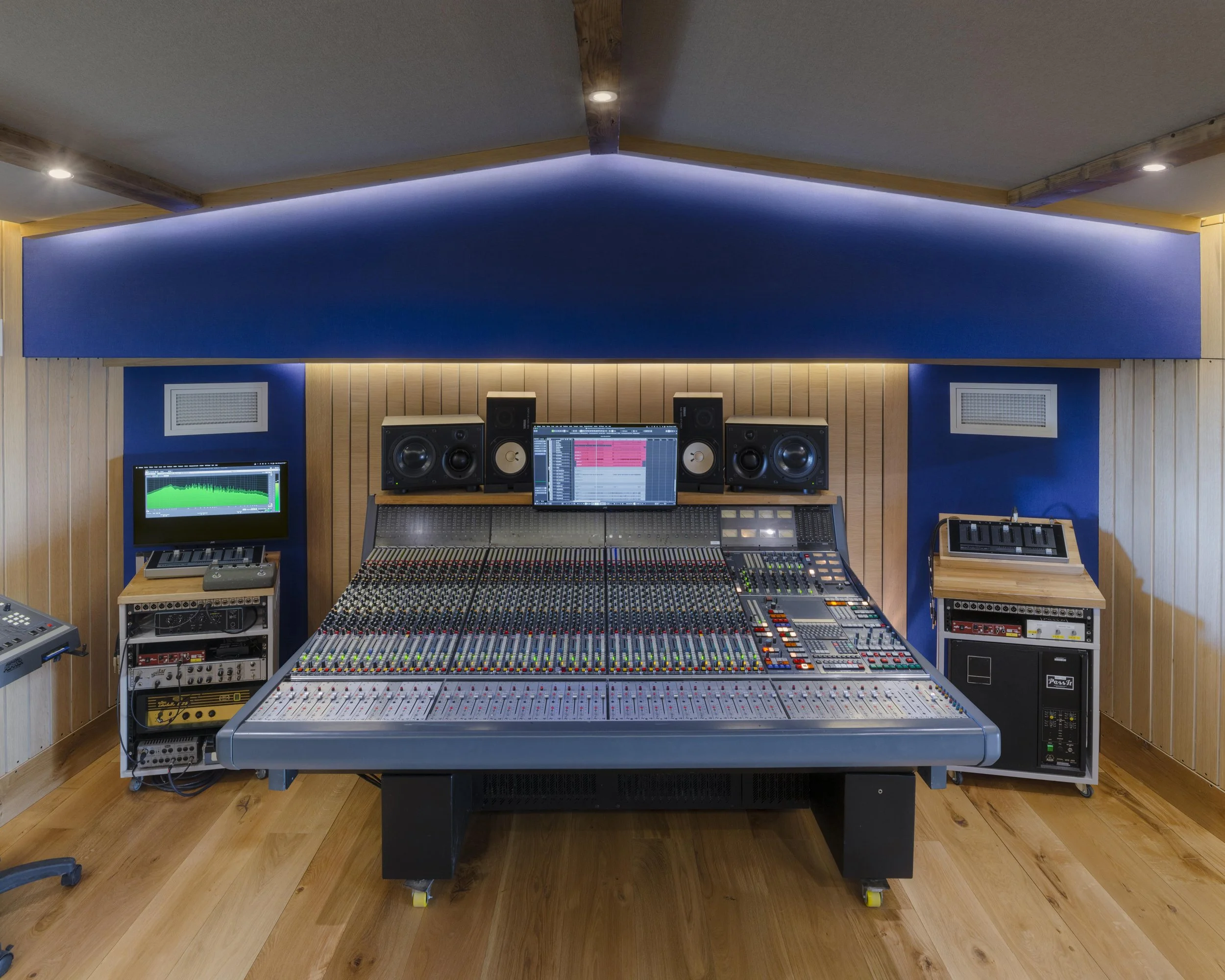
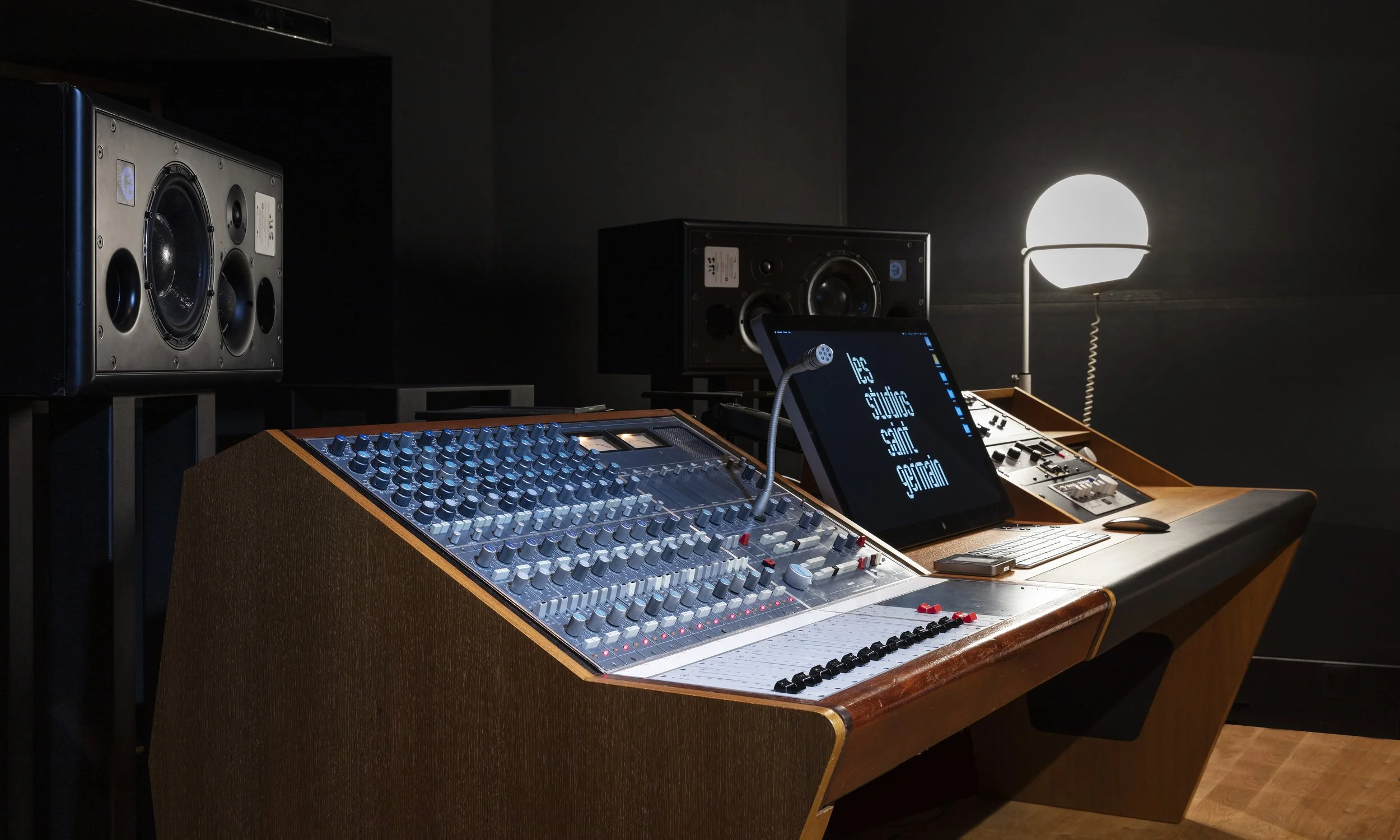
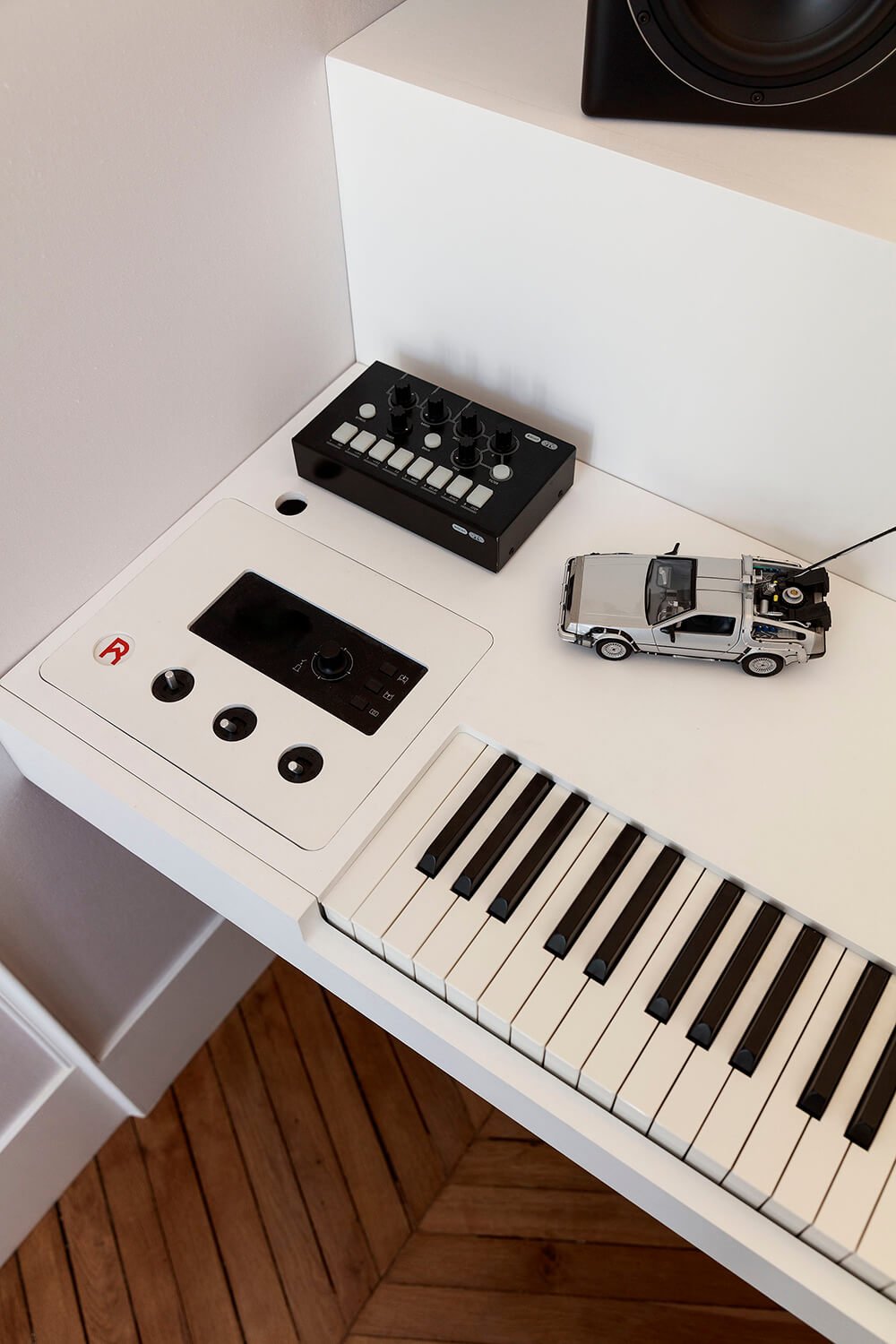
At Red House Acoustics, we design and build custom studio furniture tailored to the exact physical and acoustic requirements of your workspace. Discover how our tailor-made workstations blend premium materials, pristine cable integration, and precise ergonomics to elevate professional studio environments.
Recording studio desk: frequently asked questions
-
The ideal studio desk for a home recording studio balances a compact physical footprint with high functional efficiency. For beginners and music producers working in a small home studio, a desk featuring a dedicated keyboard tray for a midi controller, elevated shelves for studio monitors (such as yamaha or krk rokit models), and built-in rack space is essential. It should easily house your primary recording gear, including a usb audio interface like a focusrite scarlett 2i2, studio headphones, and essential microphones for recording vocals. Integrating ergonomic layout options alongside subtle recording studio lighting helps create an inspiring visual environment that enhances music production and audio editing during long sessions.
-
Yes, a standing recording studio table is an excellent investment for any sound engineer, recording engineer, or composer spending long hours in the control room. Alternating between sitting and standing postures improves circulation, reduces physical strain, and maintains high energy levels during intense audio mixing and mastering sessions. Modern sit-stand workstations are built to support heavy pro audio equipment, including multi-screen monitor setups, an analog mixing console, outboard gear, and heavy synth hardware, without compromising physical stability or acoustic accuracy.
-
The dimensions of your studio furniture depend on your available workspace and the amount of audio recording equipment you operate. A compact home recording setup may only require a width of 40 to 50 inches to fit a laptop, midi keyboard, and nearfield monitor speakers. However, a professional recording studio or commercial production studio setup often demands a larger mixing desk (60 inches or wider) with integrated equipment rack units for preamp hardware, compressor units, and patch bays. Always ensure the desk length leaves enough clearance for proper acoustic panels and bass traps placement to prevent unwanted standing waves in the room.
-
While a standard office desk can support basic digital audio setups, a custom recording studio desk is tailored specifically to your workflow and acoustic environment. Custom designs allow precise positioning of studio equipment, keeping your audio interface, microphone preamp, and hardware units perfectly accessible. Furthermore, custom builds ensure that your workstation matches the exact physical geometry of your music studio, preventing unwanted sound reflections toward the listening position and providing seamless cable management for all your xlr cables and power lines.
-
Organizing a studio setup requires establishing clear functional zones for creation, monitoring, and hardware control:
Monitoring zone: Position your studio monitors at ear level on isolated stands or desk shelves to guarantee flat frequency response and clear stereo imaging.
Control surface zone: Place your primary digital audio workstation controllers, keyboard and mouse, and primary recording interface directly in front of you for quick physical access.
Hardware rack zone: Group outboard gear, such as solid state logic or universal audio processors, into designated racks within arm's reach to streamline tracking and mixing music.
Cable routing: Separate xlr audio lines from power cables using internal channels to eliminate ground loops and signal interference across your recording system.