
Home Theater Lighting: Best Ideas for an Immersive Experience
Published on August 12, 2026
Reading time: 5min
By Lucas Medus - Studio & Acoustics Expert at Red House
Sommaire
When designing a dedicated media room, lighting is often overlooked in favor of screen size or sound quality. Yet, proper illumination directly impacts immersion and viewing comfort, reducing eye strain while enhancing picture contrast. Simply put, home theater lighting is not just about visibility, it directly shapes the cinematic experience.
Thinking about designing a dedicated home theater?
Why Is Lighting Essential in a Home Theater?
Proper lighting directly dictates viewing quality by striking a balance between total immersion and overall visual comfort. Rather than simply illuminating the room, a well-planned lighting setup enhances contrast, eliminates screen glare, and prevents eye fatigue during long movie sessions. By setting the right mood and ambiance, it transforms a basic media setup into a truly immersive, cinema-grade environment.
What Are the Different Types of Home Theater Lighting?
To achieve an optimal viewing experience, designers rely on a layered lighting approach combining distinct types of illumination to balance functionality, safety, and atmosphere:
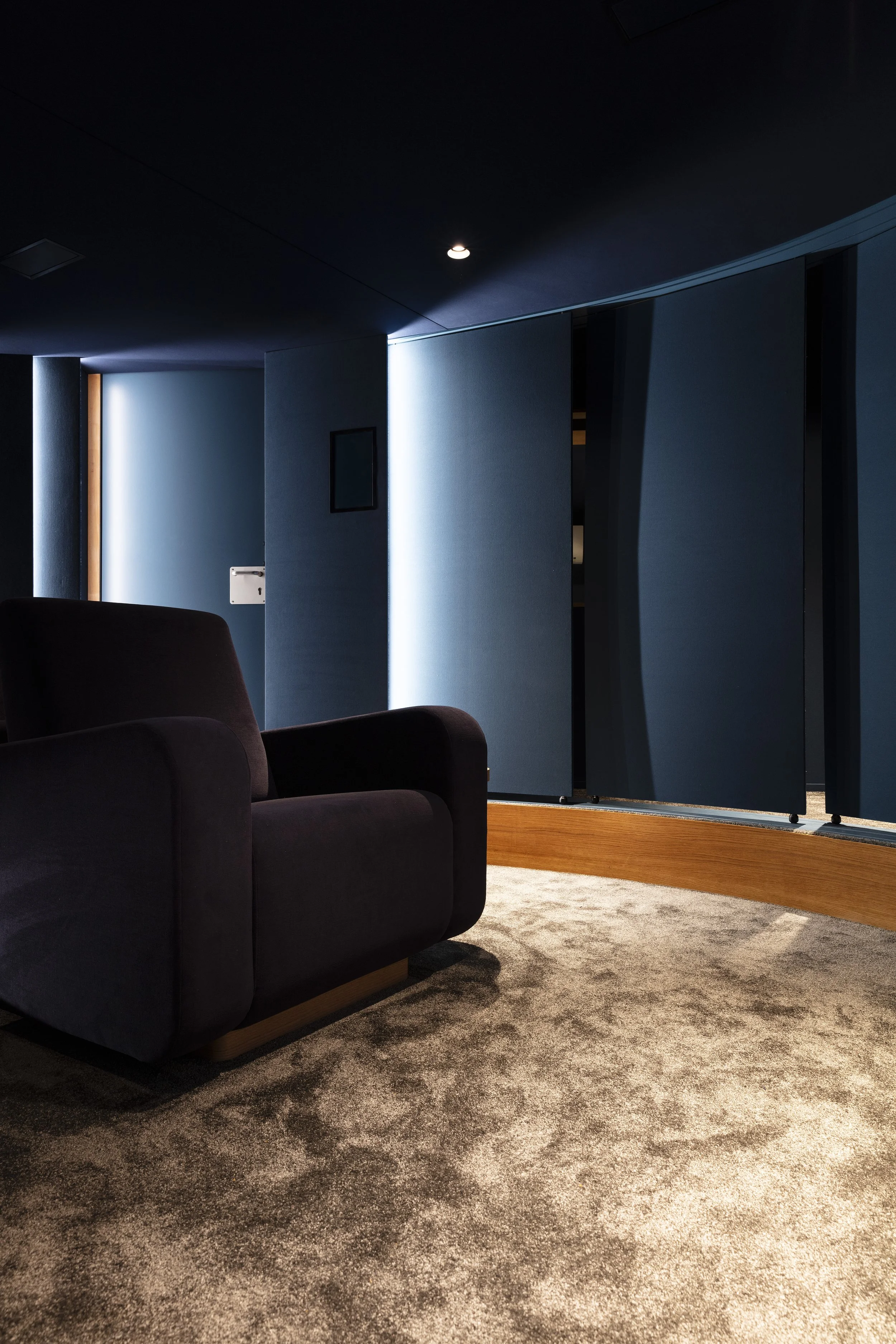
Ambient Lighting:
Offers gentle, indirect background illumination that keeps the room navigable without washing out the screen.
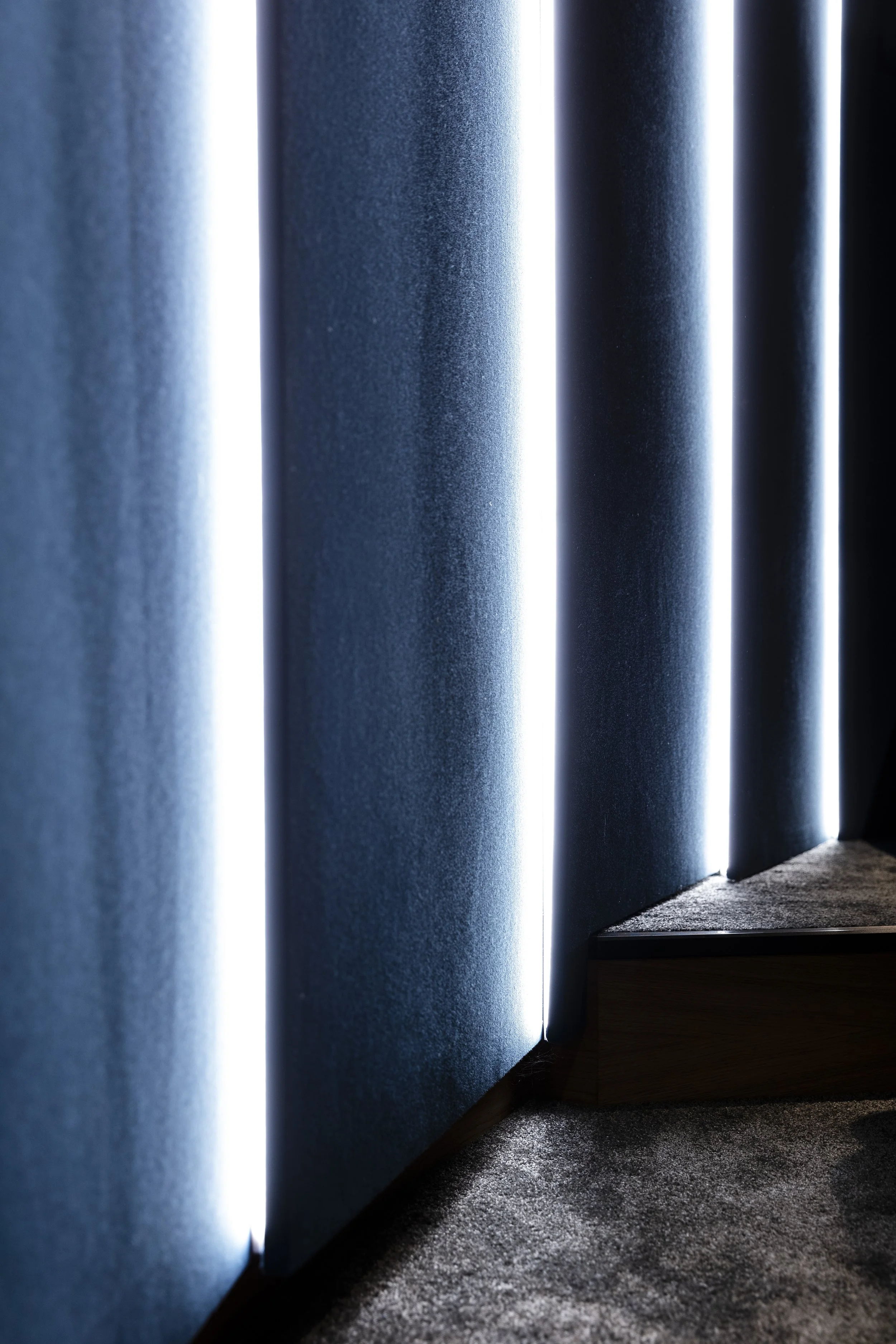
Accent Lighting:
Highlights architectural details, artwork, or wall sconces to add depth and cinema style to the space.
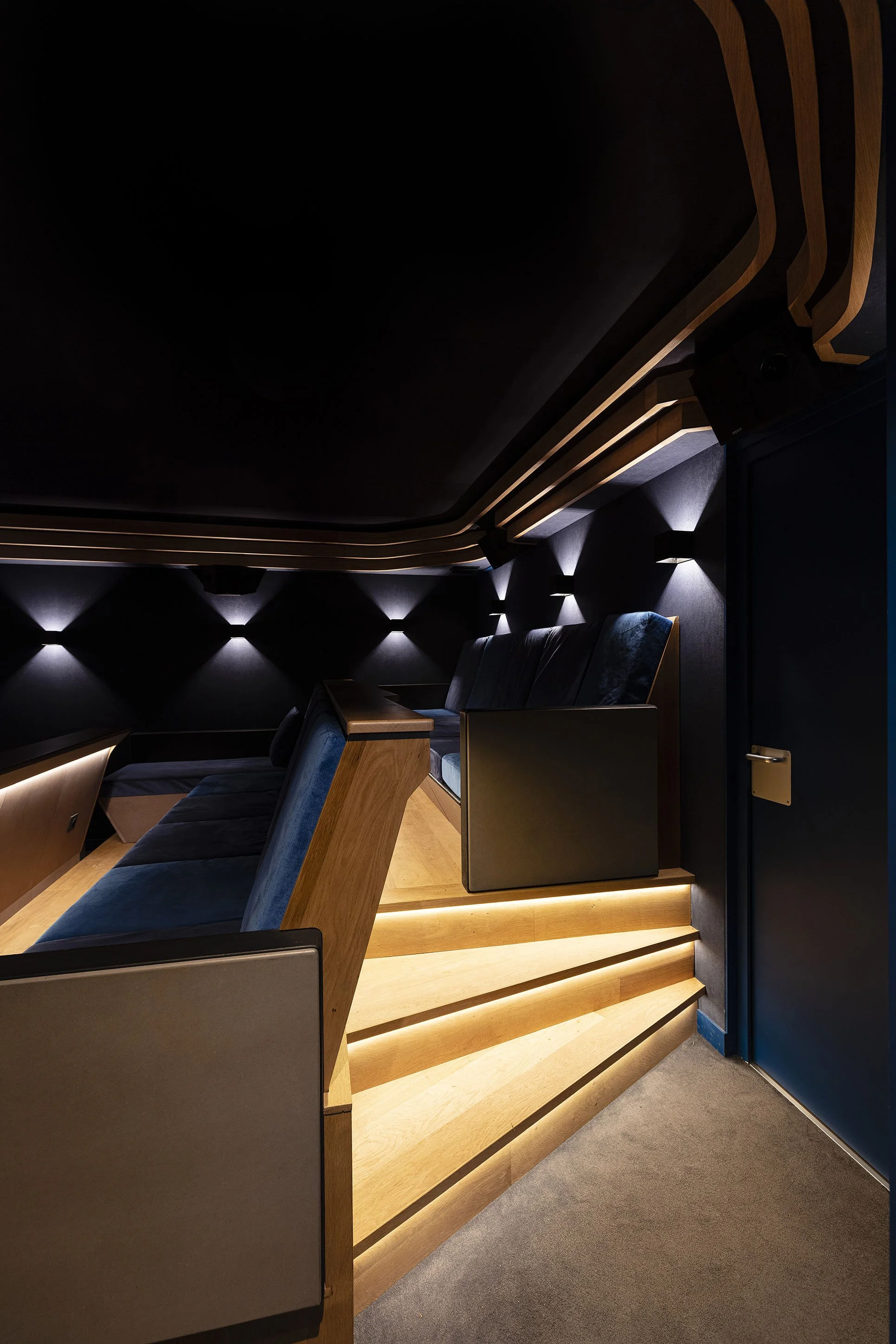
Task Lighting:
Provides focused, subtle light on key functional areas such as seating, step pathways, or remote controls.
What Is the Best Lighting Setup for a Home Theater?
The ideal home theater setup relies on a well-balanced layered lighting design, combining ambient, accent, and task lighting to create flexibility and depth. Dimmable lighting is absolutely essential, allowing you to seamlessly transition from full room visibility to movie-mode darkness.
For maximum control, implement zoned lighting to adjust individual areas independently, and ensure there is strictly no direct light hitting the screen to prevent glare and preserve picture contrast. Ultimately, the perfect setup balances immersive darkness at screen level with subtle, dimmable control throughout the room for optimal comfort and safety.
How to Design the Perfect Home Theater Lighting Setup?
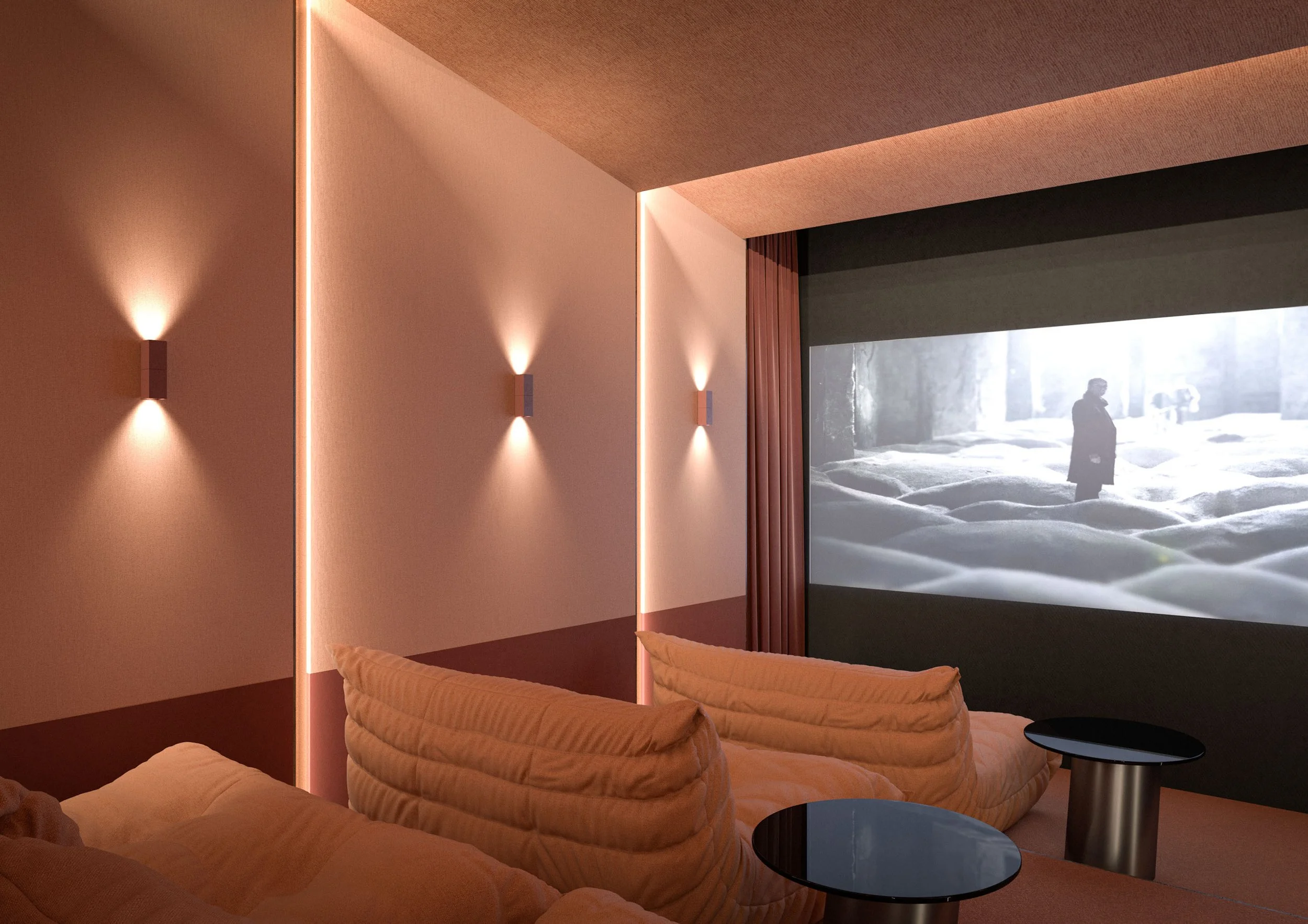
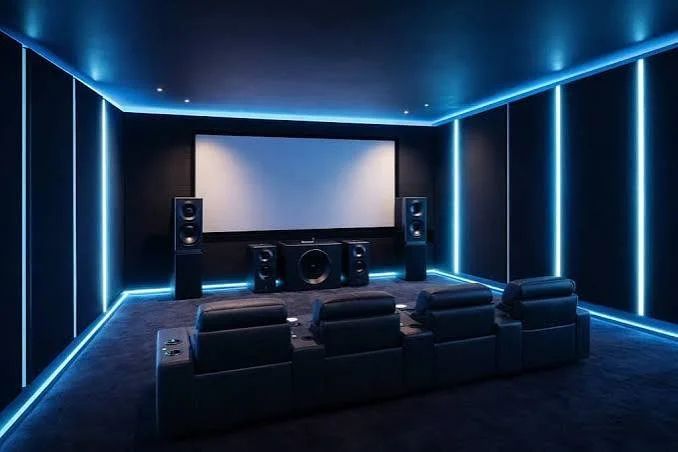
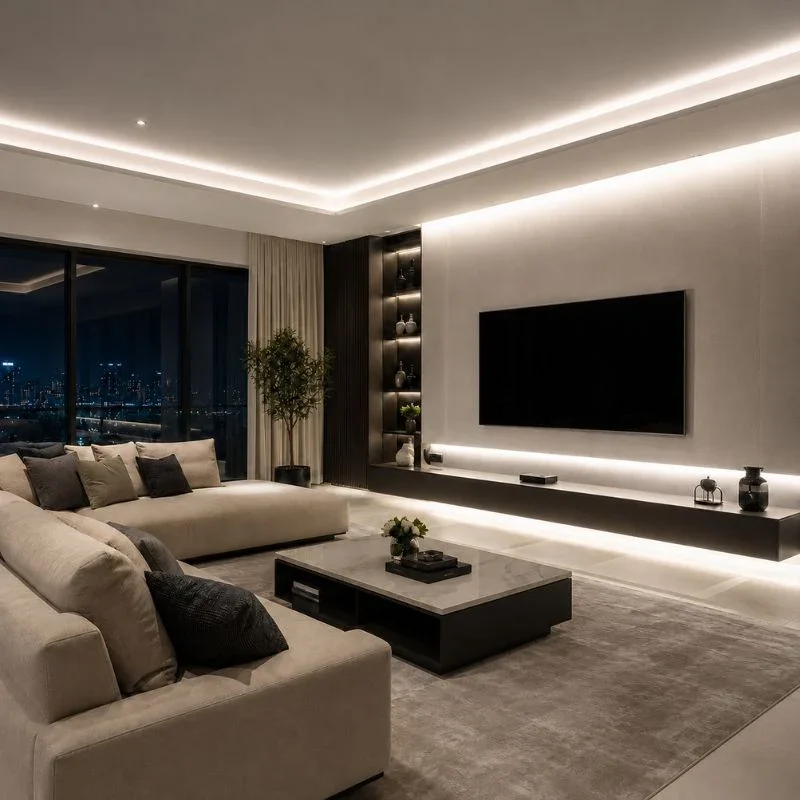
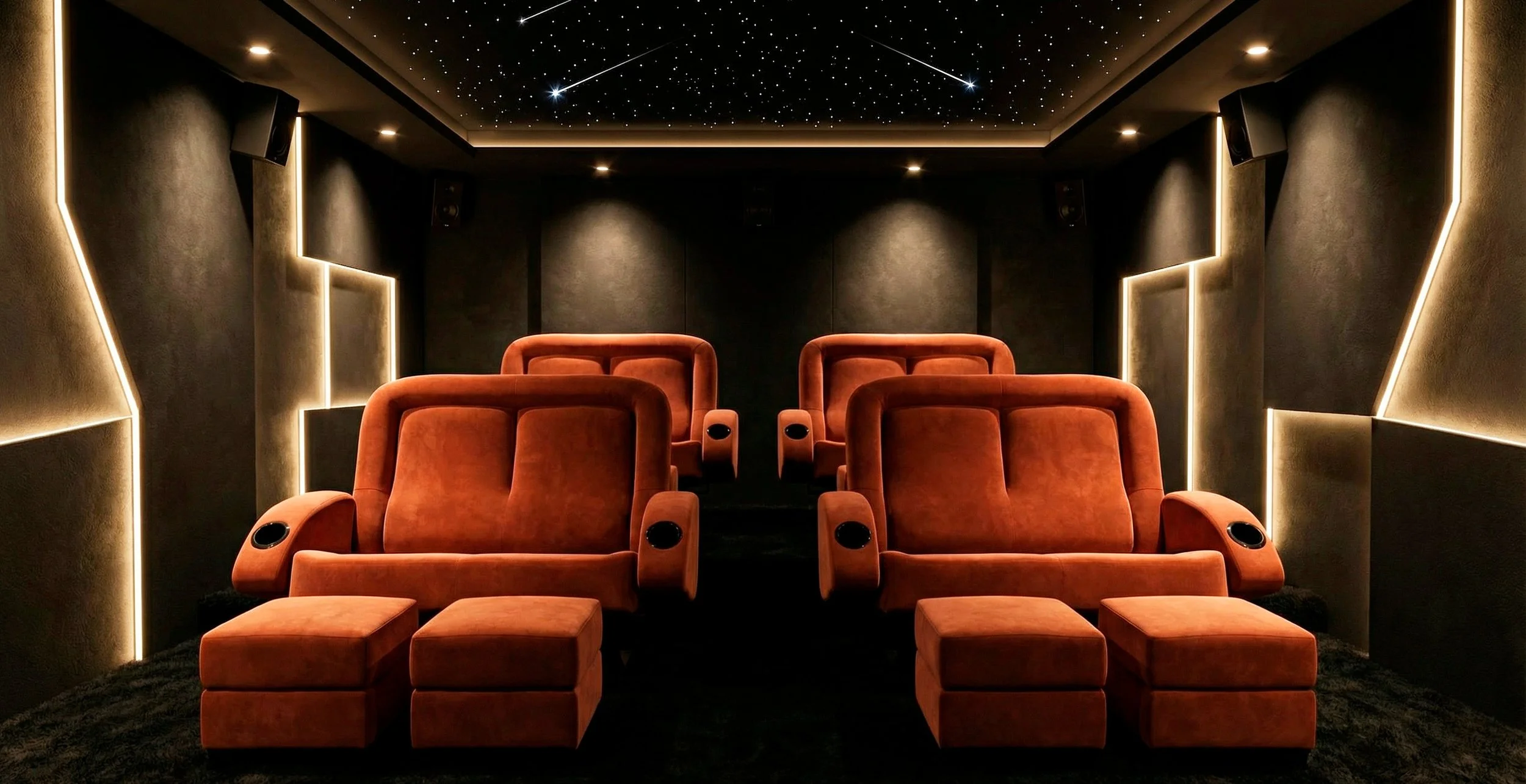
Designing the ideal lighting plan comes down to strategic placement and precise intensity control. Place bias lighting behind the screen to boost perceived contrast, add strip lights under seating, and position sconces along walls or LED strips on stairs and pathways combining safety with sleek cinema aesthetics. Accurate dimming controls are essential to tailor brightness based on usage, allowing you to dim lights completely for a blockbuster movie or keep a subtle glow active during live sports and casual viewing.
How to Avoid Glare and Reflections on Your Screen?
Screen glare can instantly ruin an immersive movie night. To prevent light bounce, strictly avoid direct light hitting the display and opt for indirect, diffuse lighting instead. Incorporating matte surfaces on furniture and painting the walls in dark, low-reflectance tones further reduces ambient light reflections, preserving high picture contrast and rich black levels.
Smart Lighting and Automation for Home Theaters?
Integrating smart controls elevates your home theater experience through seamless automation. High-performance dimming systems allow you to trigger custom lighting scenes at the touch of a button, instantly switching between modes for Movie, Relax, or Cleaning. Advanced setups even offer synchronized content automation, matching room lighting in real time with the action on screen for maximum immersion.
Are you planning a home theater or looking to improve your lighting setup?
Our team at Red House helps you design a fully immersive space with optimized lighting, acoustics and layout.
Common Mistakes in Home Theater Lighting
Avoiding a few frequent pitfalls makes all the difference when setting up your space:
Too Much Light: Over-illuminating the room washes out contrast and ruins deep black levels.
Poor Fixture Placement: Positioning lights directly above or opposite the screen creates distracting glare.
Lack of Dimmability: Using fixed-brightness bulbs prevents you from tailoring light levels to movie viewing.
Relying on a Single Light Source: Single overhead fixtures create harsh shadows instead of a balanced, layered atmosphere.
Ignoring Room Reflections: Forgetting about glossy walls, mirrors, or bright furniture allows unwanted light bounce onto the display.
How to Combine Lighting with Acoustics and Design?
A high-end media room relies on the seamless interplay between light, sound, and interior aesthetics, building on classic home theater ideas. Choosing acoustic fabrics alongside dark, matte wall finishes prevents stray reflections while simultaneously absorbing sound. Integrating hidden fixtures directly within acoustic panels or ceiling coves creates a clean, premium look that aligns lighting placement with acoustic treatments for a sophisticated, fully unified cinema experience.
Why Work with a Professional for Your Home Theater Lighting?
Partnering with an expert ensures every technical and aesthetic detail is handled seamlessly—whether you are working with a flexible layout or designing a budget home theater room. A specialist delivers a custom design tailored specifically around your room's dimensions, lighting placement, and ergonomic home theater seating arrangement. They also manage technical optimizations like glare-free beam angles and control integration, guaranteeing maximum immersion and optimal visual comfort without trial and error.
Why Choose Red House for Your Home Theater Project?
Red House brings comprehensive expertise to turn your home cinema vision into reality. Backed by years of specialized experience in high-performance media environments, Red House offers a truly all-in-one approach that combines lighting design, acoustic calibration, and interior styling under a single, seamless project management workflow.
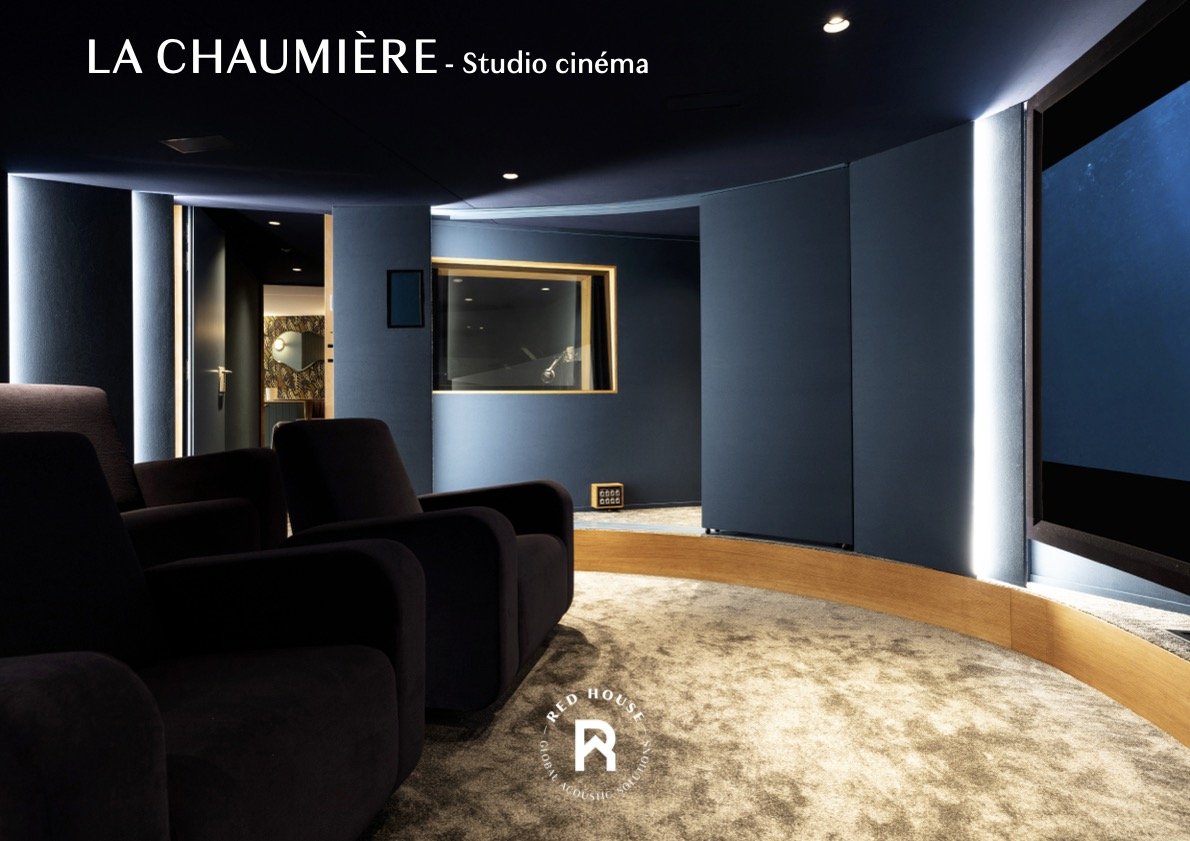
La Chaumière by Red House
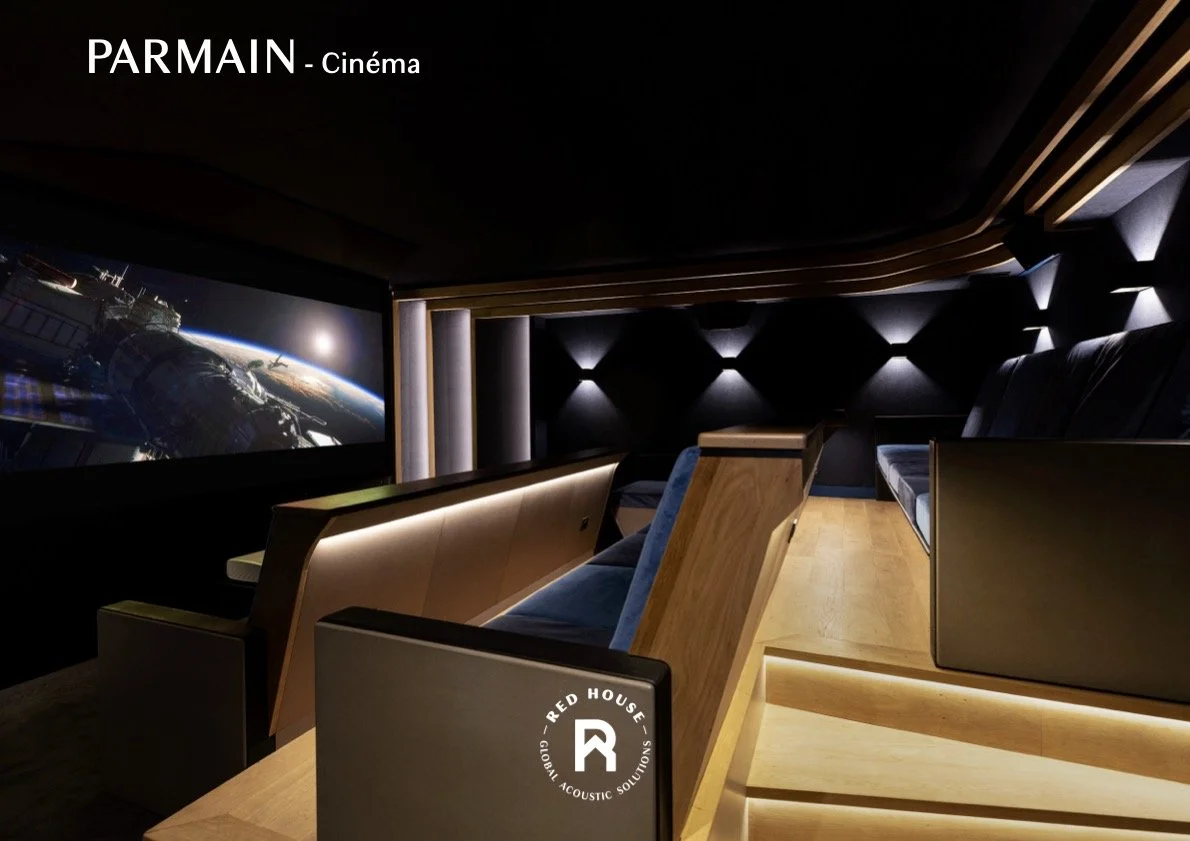
Parmain by Red House
Create a home theater designed around your space, your sound and your experience
Home theater Lighting: frequently asked questions
-
The best home theater lighting relies on a layered lighting design combining ambient lighting, accent lighting, and task lighting. Modern led technology is the preferred choice over traditional incandescent bulbs, halogen, or compact fluorescent sources due to its low energy consumption, long lifespan, and high energy efficient performance. Incorporating flexible led strip options, recessed lights, and wall sconces equipped with warm white led diodes ensures balanced illumination and dynamic mood lighting for any film.
-
To eliminate unwanted screen reflection and glare, avoid placing any direct light source opposite or directly above the display. Instead, opt for indirect lighting by using recessed lighting, wall-mounted sconces, or cove lighting with frosted diffusers. Utilizing low-glare led downlight fixtures with a directional beam angle directs illumination toward the floor or architectural features rather than bouncing off the screen. Additionally, choosing low brightness settings and matte wall finishes ensures optimal picture contrast.
-
Bias lighting consists of a light bar, led tape light, or led strip lighting mounted directly behind the display to light up the wall behind the screen. It emits a subtle white light or cool white glow that reduces the extreme contrast between a dark room and a bright display, significantly lessening eye strain. Using a 12v led or rgb led strip with adjustable color temperature allows you to fine-tune the backdrop, making it an essential lighting product for enhanced visual comfort and deeper perceived black levels.
-
Yes, every light fixture in a media room should be dimmable. Installing a dedicated led dimmer, dimmer switch, or smart lighting control system allows you to adjust the light output from full lumens down to a faint glow. A dimmable led setup connected to a smart led controller or ir remote control enables you to program custom lighting scenes for movies, gaming, or general entertaining at the touch of a button.
-
Optimal placement requires spreading lighting fixtures strategically across different zones. Install led ceiling lights or recessed cans around the perimeter for general room visibility, place wall sconces along side walls for decorative depth, and integrate low-voltage step lights or path lighting along aisles and seating areas for safety. Placing an led light strip behind the screen or under seating provides stylish accent light without throwing direct light onto the display.
Do you have a home theater project or want to improve your lighting setup?
Red House helps you design a fully immersive home theater with optimized lighting, acoustics and layout.